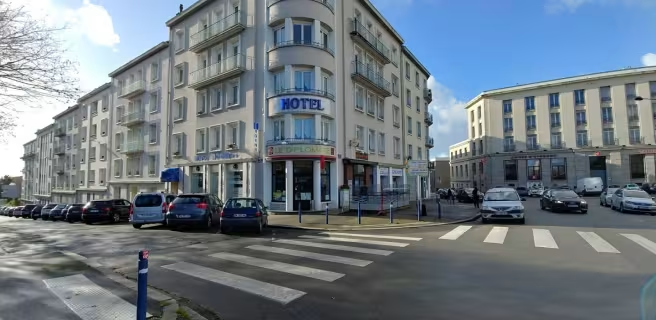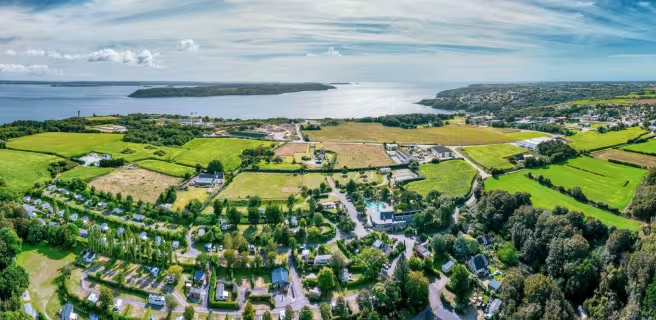

Le Conquet / Brest
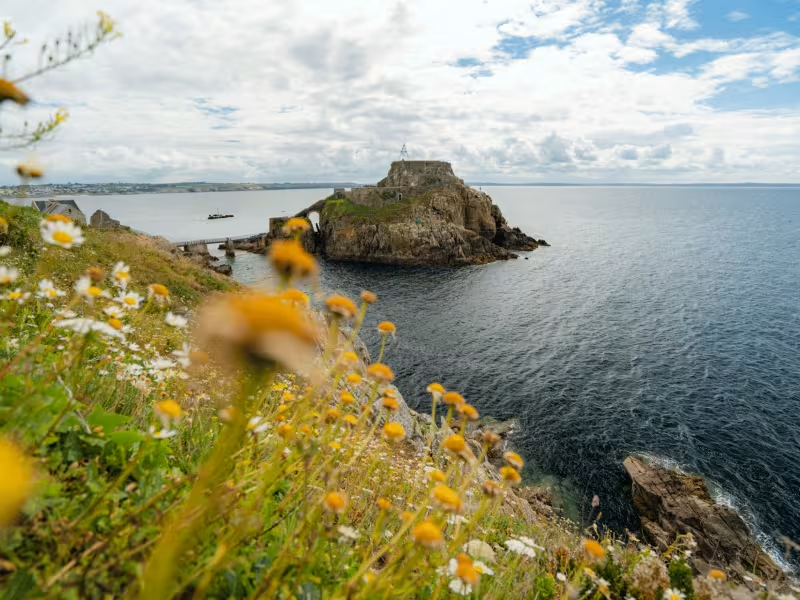
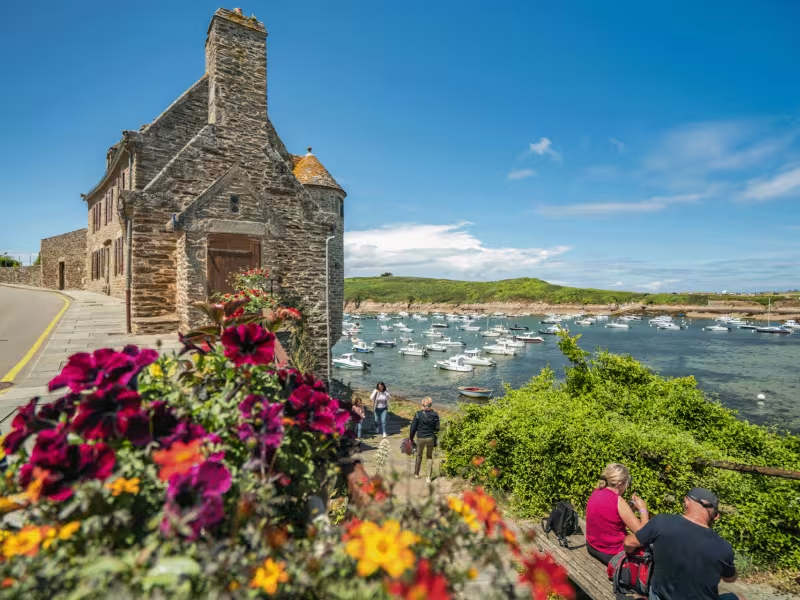
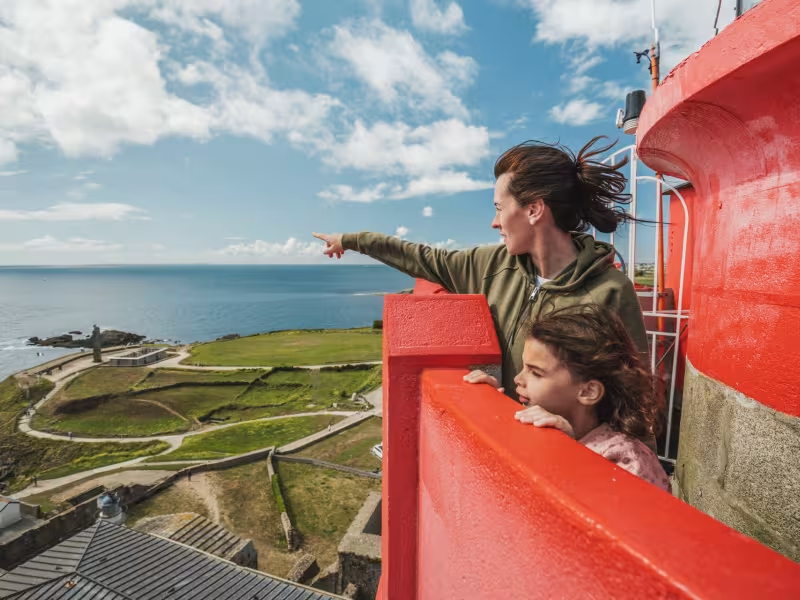
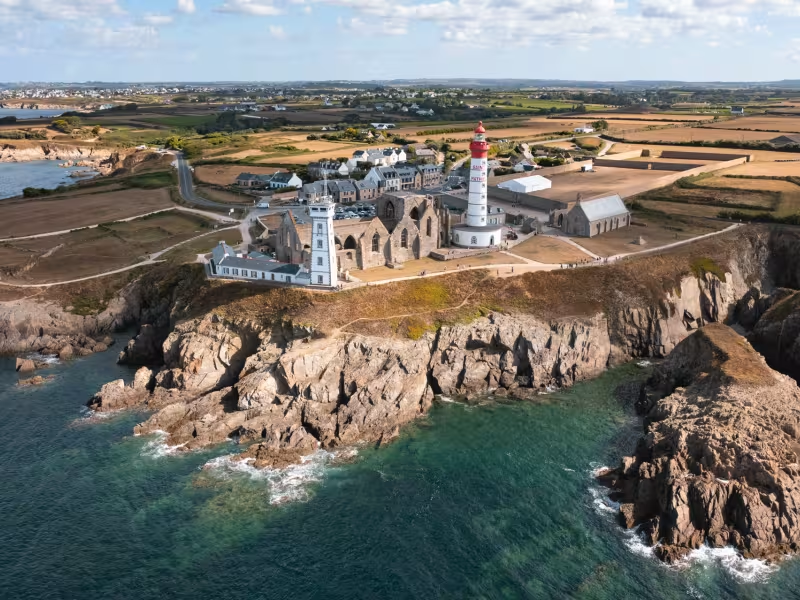
You ride along the coast towards Brest via the Pointe de Saint-Mathieu (in the parish of Plougonvelin), a headland famed both for the ruins of a medieval abbey and for a lighthouse. The views from the top of the latter, taking in the reefs of Les Vieux Moines and the Chaussée des Pierres Noires, are breathtaking. Next, you ride along the side of the Anse de Bertheaume, a bay overseen by a fort designed by Vauban, Louis XIV’s great engineer. There follow some tremendous, scenic views across the Rade de Brest, one of the largest enclosed bays in the world, covering 180km2. At the Rade’s goulet, or narrow entrance from the Atlantic, the Phare du Petit Minou is a lighthouse placed there to indicate to boats the channel they need to follow to enter into the Rade de Brest, by lining it up with the Phare du Portzic, another lighthouse, which you ride close to in order to reach Brest, a sprawling city that very much lives from its strong connections with the sea.
The route
Leaving the outskirts of Le Conquet, you join a coast road offering panoramic views all the way up to the level of the Phare de Saint-Mathieu; along this magnificent stretch shared with motorized traffic there are some blind bends, so remain alert. Leaving the site of Saint-Mathieu, take care riding along the cycle lane taking you along a deceptive rise up to Plougonvelin. Traffic is restricted to 30kph along this small town’s streets, allowing you to ride down safely to the Plage du Trez-Hir, a beach. Once you’ve enjoyed the panoramic journey around the Anse de Bertheaume, the cycle route climbs, leading you along country roads looking down on the sea. Locmaria-Plouzané’s beaches provide a protected yet panoramic way to enter the great bay of the Rade de Brest. Climbing to leave the coast behind and to reach the centre of Brest, you’re guided along cycle lanes and paths.
Cycle links
- To Goulven via the Véloroute Côtes des Légendes (via Plabennec and Lesneven) - link no.1, download below
- To Landeda via the Véloroute des Abers (via Plabennec) - link no.1 to Plabennec then link no.2, download below
Gradients and elevation
Slope breakdown
Road types
- Cycle path
- Routes reserved for cyclists and pedestrians (greenways, cycle tracks, towpaths), separated from cars for maximum safety.
- Shared road
- Quiet minor roads with little traffic (unless otherwise stated in the stage details). Shared with cars (stay alert).
- Not specified
- Data unavailable or being assessed. Please refer to the detailed stage description.
- Provisional
- Section on a road or cycle path awaiting better-quality facilities (see stage details).
Surface
- Smooth
- Asphalt, tarmac or smooth concrete. Optimal comfort.
- Rough
- Fine gravel, compacted stabilised surface or worn tarmac. Less comfortable, vibrations possible.
- Natural
- Dirt, grass, roots or stones. Under 5%: short sections with little impact. Higher percentage: route suited to mountain or gravel bikes only.
- Not specified
- Data unavailable or being assessed. Please refer to the detailed stage description.
Road types
- Cycle path
- Routes reserved for cyclists and pedestrians (greenways, cycle tracks, towpaths), separated from cars for maximum safety.
- Shared road
- Quiet minor roads with little traffic (unless otherwise stated in the stage details). Shared with cars (stay alert).
- Not specified
- Data unavailable or being assessed. Please refer to the detailed stage description.
- Provisional
- Section on a road or cycle path awaiting better-quality facilities (see stage details).
Don't miss
- The Pointe de Saint-Mathieu, a dramatic headland with a ruined abbey and a lighthouse to explore
- Bertheaume Fort, designed by Vauban, Louis XIV’s famed engineer
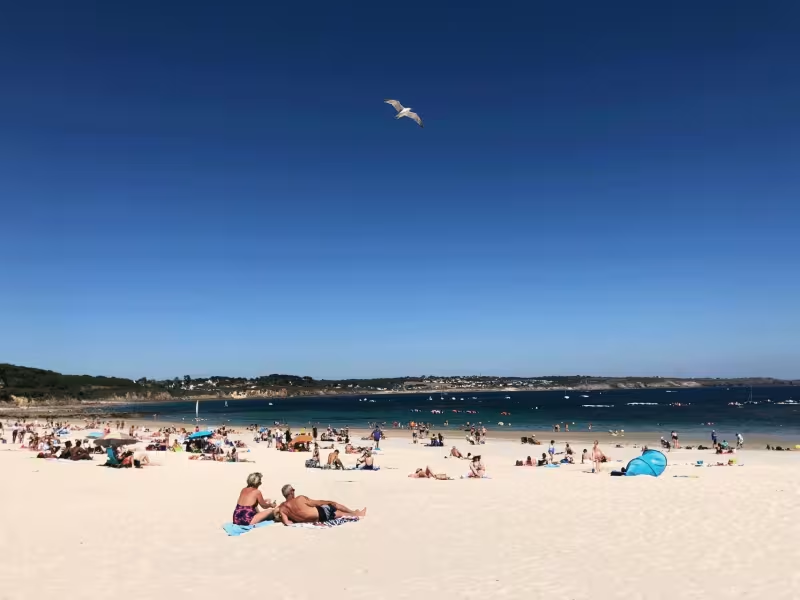
- The Plage du Trez Hir, a beach with a pool too, and a sailing school
- The Phare du Petit Minou, a lighthouse
- The Phare du Portzic, another lighthouse
- Brest: Océanopolis, a major visitor centre dedicated to explaining the oceans.