

Caderousse / Orange

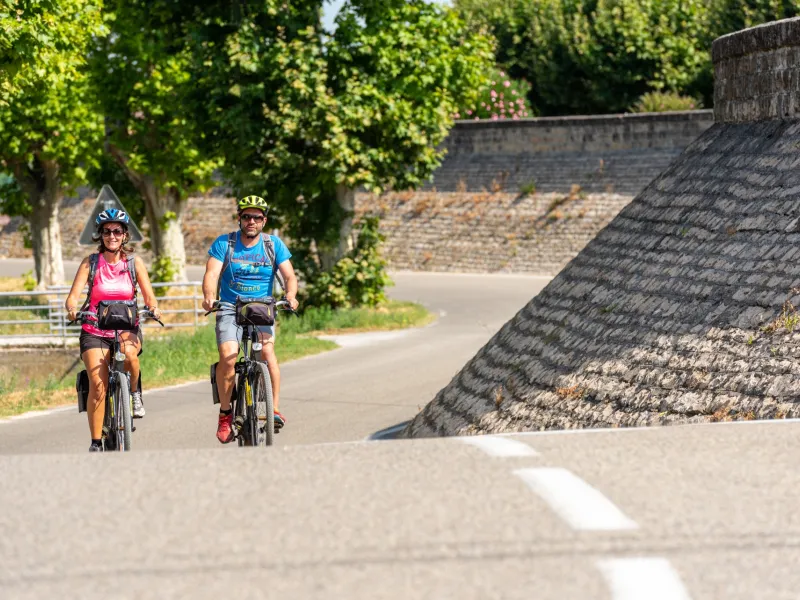
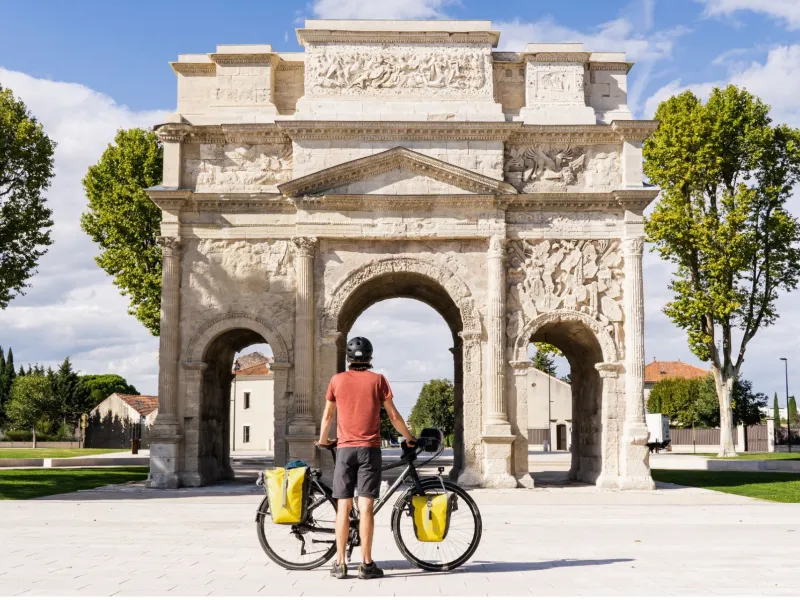
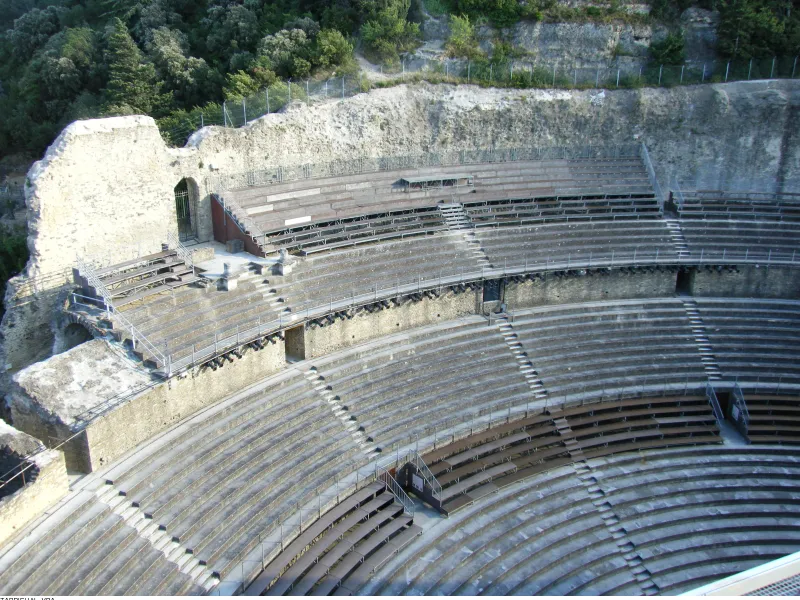
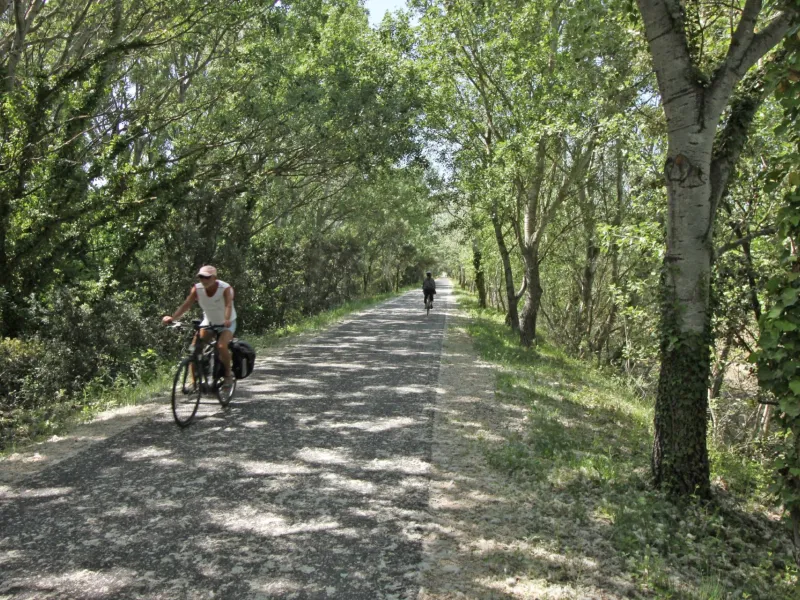
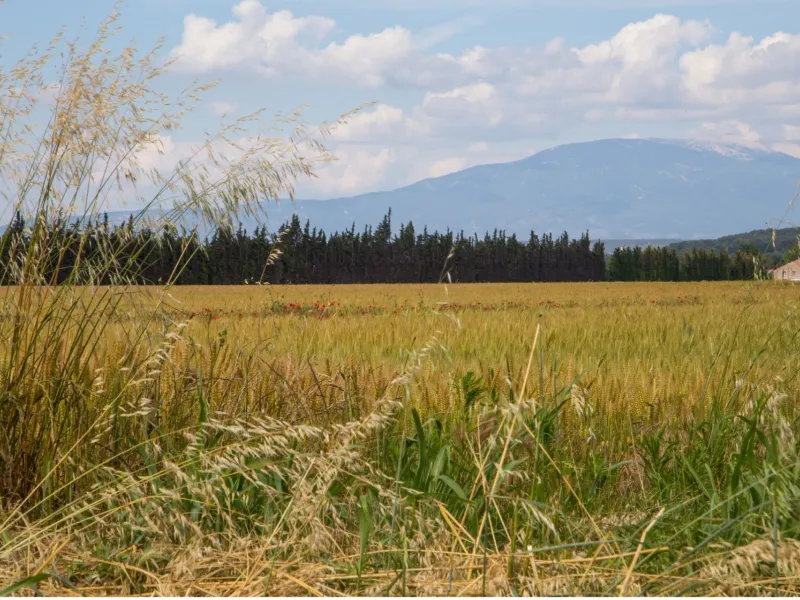
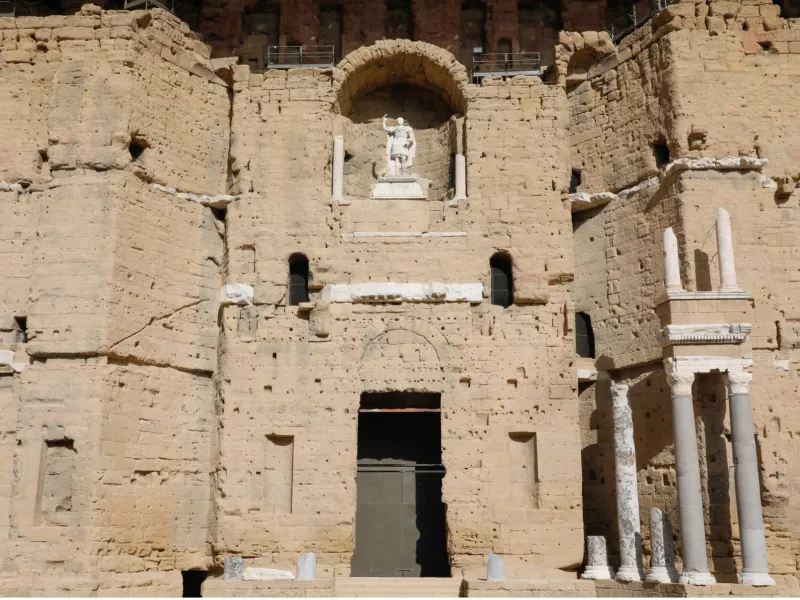
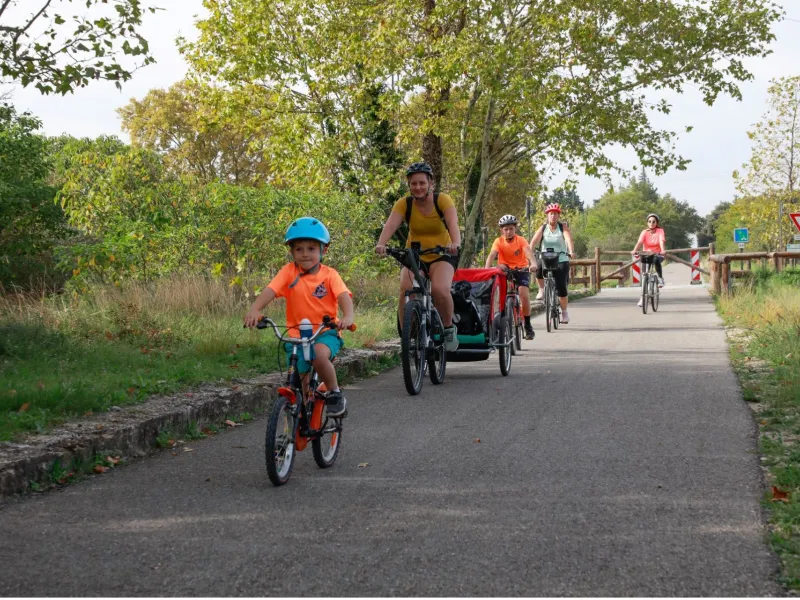
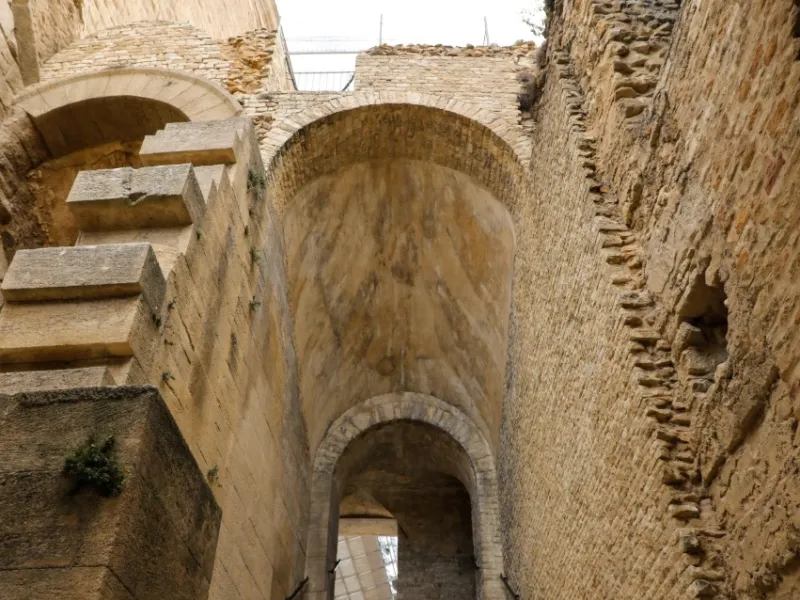
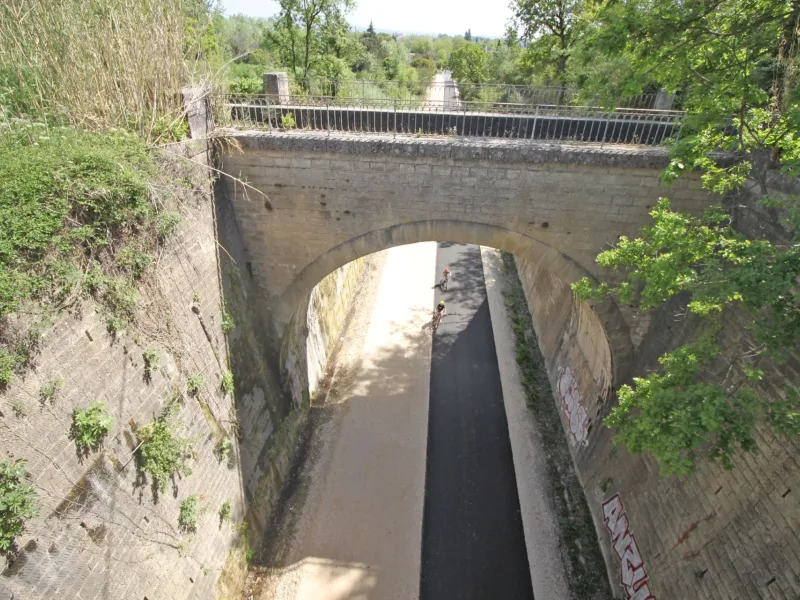
On the ViaRhôna cycle route, at the level of Piolenc, continue first along this cycle route in the direction of the village of Caderousse, nestling in a former, older branch of the Rhône River, with an imposing levée or embankment worth seeing. From this village, make for the town of Orange, riding along quiet roads shared with motorized traffic. Then, explore the town’s exceptional historical vestiges, with its superb Roman triumphal arch and theatre listed as a UNESCO World Heritage Site. Note that from summer 2024, it will in fact be possible to reach Orange directly from Piolenc and its artificial lake (or plan d'eau) via a road shared with motorized traffic, followed by a footbridge over the Aigues River. At time of writing, this footbridge was being worked on, and therefore not open to cyclists or pedestrians.
The route
At the level of the Plan d'Eau Li Piboulo (a lake), in the parish of Piolenc, leave the ViaRhôna cycle route, going in the direction of the Plan d'Eau, which you then cycle beside, on a road shared with motorized traffic. Next, turn right, heading in the direction of the town of Orange, making use of a signposted country road. Take care though: occasionally, a lorry passes along here, beside the high-speed rail TGV line; and there’s a narrow stretch to negotiate, on the footbridge over the Aigues River, which you have to cross on foot. You then enter the town of Orange along cycle lanes beyond the Roman triumphal arch; continue through the town centre to reach the railway station served by regional TER trains. Take care, as you have to cross Orange via streets shared with motorized traffic.
It’s also possible to start along this stage from a bit to the south, getting off the ViaRhôna cycle route at the village of Caderousse.
Gradients and elevation
Road types
Surface
Don't miss
- Caderousse: the Digue Le Batardeu (an impressive levée, or embankment); St Martin’s Chapel (11th century); the Chapelle des Grammont; the île des Brotteaux, an island in the Rhône where you can picnic or go bathing.
- Orange: the Roman triumphal arch and theatre https://www.theatre-antique.com, plus the associated Musée d'Art et d'Histoire. Orange’s Théâtre Antique is one of the rare theatres from antiquity to have preserved its stage wall, reaching a dizzying 37m (over 100ft) in height. Make the most of the virtual 3D tours available, with soundtrack.
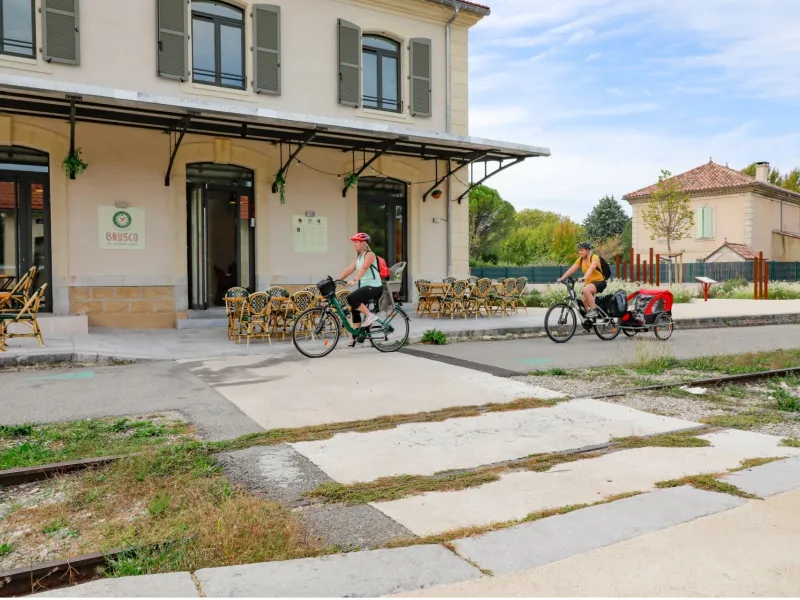
Note that the former train stations at Jonquières, Sarrians and Loriol du Comtat have been converted into restaurants. Explanatory signs dotted along our cycle route retell the history of this former railway line that served in good part to transport food and wine to Paris; plus, in its heyday, it also transported many celebrities, going to take the waters at the little natural thermal spa in the Dentelles de Montmirail close by. - Piolenc: a village known in these parts as a garlic capital, and also known today for its Plan d’Eau Li Piboulo, an artificial lake offering all manner of water sports in summer, a place where swimming is permitted too.
Find your accommodation on this stage

Trains and transport on the route
SNCF
- Orange – railway station served by both TGV high-speed services and TER regional services, on the Lyon – Avignon line. Orange town station has a secure bike shelter.