

Via Venaissia

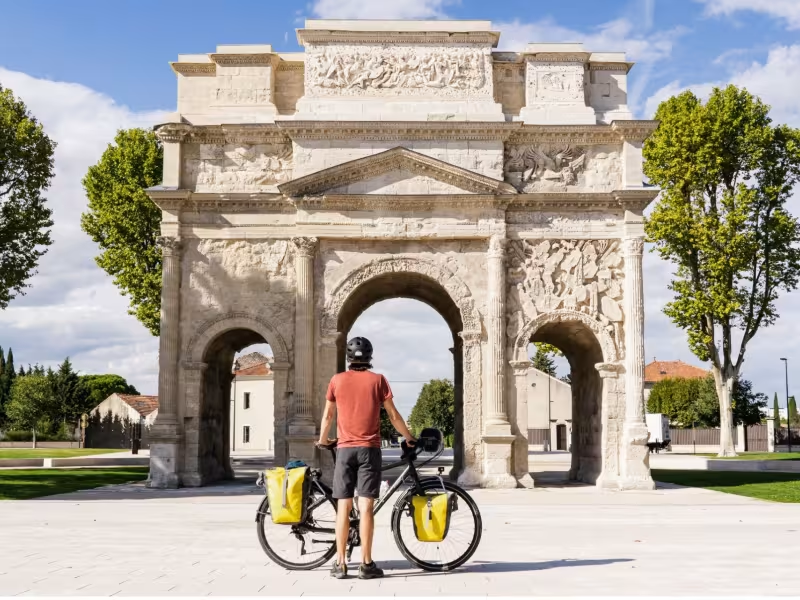
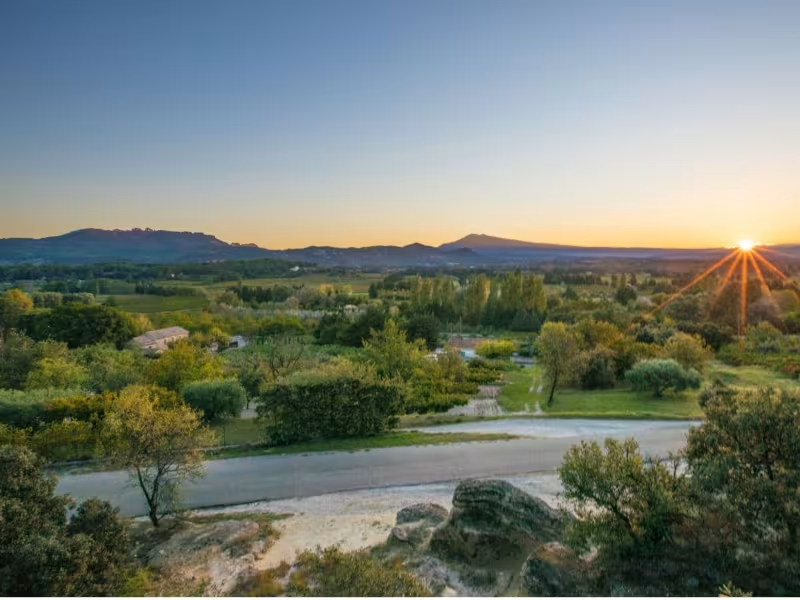
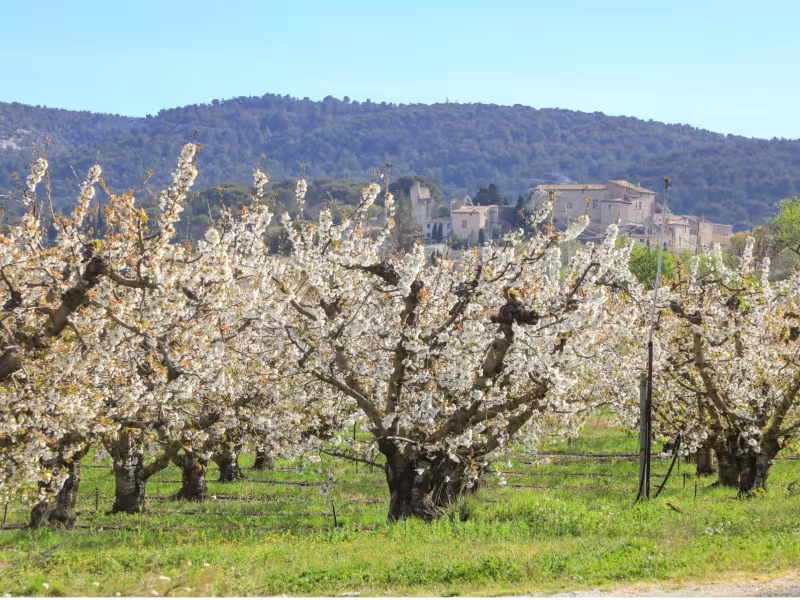
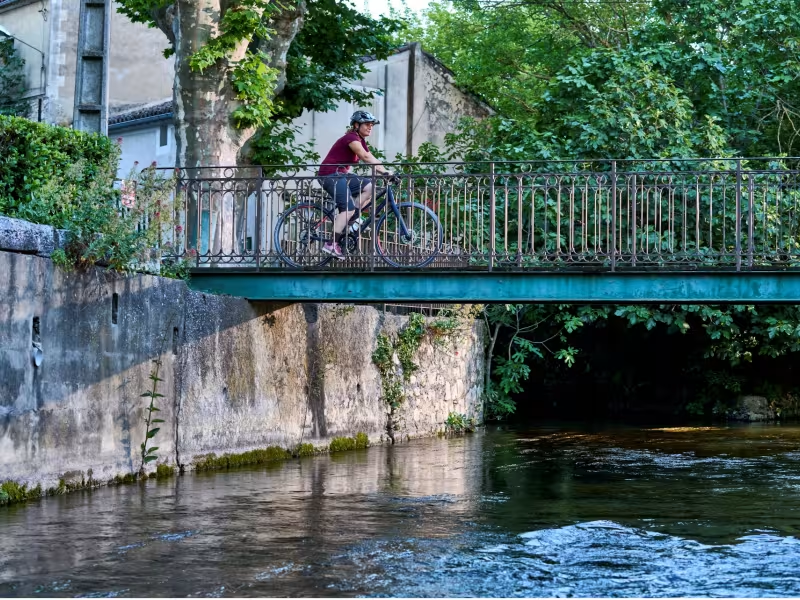
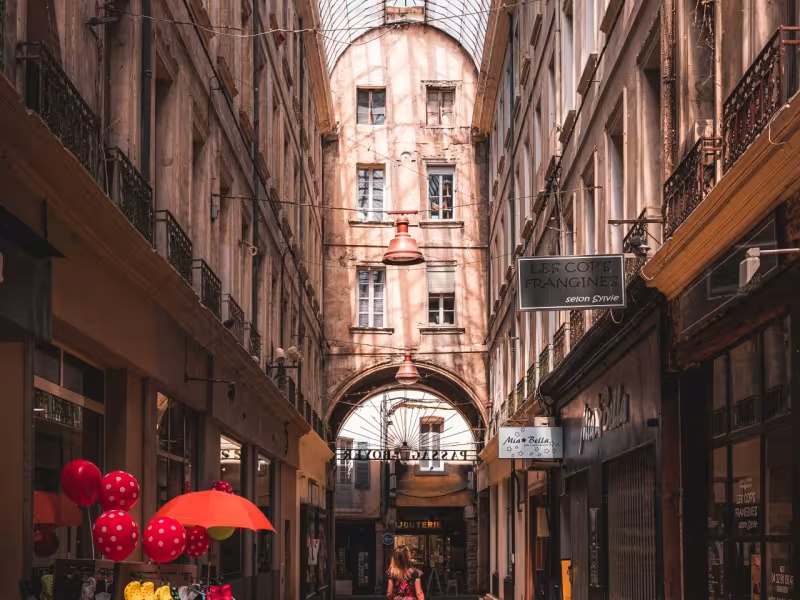
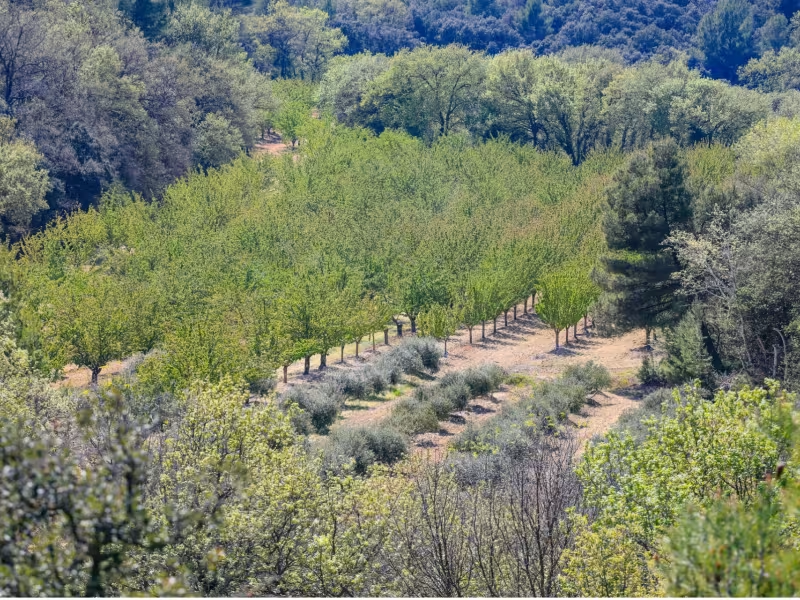
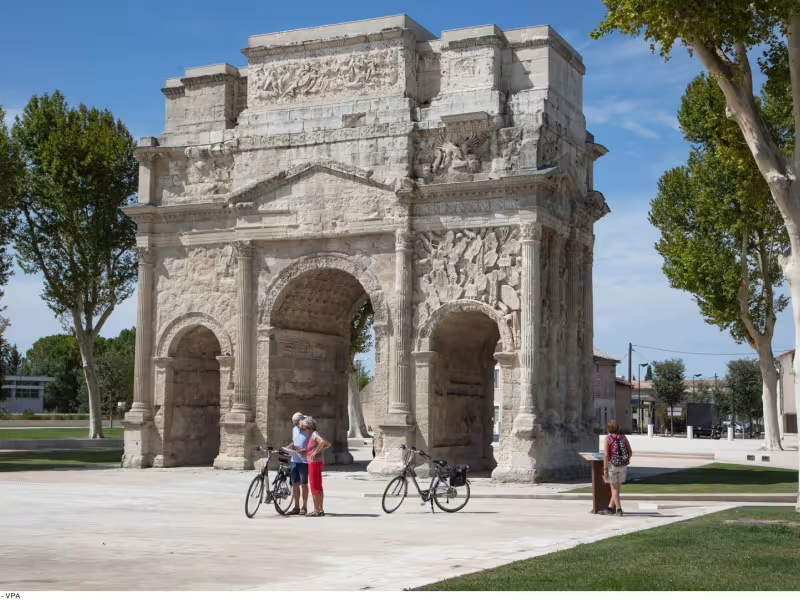
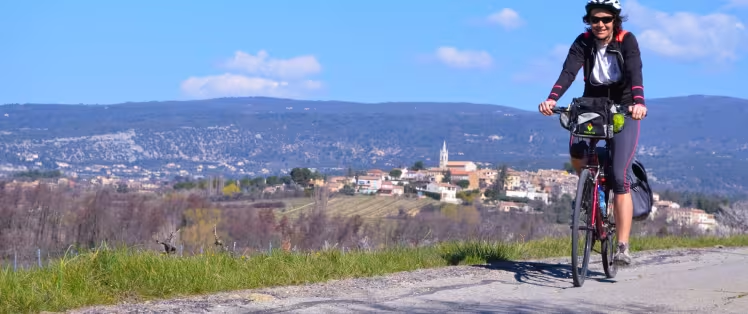
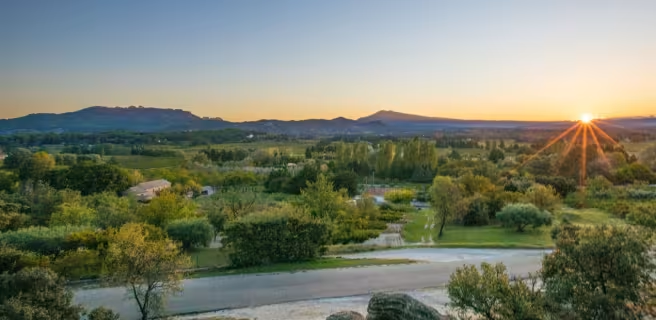
The Via Venaissia is a delightful cycle route, set up by the département (French county) of Vaucluse in northwest Provence. This route creates a splendid link between the ViaRhôna (from either Piolenc or Caderousse) and Méditerranée à Vélo (at Robion), two much longer cycle routes. Taking you meandering through vineyards and orchards, the Via Venaissia also leads you on a journey through the history of Vaucluse. This cycle route’s name derives more specifically from an historic papal territory, or county it crosses – the Comtat Venaissin. Covering a total of 63km (including the provisional link from L’Isle-sur-la-Sorgue to Robion), it guides you via Orange, a town with extraordinary Roman vestiges, Carpentras, an historic town located at the foot of the mighty Mont Ventoux, and L’Isle-sur-la-Sorgue, a provençal Little Venice renowned for its antiques shops, before taking you on to the foothills of the Luberon Range. You cross traditional provençal villages too. As you ride along, enjoy tremendous views over the local vineyards, the dramatic jagged peaks of the Dentelles de Montmirail (a small range), and the great mountain of northwest Provence, the Mont Ventoux. At many a stop, savour local specialities linked to local history, with the likes of fine Côtes du Rhône wines, garlic, strawberries, figs and olive oil to try. Connected to the Rhône, the Via Venaissia can offer a fine cycling adventure to join the Méditerranée à Vélo cycle route. Or, otherwise, there’s a 120km-long cycling circuit you can take going via Orange – L’Isle-sur-la-Sorgue – Robion – Cavaillon – Beaucaire – Avignon – Orange. Welcome to an intense cycling tour around northwest Provence!
Signposting of the route
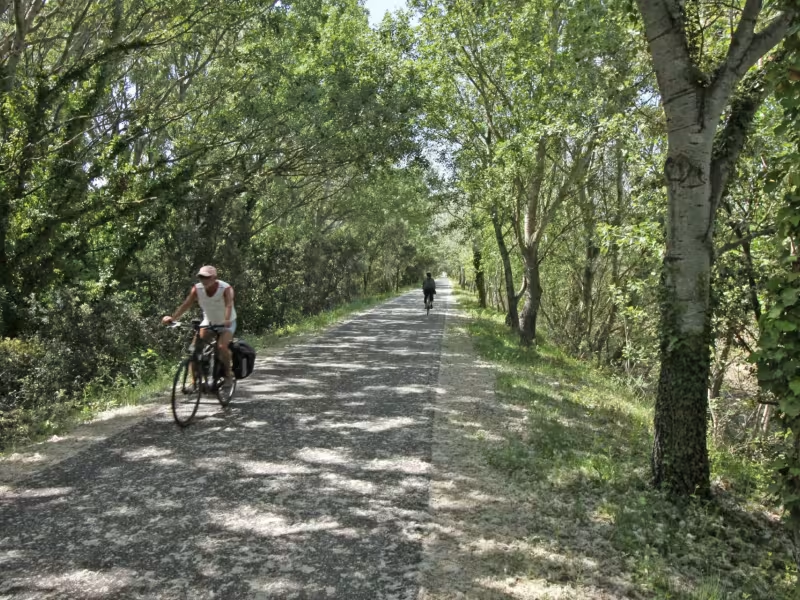
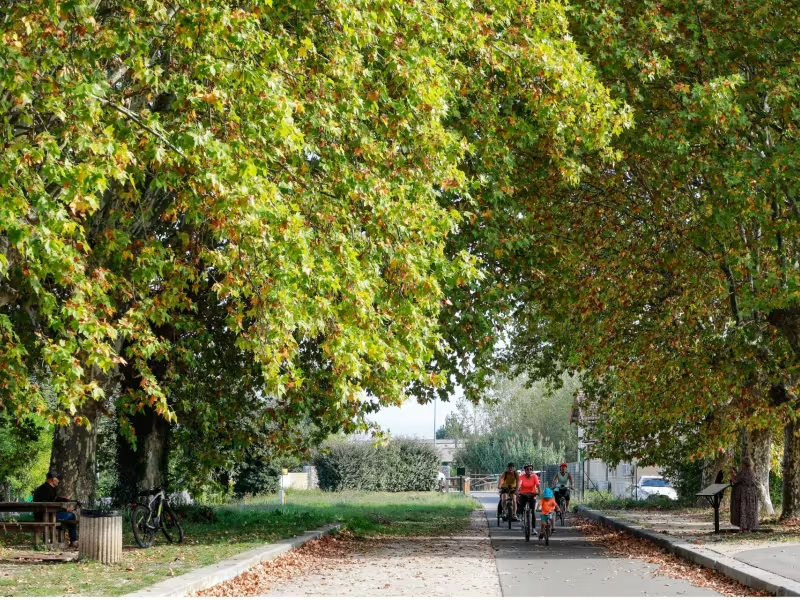
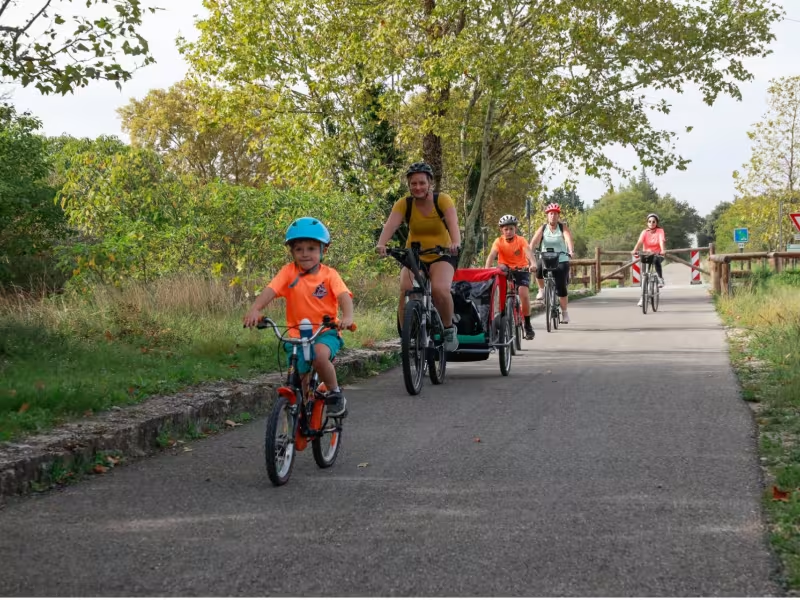
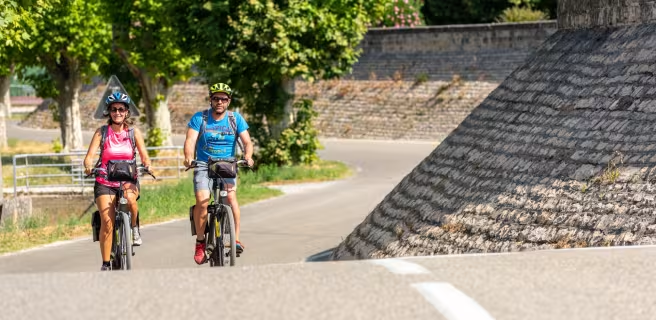
The route is signposted throughout. It is mainly a cycle path between the south of Orange and Carpentras, and then between the south of Carpentras and Velleron. The sections through Orange, Carpentras and L’Isle-sur-la-Sorgue are shared-use paths. The route is entirely on tarmac. The Via Venaissia is flat.
The final stage between L'Isle-sur-la-Sorgue and Robion is currently under development.
Gradients and elevation
Road types
Surface
Trains and transport on the route
There are TER stations in Orange, Carpentras and L'Isle-sur-la-Sorgue, all three equipped with cycle parking. There are no connections between these stations; all lines converge on Avignon. The journey to and from the City of the Popes takes approximately 20 minutes.
Access by train:
- Nearest station to the start (Caderousse): Orange station
- From the finish (Robion): Cavaillon station
View infrastructure on the map
Reviews for Via Venaissia
"Accueil Vélo" accommodation on Via Venaissia
87 Accueil Vélo accommodations await you on Via Venaissia!
View accommodations on the map
See also

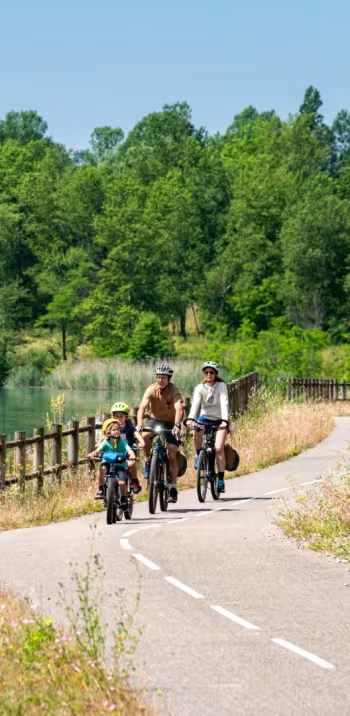
ViaRhôna


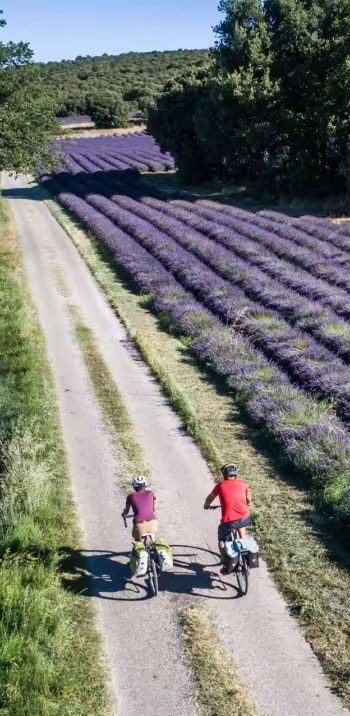
Around the Luberon by bike

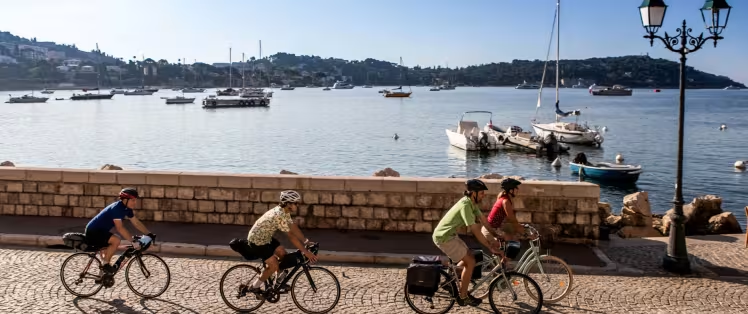
Mediterranean Cycle Route
Séjours clés en main
Partez l'esprit léger sur ce parcours avec les séjours organisés de nos agences partenaires.


The 4 stages of Via Venaissia
1 Caderousse / Orange
2 Orange / Carpentras
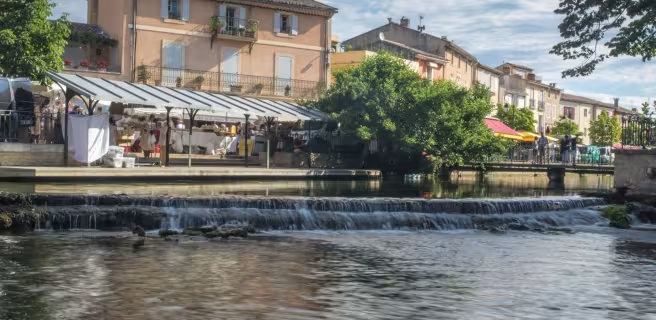
3 Carpentras / L'Isle-sur-la-Sorgue
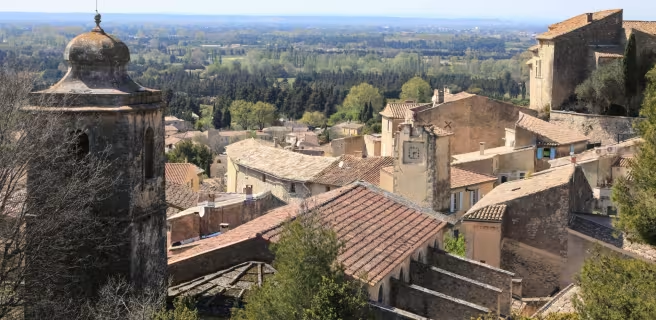
4 L'Isle-sur-la-Sorgue / Robion
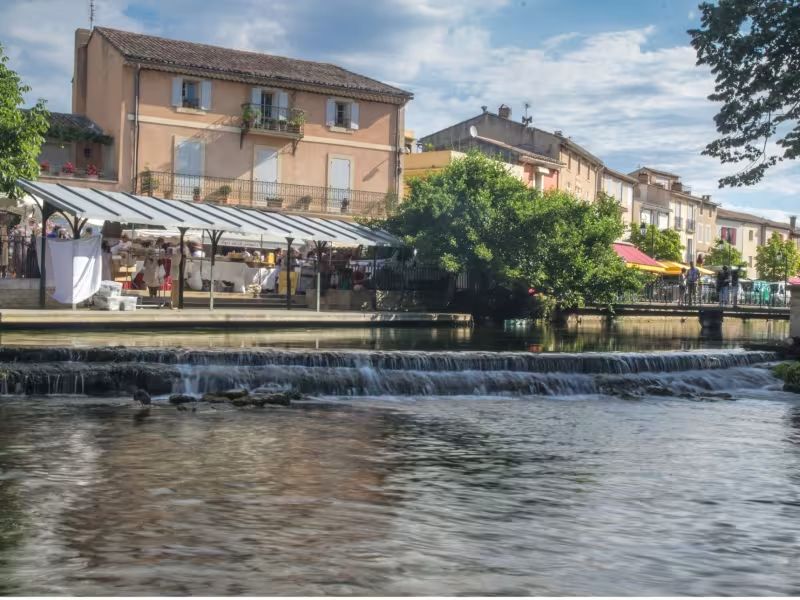
L'Isle-sur-la-Sorgue is a place you won’t be able to resist stopping at. A year-round magnet for antiques collectors, its weekly Sunday market offers a wonderful display of provençal colours, scents and tastes. This enchanting place hones all the senses! From town, a link via road shared with motorized traffic enables you to join up with the Méditerranée à Vélo cycle route at the level of Robion, a key junction for cyclists crossing the Luberon region. From there, you have the option of riding on all the way to Menton (a Mediterranean resort on the French-Italian border), or then continuing on a Provence-based cycling circuit, going via Cavaillon, the foot of the steep little Alpilles Range, Beaucaire and Avignon, making use of the ViaRhôna cycle route. Along the way, there’s an additional detour you can make to Lagnes, a pretty medieval village on the slopes of the Monts de Vaucluse, the little range located between Luberon and Mont Ventoux. Lagnes offers a main entry point to the extraordinary Mur de la Peste (Plague Wall), a 27km-long rampart built along the Monts de Vaucluse in a vain attempt to protect the Comtat Venaissin region from a terrible outbreak of the plague in the 18th century, this Grande Peste (Great Plague) estimated, roughly, to have killed one in four people across Provence. This epidemic was evoked by famed regional writer Marcel Pagnol (he of the renowned provençal novels Jean de Florette and Manon des Sources, turned into famous films) in an unfinished work, Les Pestiférés (The Plague-stricken).