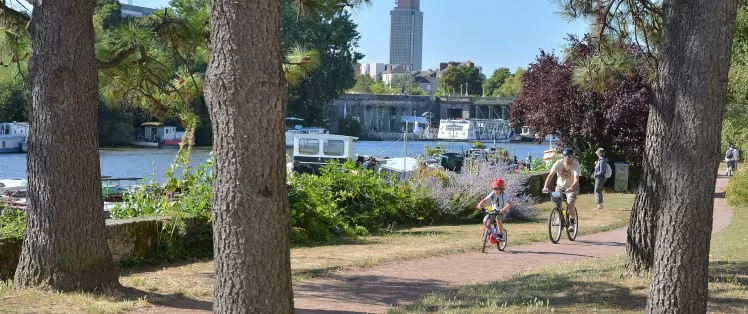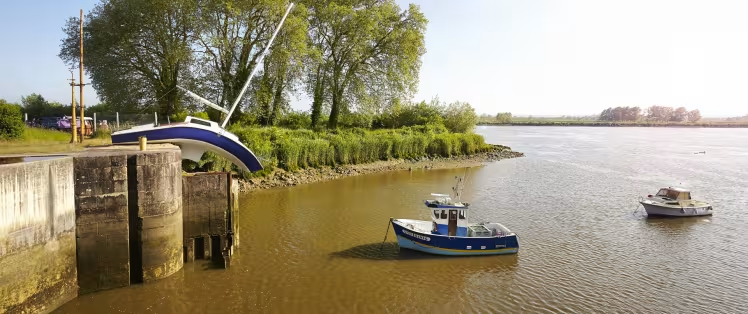

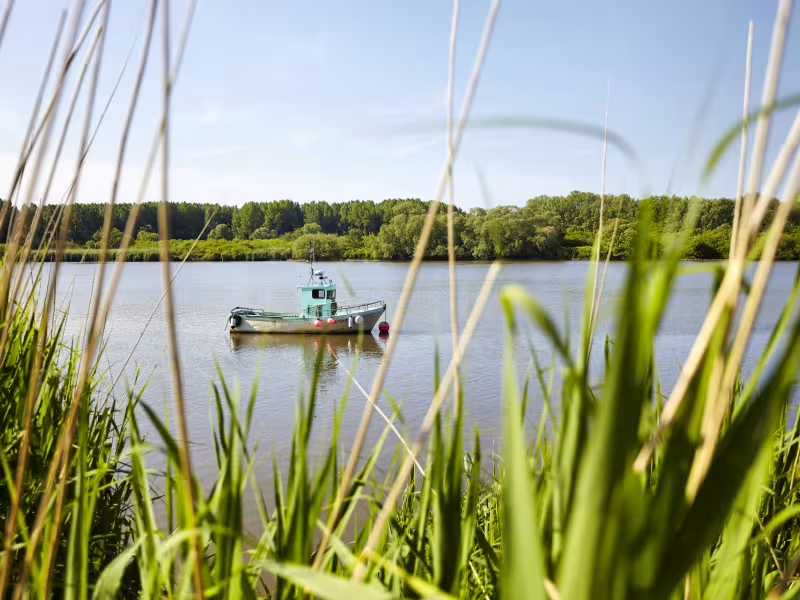
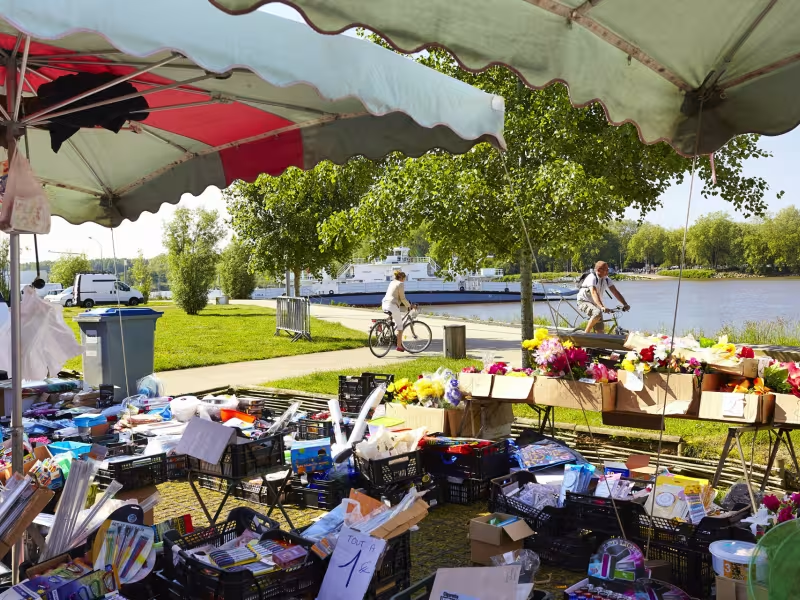

An exhibition of contemporary art is displayed all the way down the estuary on this shared stage of La Vélodyssée and La Loire à Vélo. Some surprising changes of scenery are guaranteed to brighten up your departure from the bustling city of Nantes.
Gradients and elevation
Slope breakdown
Road types
- Cycle path
- Routes reserved for cyclists and pedestrians (greenways, cycle tracks, towpaths), separated from cars for maximum safety.
- Shared road
- Quiet minor roads with little traffic (unless otherwise stated in the stage details). Shared with cars (stay alert).
- Not specified
- Data unavailable or being assessed. Please refer to the detailed stage description.
- Provisional
- Section on a road or cycle path awaiting better-quality facilities (see stage details).
Surface
- Smooth
- Asphalt, tarmac or smooth concrete. Optimal comfort.
- Rough
- Fine gravel, compacted stabilised surface or worn tarmac. Less comfortable, vibrations possible.
- Natural
- Dirt, grass, roots or stones. Under 5%: short sections with little impact. Higher percentage: route suited to mountain or gravel bikes only.
- Not specified
- Data unavailable or being assessed. Please refer to the detailed stage description.
Itinerary
Nantes is transforming itself, building 3 new mass transit lines and a new bridge, to be delivered by the end of 2027.
During the works, La Vélodyssée will continue to run along Quai de la Fosse, but the cycle path will be adapted to the site environment.
On the right-hand bank of the Loire, the cycle routes are currently uneven: cycle strips and lanes. Traffic is particularly heavy here, so caution.
Alternative and connections
A route south of the Loire is currently under development - from Île de Nantes > Trentemoult > Bouguenais > La Montagne > St-Jean-de-Boiseau > Le Pellerin. This will, in particular, allow the discovery of another part of the perennial works displayed on the Estuary as well as a more natural Loire.
Connections on the route towards stations.
Trains and transport on the route
Reviews for Nantes / Le Pellerin
Find your accommodation on this stage







Découvrez également