

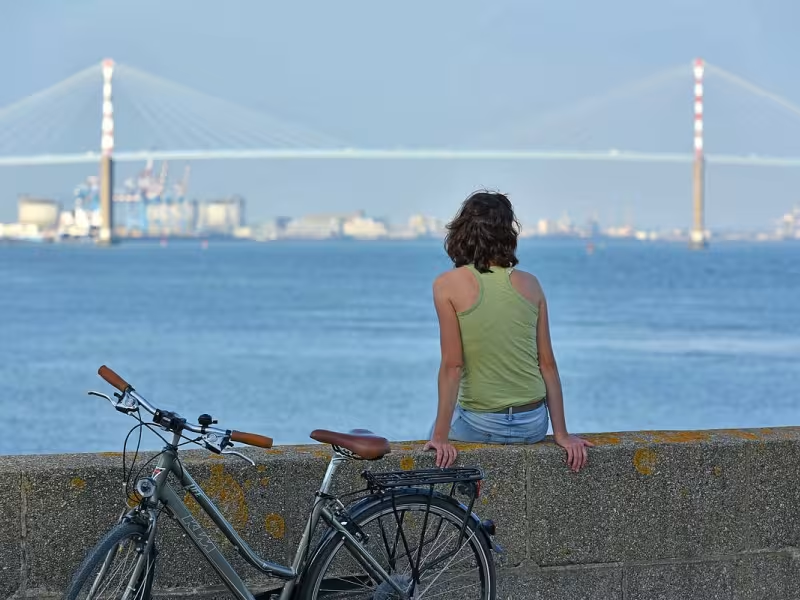
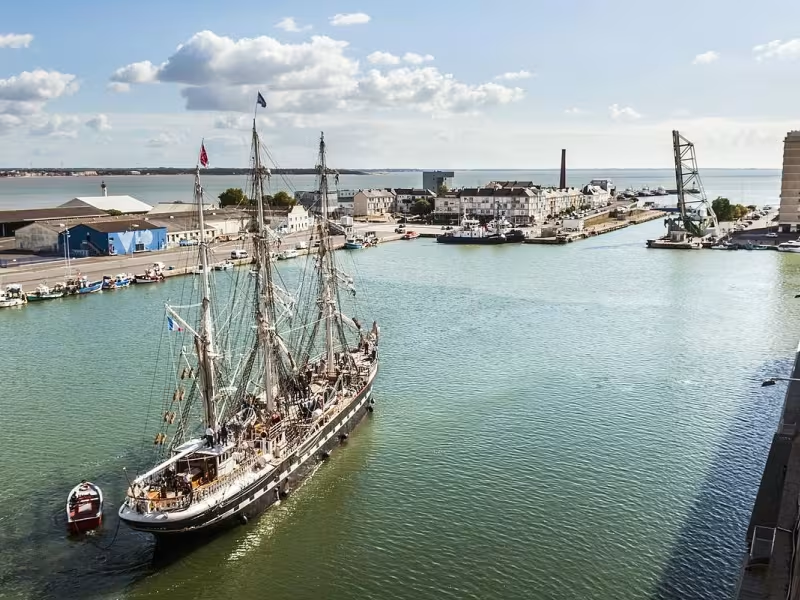
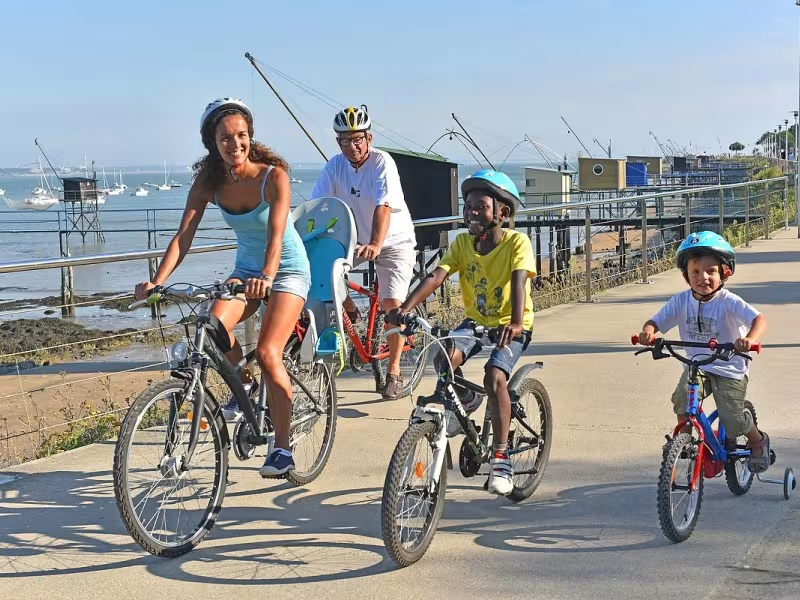
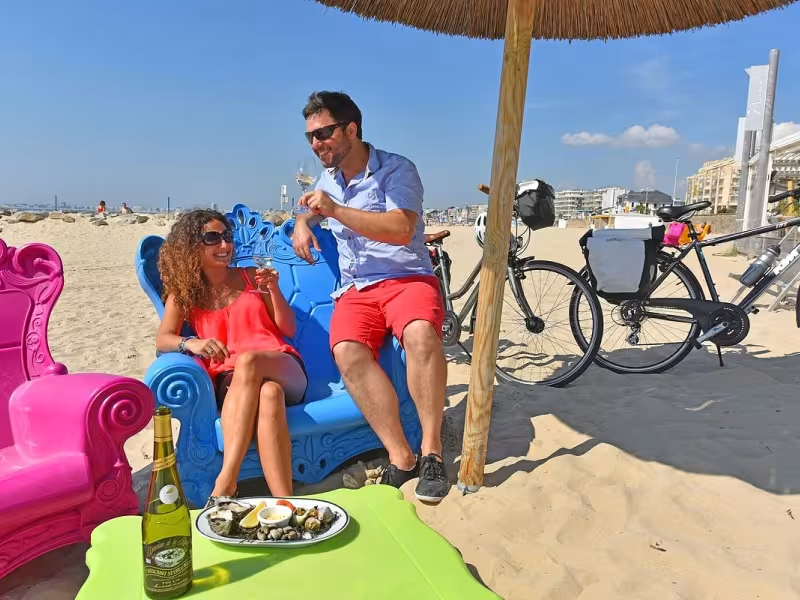
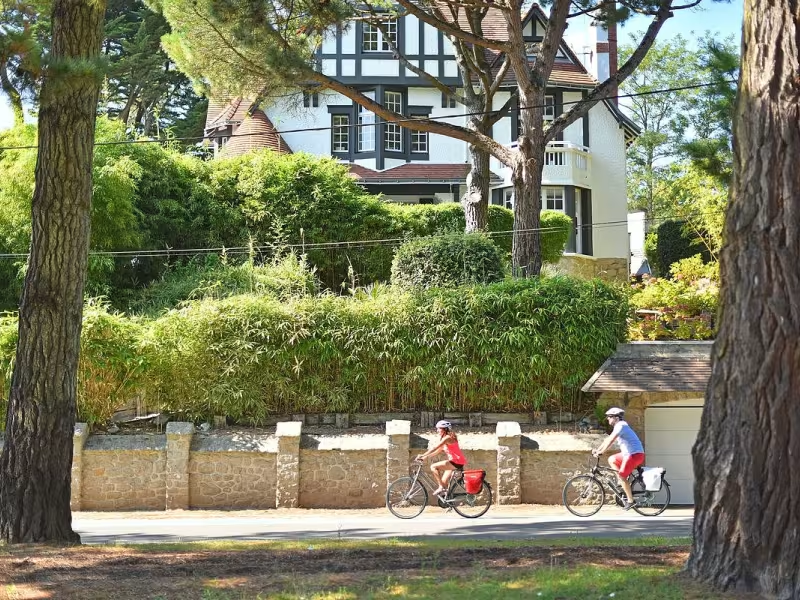
This stage offers a touch of old-fashioned charm. It also passes by Dissignac’s Neolithic mound before Le Bois Joalland Lake, appreciated by locals for its sports facilities. Before the lake, the way passes through woods and countryside; after it, it becomes more urban. Arriving at the port of St-Nazaire, wide boulevards follow the seafront, and the American First World War monument greets you with open arms.
Cycle route
Follow signs for Vélocéan. The way is along a mix of tracks and roads with only light traffic.
There’s a short stretch along a 10% gradient just before Pont Saillant.
Note that the end of the stage, going through the port areas of St-Nazaire, is not laid out yet.
It’s possible to join both the Loire à Vélo and Velodyssey cycle routes by taking a bus, Lila 17, taking you across the huge, magnificent Loire estuary bridge at Saint-Nazaire.
Gradients and elevation
Slope breakdown
Road types
- Cycle path
- Routes reserved for cyclists and pedestrians (greenways, cycle tracks, towpaths), separated from cars for maximum safety.
- Shared road
- Quiet minor roads with little traffic (unless otherwise stated in the stage details). Shared with cars (stay alert).
- Not specified
- Data unavailable or being assessed. Please refer to the detailed stage description.
- Provisional
- Section on a road or cycle path awaiting better-quality facilities (see stage details).
Surface
- Smooth
- Asphalt, tarmac or smooth concrete. Optimal comfort.
- Rough
- Fine gravel, compacted stabilised surface or worn tarmac. Less comfortable, vibrations possible.
- Natural
- Dirt, grass, roots or stones. Under 5%: short sections with little impact. Higher percentage: route suited to mountain or gravel bikes only.
- Not specified
- Data unavailable or being assessed. Please refer to the detailed stage description.
Don’t miss
Dissignac Neolithic tumulus; Le Bois Joalland Lake and landscaped park; St-Nazaire seafront, including the American monument (recalling the US soldiers who landed here to go to the Western Front at the end of the First World War); Escal’Atlantic, a stylish museum, set in Nazi submarine pens, but dedicated to St-Nazaire’s cruise-liner building; the startling contemporary art installations of the permanent exhibition, Estuaire, along the Loire Estuary.