
Kembs / Neuf-Brisach

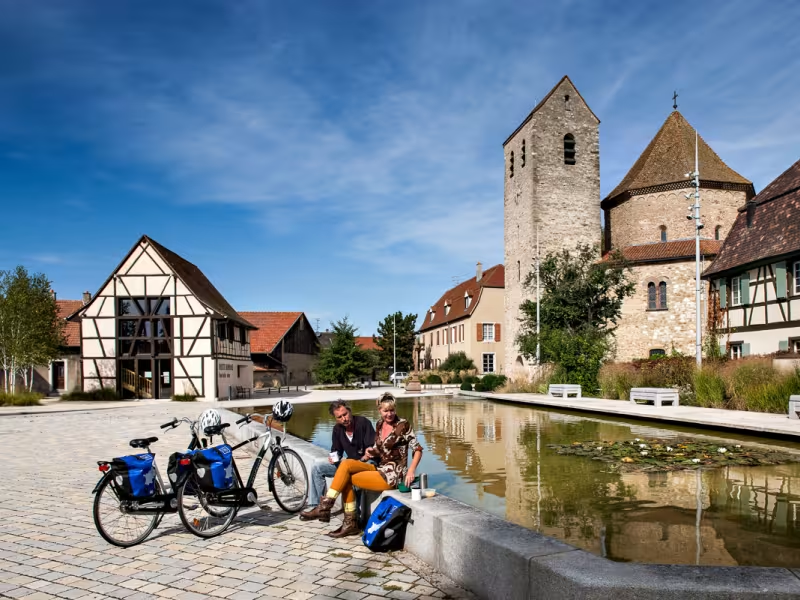
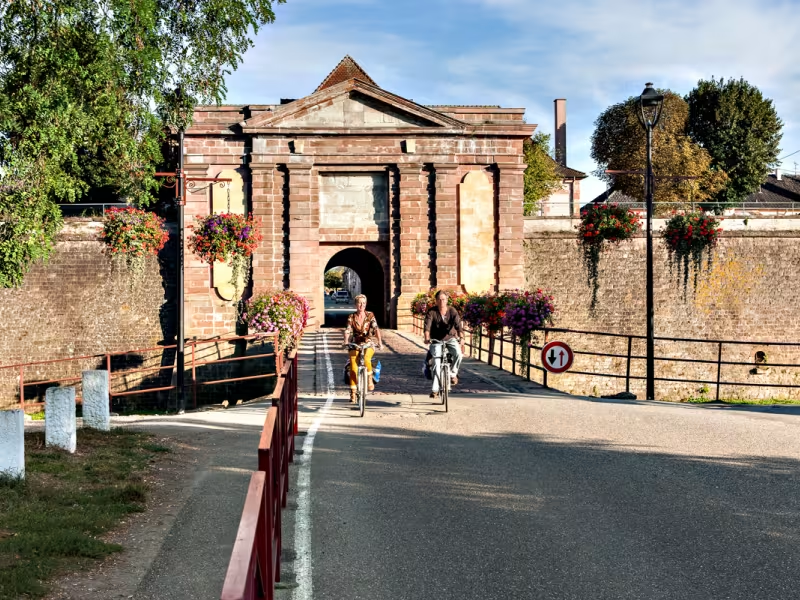
EuroVelo 15 continues through Ottmarsheim. This village’s rare octagonal Romanesque church is one of the most famous in the Upper Rhine. Further on, at Fessenheim, a museum focuses on the work of Victor Schoelcher; his family was from these parts and he was central in having slavery abolished across French territories in 1848. The last stop on the stage, Neuf-Brisach was the last fortified town designed by Louis XIV’s great military architect, Vauban. Now a UNESCO World Heritage Site, its octagonal form presents the most accomplished example of Ancien Régime defence.
Cycle route
From Niffer, signposts indicate the EuroVelo 15 cycle route all the way along.
Initially, on the 3km of canal-side path up to Niffer Lock, this stage is free of motorized traffic. Then the way alternates between quiet roads with little motorized traffic and greenways going along a former railway line up to Neuf-Brisach. At various points, linking cycling trails lead across the border into Germany. There are also options for reaching the French city of Mulhouse.
Gradients and elevation
Road types
Surface
Tourist information
Office du tourisme du Pays de Brisach, +33 (0)3 89 72 56 66
Don’t miss
- Niffer: Le Corbusier's lock,
- Ottmarsheim: 11th century Romanesque church
- Chalampé: the Rhine island (fauna and flora)
- Bantzenheim: the barn
- Blodelsheim: half-timbered houses
- Fessenheim: Victor Schoelcher museum area, locks
- Vogelgrun: St-Alphonse brewery, Rhine Island (fauna and flora), locks, fish pass, nautical base
- Neuf-Brisach: stronghold, Vauban citadel (UNESCO world heritage site), Vauban historical museum and the MAUSA urban art and street-art museum in the citadel's galleries
- Hardt forest: cycling routes
Specialist bicycle services
Bike hire, including of electric bikes, available from Neuf-Brisach