5 stages · 93 km

Gradients and elevation

Ascents: 876m
Descents: 1104m
Lowest point: 326m
Highest point: 1029m

Road types

25km (27%) By road
67km (71%) Cycle path
2km (3%) Unknown
6km (8%) Provisional itinerary

Surface

26km (116%) Smooth
12km (52%) Unknown
7km (31%) Rough

5 stages used

Lavoûte-sur-Loire / Yssingeaux

1 Lavoûte-sur-Loire / Yssingeaux

23 km
1 h 30 min
I cycle often
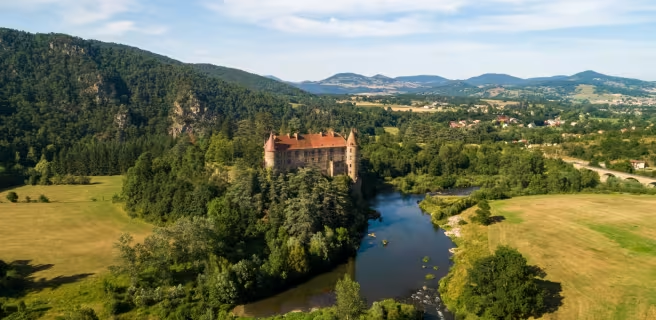
Start your Via Fluvia adventure in the Auvergne’s Velay area, marked by old volcanoes and gorges, the powerful young Loire cutting its way through these lands. Enjoy a last look at what the French call Europe’s last great wild river and the Château de Lavoûte-Polignac. The way rises gently up from the Loire, going along stretches of quiet roads and greenways, through scenery that wouldn’t look amiss in a Western. At Rosières, the Corboeuf Ravines, with steep colourful sides, look like a little slice of Colorado. Racing along on your loyal ‘steed’, imagine chasing an ‘iron horse’ above the Suissesse Gorges! Reaching the end of this melodramatic stage, you zigzag around the great Sucs du Velay; these ancient, rounded volcanoes will be practically the sole witnesses of your progress through these magical parts.
Yssingeaux / Raucoules

2 Yssingeaux / Raucoules

21 km
1 h 22 min
I begin
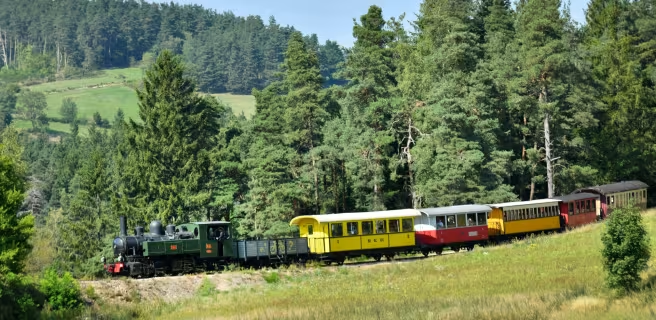
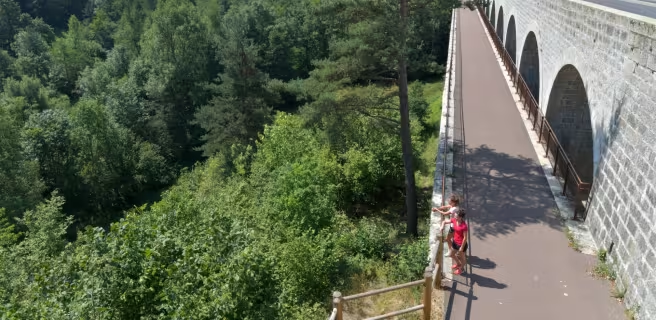
The green ribbon of the Via Fluvia continues to unfold along the old railway line here, converted for the enjoyment of both cyclists and hikers. From Yssingeaux to Raucoules, the route crosses open countryside, still marked by the rounded shapes of the area’s sucs, ancient dormant volcanoes. Along the way, take the time to wander around the charming village of Grazac, home to a magnificent Cluniac priory. Reaching Lapte, leave your bike on the square in front of the church to climb to the top of the belfry. Enjoy the beautiful 360° views over the Velay Mountains, then get back on the greenway to reach Oumey Station, starting point for the Velay Express, the last working train service in the area.
Raucoules / Riotord

3 Raucoules / Riotord

15 km
1 h 01 min
I begin
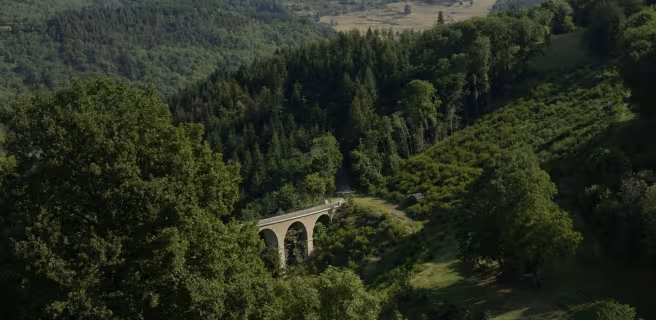
This Via Fluvia stage brings to mind the great railway age of the past. Riding through the heart of the countryside, you follow in the tracks of an astonishing railway heritage, with its former stations, its viaducts, aqueducts and tunnels. The last original working station is the Gare d’Oumey, starting point for the steam train, the Velay Express. Even if you don’t embark on a journey on this locomotive, enjoy watching it set out, the curls of smoke rising from it as it gathers speed. The train’s whistles still ringing in your head, cycle on to Riotord, following Les Dunières Gorges in a calm, relaxing atmosphere.
Riotord / Bourg-Argental

4 Riotord / Bourg-Argental

21 km
1 h 20 min
I cycle often
The Via Fluvia follows a provisional route along this stage, going via quiet roads, while awaiting the transformation of the former railway line and Le Tracol Tunnel. This stretch is steep, going up and down a lot, and marked by high-altitude landscapes. Cross via the Col du Tracol, a pass at 1,023m, to reach the Parc Naturel Régional du Pilat. Here, nature is king, dense forests alternating with green meadows filled with flowers in spring, and, in summer, with cows. The town of Bourg-Argental, with its hotels and restaurants, makes an ideal stop at which to recharge your batteries.
Bourg-Argental / Annonay

5 Bourg-Argental / Annonay

14 km
1 h 27 min
I cycle often
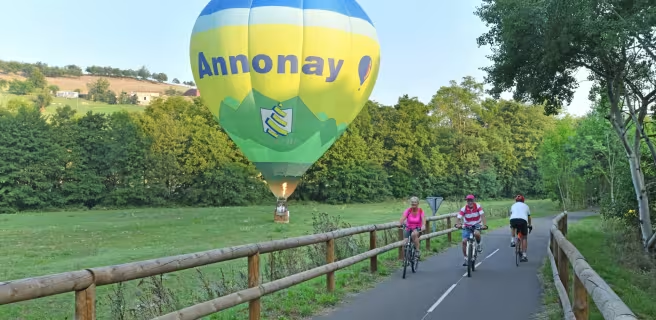
The Via Fluvia cycle route leaves the Monts du Pilat to enter the county of Ardèche. A provisional route takes you along quiet roads to Saint-Marcel-lès-Annonay, via Saint-Julien-Molin-Molette, while awaiting the transformation of the former railway line on the border of the county of La Loire. Riding on beside the Deûme River, a lovely greenway leads gently to the town of Annonay. This area saw the birth of many revolutionary inventions in the 18th and 19th centuries – hot-air balloons, tubular boilers (precursors of locomotives) and suspension bridges – still in use today. At Davézieux, visit the Musée des Papeteries Canson et Montgolfier, set in the birthplace of the Montgolfier brothers, who invented hot-air balloons, hence why these early flying machines are known as montgolfières in French.
Afficher les étapes