22 stages · 595 km

Gradients and elevation

Ascents: 2573m
Descents: 2602m
Lowest point: 0m
Highest point: 125m

Road types

467km (78%) By road
128km (21%) Cycle path
11km (3%) Provisional itinerary

Surface

64km (197%) Smooth
1km (3%) Rough

22 stages used

Roscoff / Plouescat

1 Roscoff / Plouescat

32 km
2 h 56 min
I cycle often
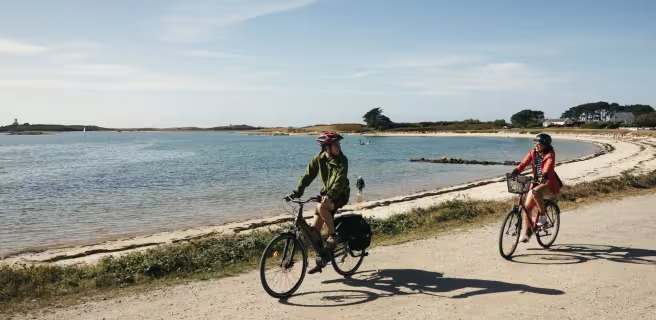
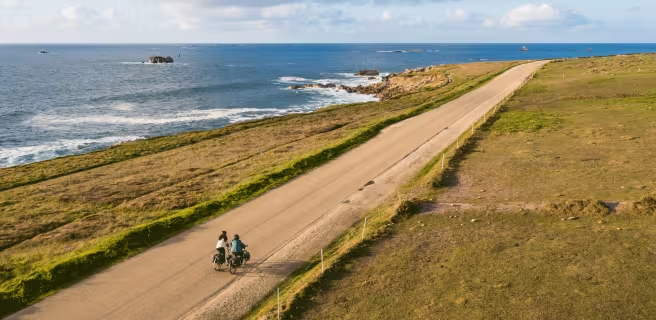
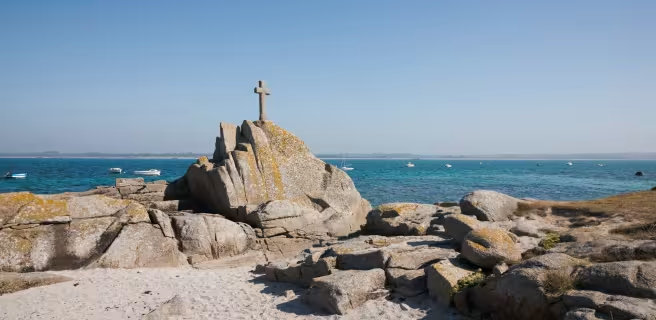
Starting from the port of Roscoff, in the département (French county) of Finistère in northwest Brittany, enjoy the coast to the full riding off westwards towards Plouescat. On this stage, breathe in the invigorating sea air; you’ll feel almost like you’re heading out onto the open seas! Our cycle route, La Littorale, reveals a whole wonderful range of viewpoints and shifting colours, with a mix of creeks, coves, scattered granite boulders, neatly tended fields and stone-built villages… In short, relish the traditional sides to Brittany from the start of this cycle route!
Plouescat / Brignogan-Plages

2 Plouescat / Brignogan-Plages

22 km
1 h 55 min
I cycle often
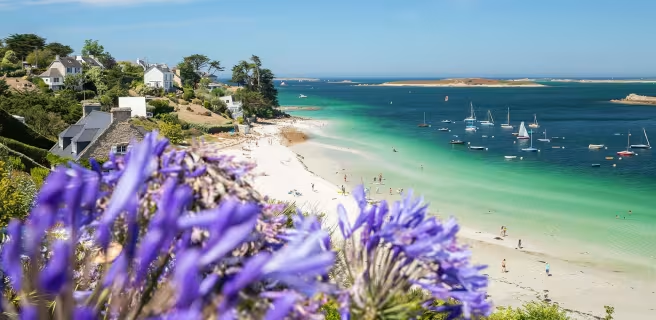
You enter a coastal area known as the Côte des Légendes as you cycle west from Plouescat and its fine sandy beaches. The imposing spire rising from Goulven Church seems to stand guard between you and the sea as you cycle by. It reaches 58m in height, dominating the Bay of Goulven, a protected natural area and a paradise for migrating birds. Riding along, the seascapes change by the minute as the tide goes in and out. Admire the views from Beg ar Groas Headland onto a remarkably preserved bay before reaching the charming resort of Brignogan.
Brignogan-Plages / Plouguerneau

3 Brignogan-Plages / Plouguerneau

42 km
4 h 02 min
I cycle often
La Littorale cycle route leads you on by bike along the Route des Phares, dotted with impressive lighthouses. The first you spot is that of Pontusval, said to be the most photographed lighthouse in France. Cycle on towards l’Île Vierge, an island boasting the tallest lighthouse in Europe. On this stretch of northern Finistère coast you in fact come to the most intense concentration of lighthouses in the world. They bear witness to the strong sea-faring history and traditions of these parts. On a different scale, the little thatched cottages in the village of Meneham hide among enormous natural blocks of granite; this enchanting place retains an air of mystery.
Plouguerneau / Landéda

4 Plouguerneau / Landéda

10 km
40 min
I cycle often
Heading west to Landéda, La Littorale cycle route leads you around the Aber Wrac’h, the biggest and most maritime of the abers (a Breton word for a deep estuary) along the north Finistère coast. The Beg-an-Toull Belvedere provides unbeatable views on this most magnificent of Breton abers. Should you wish to reduce substantially the distance to ride right around this aber, in July and August, there’s the option to take the little ferry (bac in French) linking the port of Aber Wrac’h to Perros (the name for this little port sometimes spelt Perroz). Do take in the view across the mouth of the Aber Wrac’h from the Sémaphore (an old coastal signal station turned local cultural centre), standing out in an exceptional spot, close to the well-named Notre-Dame des Anges Abbey ruins.
Landéda / Saint-Pabu

5 Landéda / Saint-Pabu

31 km
2 h 03 min
I cycle often
Once past l’Aber Wrac’h, La Littorale cycle route guides you on to explore the Aber Benoît, a deep sea inlet with richly varied landscapes. You cross this aber via the Pont de Tréglonou bridge, nestling at the back of the estuary, the looks of whose banks change greatly with the tides. Look out for bird species that thrive in this environment on the divide between fresh and salt waters, such as shelducks, egrets and wild swans. To learn more about the special natural features of the north Finistère abers, dismount to visit the Centre d’interprétation de la Maison des Abers, covering the topic in detail.
Saint-Pabu / Lanildut

6 Saint-Pabu / Lanildut

27 km
1 h 46 min
I cycle often
La Littorale cycle route now offers you a sobering history lesson connected to these rocky maritime parts, as you ride towards Lanildut via Portsall (in the municapility of Ploudalmézeau); here, dismount to visit the museum spaces of Ancre an eor - Dans le sillage de l’Amoco Cadiz, recalling the environmental catastrophe caused by the sinking of an oil tanker in these parts in 1978. As to the splendid Route Touristique de Landunvez, it has wonderful views down on the sea, giving cyclists the impression that they’re almost riding across the waves! The Presqu’île Saint-Laurent, a peninsula, provides one of the finest views across to an iconic lighthouse, the Phare du Four, out to sea. A last place to explore on this stage is the Maison de l’Algue, covering the topic of seaweed and its many uses in these parts, this visitor centre set beside the Aber Ildut, the smallest of the three main abers marking the north Finistère coastline.
Lanildut / Le Conquet

7 Lanildut / Le Conquet

20 km
1 h 51 min
I cycle often
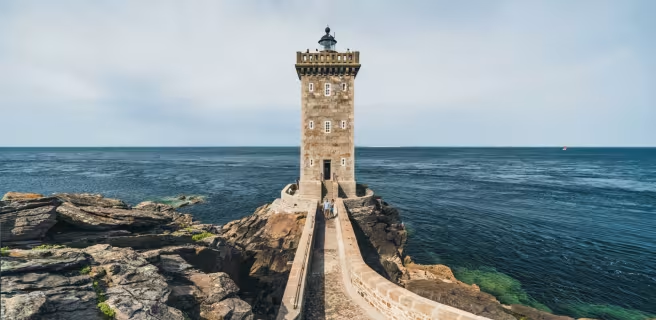
From May to October, there’s the possibility of crossing the Aber Ildut, with your bike on board an electric boat, or then make the most of the extra 14km, going all the way around the Aber, to explore the small-scale heritage beside the cycle route around Brélès (with its church and washhouses, or lavoirs). Next, you ride along close to the Pointe de Corsen, the most westerly headland on mainland France, and the theoretical dividing line between the Channel (la Manche in French) and the Atlantic Ocean. It’s really worth stopping at the Phare de Trézien, a lighthouse in the parish of Plouarzel, but this one built inland, some 500m from the coast. Continue on to the Phare de Kermorvan, the latter lighthouse standing out on the headland that bears the same name. Le Conquet, long renowned as a fishing port, operates ferries year-round to the islands of Molène and Ouessant (Ushant in English), which also feature further iconic lighthouses. Trips out to these splendid islands offer further potential exciting adventures just off La Littorale’s route.
Le Conquet / Brest

8 Le Conquet / Brest

33 km
3 h 15 min
I cycle often
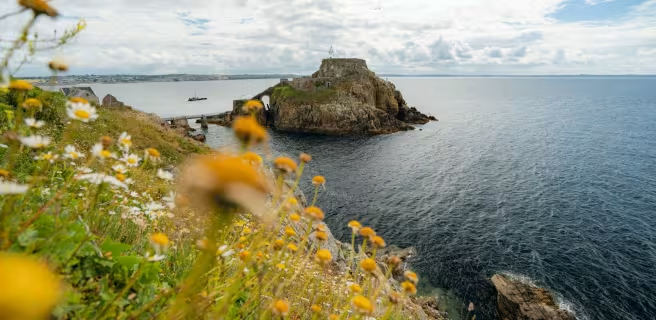
You ride along the coast towards Brest via the Pointe de Saint-Mathieu (in the parish of Plougonvelin), a headland famed both for the ruins of a medieval abbey and for a lighthouse. The views from the top of the latter, taking in the reefs of Les Vieux Moines and the Chaussée des Pierres Noires, are breathtaking. Next, you ride along the side of the Anse de Bertheaume, a bay overseen by a fort designed by Vauban, Louis XIV’s great engineer. There follow some tremendous, scenic views across the Rade de Brest, one of the largest enclosed bays in the world, covering 180km2. At the Rade’s goulet, or narrow entrance from the Atlantic, the Phare du Petit Minou is a lighthouse placed there to indicate to boats the channel they need to follow to enter into the Rade de Brest, by lining it up with the Phare du Portzic, another lighthouse, which you ride close to in order to reach Brest, a sprawling city that very much lives from its strong connections with the sea.
Brest / Daoulas

9 Brest / Daoulas

28 km
1 h 51 min
I cycle often
An unmissable, unavoidable major crossing point along La Littorale cycle route is the massive Pont Albert-Louppe, the bridge spanning the place where the Elorn River flows into the Rade de Brest’s huge enclosed bay, with the Plougastel Peninsula on the other, southern side. The Plougastel area is renowned for its strawberry production. To understand the local heritage, stop at the Musée de la Fraise et du Patrimoine. Continue on to the historic town of Daoulas, still marked by the maritime influence of the Rade de Brest. It makes a fine stop, with its remarkable abbey now home to a cultural centre that stages major exhibitions, plus it features gardens with plants and trees from around the world that boast medicinal properties.
Plogoff / Audierne

13 Plogoff / Audierne

21 km
1 h 24 min
I cycle often
This stage of the coastal cycle route takes you to the end of the world, to the heart of a grandiose landscape and wilderness. Leave the Pointe du Raz Grand Site de France behind, and head for Audierne and its fishing and yachting harbour. Along the way, take a look at the sheltered harbours, notably Bestrée, built by men to protect their boats from the onslaught of the sea. Heritage lovers won't want to miss the chapel of Saint-Tugen, passing through the village of Primelin, a fine example of Breton Renaissance architecture. Before reaching the center of Audierne, the cycle route skirts the sheltered and safe beach of Sainte-Evette.
Audierne / Pouldreuzic (Penhors)

14 Audierne / Pouldreuzic (Penhors)

18 km
1 h 10 min
I cycle often
Wild nature and breathtaking scenery are the order of the day on this stage of the coastal cycle route. From Audierne, in the Goyen estuary, the cycle route moves slightly away from the coast for the first few kilometers, before approaching it again in the commune of Plouhinec, where it skirts the prehistoric site of Menez Drégan, an ancient collapsed sea cave. You pass the cove of Pors Poulhan, which marks the end of Cap Sizun and the beginning of Pays Bigouden. The stage ends at the large beach of Penhors, popular with surfers.
Pouldreuzic (Penhors) / Penmarc'h

15 Pouldreuzic (Penhors) / Penmarc'h

30 km
1 h 52 min
I cycle often
Peace and nature as far as the eye can see are guaranteed on this leg of the coastal cycle route. The route bypasses the Biological Reserve of the Trunvel-Tréogat pond, a migratory bird ringing station unique in France. After a few kilometers, the journey takes a more maritime turn. Admire the chapel of Tronoën before arriving near the famous Pointe de La Torche. It's well worth the detour and its quota of sea spray! We then arrive at the port of Saint-Guénolé, specialized in sardine fishing. A few pedal strokes later and you're in Penmarc'h. The 60-metre-high Eckmühl lighthouse offers a breathtaking view.
Penmarc’h / Pont-L'Abbé

16 Penmarc’h / Pont-L'Abbé

33 km
1 h 20 min
I cycle often
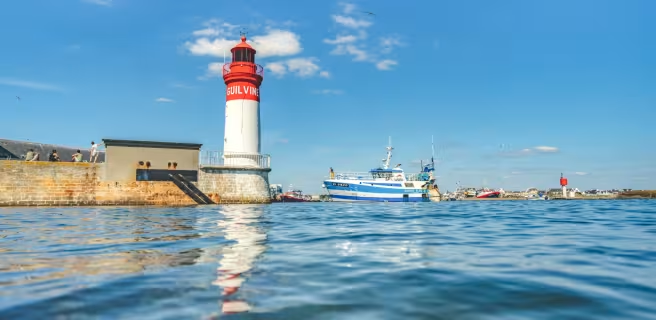
This stage of the coastal cycle route is unique in that it follows the coastline and passes through several fishing ports. The first of these, Le Guilvinec, comes alive in the late afternoon, when the boats arrive. The panoramic terrace of the Haliotika discovery center is a good place to observe this impressive activity. Further on, the cycle route passes through the port of Lesconil, then Loctudy, where the "demoiselle de Loctudy" is fished. You then arrive in Pont-l'Abbé, capital of the Pays Bigouden. Its castle houses the town hall and a museum presenting traditional local society. The town is particularly lively on Thursday, market day.
The gulf of Morbihan by bike

17 The gulf of Morbihan by bike

20 km
3 h 00 min
I cycle often
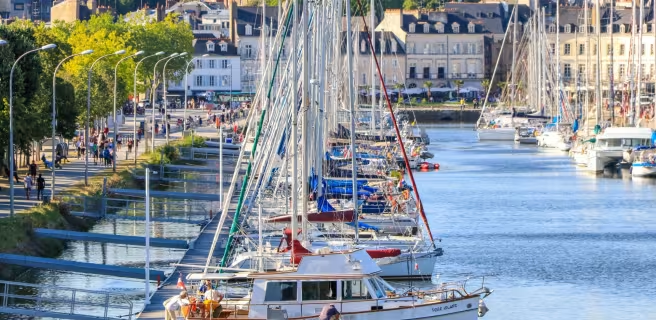
Heading out from the town of Vannes, east round to Port-Navalo, make the most of the exceptional protected maritime atmosphere of the Gulf du Morbihan. On the gulf’s south side, the Presqu’île de Rhuys is a wide peninsula crisscrossed by cycle paths, allowing you to admire the many creeks and islands of the gulf, a wildly indented, beautiful inland sea, its aspect changing greatly with the tides and the seasons.
Bénodet / Concarneau

18 Bénodet / Concarneau

39 km
1 h 25 min
I cycle often
While awaiting a fuller connection to other Breton routes, from Férel (west of La Roche-Bernard on the Vilaine River), a slightly hilly cycle route takes you along quiet roads and tracks to Pénestin at the Vilaine’s estuary. The Pointe du Scal Headland makes for a particularly special stop on this stage split between countryside, riverbanks and the ocean’s edge.
Concarneau / Pont-Aven

19 Concarneau / Pont-Aven

31 km
1 h 36 min
I cycle often
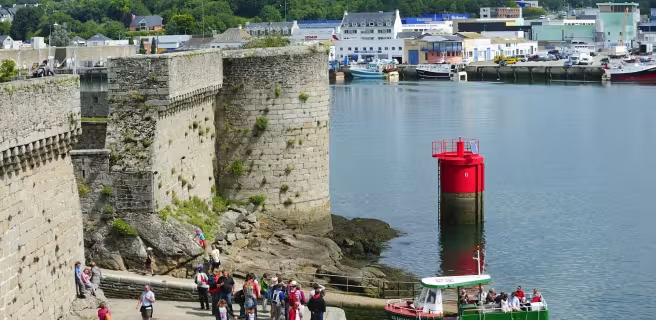
Before continuing your adventure, treat yourself to one last stroll through the famous Ville Close, surrounded by 15th-century ramparts and lively terraces. Take your bike aboard the ferry for a short 200-meter crossing to the Lanriec district. Your journey along the coastal cycle route continues to the Pointe de Trévignon, via Trégunc. This area, popular with nature lovers, is a bird paradise and the property of the Conservatoire du Littoral. Further on, the cycle route passes through the village of Névez - welcome to thatched cottage country! Following the river Aven, the last pedal strokes of this stage take you to Pont-Aven, made famous by the works of Gauguin. Here, art galleries abound, perpetuating the bohemian spirit of yesteryear.
Pont-Aven / Guidel-Plage

20 Pont-Aven / Guidel-Plage

26 km
2 h 12 min
I cycle often
Leaving Pont-Aven, the city of painters, you pedal towards Riec-Sur-Belon, the capital of the flat oyster. Welcome to the Pays de Quimperlé, with its unspoilt landscapes around the "rias", rivers invaded by the sea. The coastal cycle route then reaches Doëlan and its charming little port nestled in a deep, narrow ria. A former fishing and trading port, Doëlan is still home to a few fishing boats. The stage ends at Le Pouldu for a well-deserved break in this seaside resort with its three beaches. A great place to watch the tide turn against the Morbihan dunes.
Étel / Auray

24 Étel / Auray

29 km
1 h 57 min
I begin
At the beginning of this stage of La Littorale cycle route, do take the time to explore the nooks and crannies of the charming port of Étel. The old boat cemetery is particularly striking, reflecting the end of the times of fishing by sailing boat. Relive the days of Étel fishermen going out to catch tuna by visiting the Musée des Thoniers. Next, you cycle into the Parc Naturel Régional du Golfe du Morbihan. A stop at the enchanting port of Saint-Goustan is a must. Its very steep lanes are lined with half-timbered houses and you can cycle around its quays, admiring the extremely picturesque scenes, with plenty of café terraces at which to pause. Saint-Goustan forms part of the historic municipality of Auray, designated a Ville d’Art et d’Histoire for its rich heritage.
Auray / Vannes

25 Auray / Vannes

32 km
2 h 09 min
I cycle often
The best way of exploring the great enclosed bay of the Golfe du Morbihan (Little Sea in Breton) is by bike. You start by negotiating the enchanting waterside village of Le Bono, with its old suspension bridge and old oyster-farming areas. Close by, the neolithic burial mound, the Tumulus de Kernours, takes you back 5,000 years! Riding on in the direction of Vannes, stop at the Pointe d'Arradon, a headland boasting fabulous views of the little islands dotted around the Golfe du Morbihan, and with places at which to savour local oysters. You finish this stage by arriving at the Port de Vannes, just beyond the old city walls. It makes for a lovely ride, going from the marina into the historic town centre.
Vannes / Muzillac

27 Vannes / Muzillac

39 km
2 h 52 min
I cycle often
Leaving Vannes to head for the Presqu’île de Rhuys (a wide peninsula closing off the southeastern side of the massive enclosed bay of the Golfe du Morbihan), la Littorale cycle route guides you across the Marais de Lasné, marshlands that have been designated an ornithological reserve, a perfect place to stop and observe the local wildlife. After Rhuys, our cycle route leads you on via Saint-Armel, Surzur, Ambon and Muzillac. You ride along either quiet roads with little motorized traffic or then rural tracks providing views of the hedge-divided fields of the Bocage Morbihannais. Before reaching the Marais d'Ambon (further marshlands), the cycle route runs along a former railway line (used by the Compagnie des Chemins de fer du Morbihan from 1903 to 1948) now converted into a greenway.
Muzillac / Arzal

28 Muzillac / Arzal

13 km
53 min
I cycle often
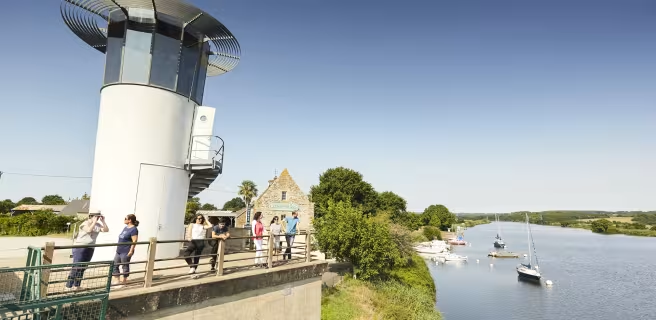
Riding off from Muzillac, you head for the town of Billiers, dominated by its curious steeple that doubles as a lighthouse. Next, La Littorale cycle route guides you along the banks of the Vilaine Estuary, via roads full of slopes; the reward for your physical exertions are some wonderful views down on the river. You also ride through traditional villages offering wonderful displays of typical rural Breton architecture. Reaching the Barrage d'Arzal, you can admire up close the technical prowess of this engineering structure, the largest estuary dam in Europe.
Arzal / Pénestin

29 Arzal / Pénestin

19 km
1 h 14 min
I cycle often
La Littorale cycle route leads you gently down to the Barrage d’Arzal; crossing the Vilaine River via this dam is one of the most memorable highlights on this stage. Along the next stretch, you’ll have to adjust your gears frequently to tackle the slopes along the Vilaine Valley, but with fine glimpses to be had of the river as you negotiate a mix of minor roads and more rough-surfaced tracks. The little port of Trehiguier offers an uplifting place to pause, contemplating the Vilaine’s estuary, but looking from its south side to the north side that you departed from in the morning.
In fine weather, the Pénestin Headland offers a splendid, dreamy end to your cycling trip, with views out to sea of the little islands of Houat and Hoëdic, and maybe even Belle-Île-en-Mer…
Afficher les étapes