18 stages · 452 km

Gradients and elevation

Ascents: 3857m
Descents: 3117m
Lowest point: 169m
Highest point: 1157m

Road types

386km (85%) By road
66km (26%) Cycle path

Surface

49km (126%) Smooth
28km (73%) Rough

18 stages used

Nevers / Sancoins

1 Nevers / Sancoins

39 km
2 h 34 min
I begin
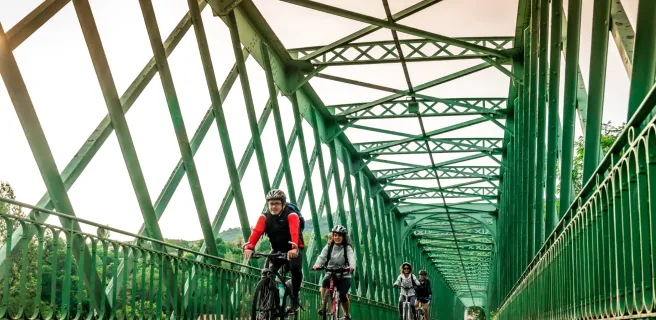
Your journey along the Via Allier cycle route begins in the ducal city of Nevers. You’re led across the Loire, following its parallel canal (canal latéral) to Le Guétin canal-bridge, taking you over the Allier River. At the natural site of Le Bec d’Allier, admire how the waters of Allier and Loire merge. Cycling a little further, you reach Apremont-sur-Allier, a member of the association Les Plus Beaux Villages de France. This place, dominated by a château with floral gardens awarded the national accreditation of a Jardin Remarquable, provides a Romantic stop! Before the small town of Sancoins, La Halle de Grossouvre and its Espace Métal recall the area’s iron-forging past.
Sancoins / Le Veurdre

2 Sancoins / Le Veurdre

17 km
1 h 09 min
I cycle often
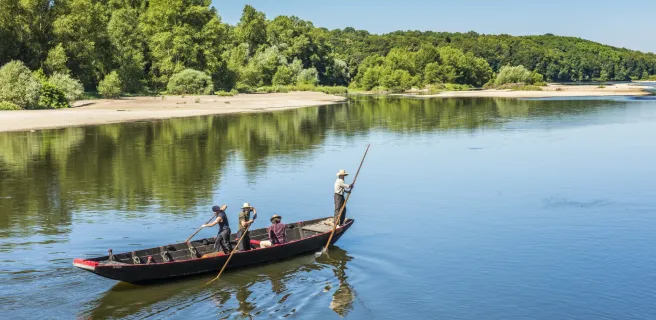
The Via Allier cycle route now enters the département, or French county, of Allier. This stage recalls the centuries when trading thrived along the river of the same name. Given the difficulties of navigating along the wild Allier, a distinct mariners’ culture evolved in many of the towns the river crossed in the Auvergne Region. Le Veurdre offers fine testimony of this history, as revealed at its Musée de la Batellerie and brought back to life thanks to events proposed by the association La Chavannée. For this first stage through the Auvergne, you ride along quiet country roads leading you through the typical bocage bourbonnais, with its hedge-divided patchwork of fields.
Le Veurdre / Moulins

3 Le Veurdre / Moulins

37 km
2 h 27 min
I cycle often
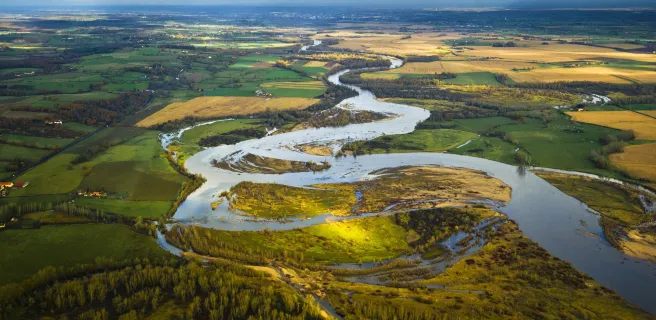
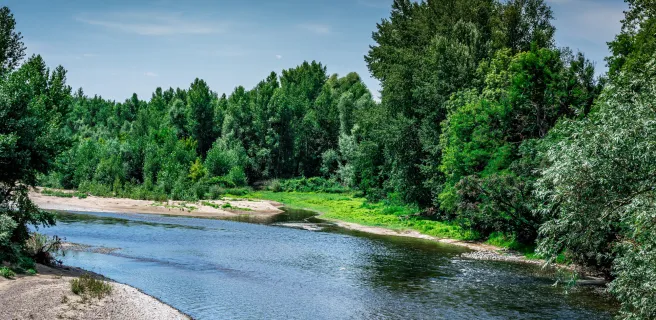
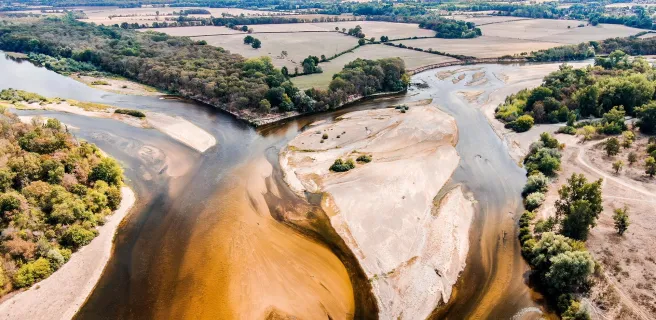
Your adventure along the Via Allier cycle route continues along this fine Loire tributary, considered one of the last great wild rivers in Western Europe. To appreciate the Allier to the full and close up, go right to the riverbank to admire the mosaic of rich and varied environments created by its shifting waters that have carved out substantial meanders. You might compare the Allier River to a cyclist, enjoying a certain freedom of movement on their journey… especially, in the Allier’s case, south of Moulins! As to this city, historic capital of the Bourbon dukes, it merits an in-depth exploration of its streets and lanes, revealing five centuries of splendid architecture.
Moulins / Saint-Pourçain-sur-Sioule

4 Moulins / Saint-Pourçain-sur-Sioule

44 km
2 h 56 min
I cycle a lot
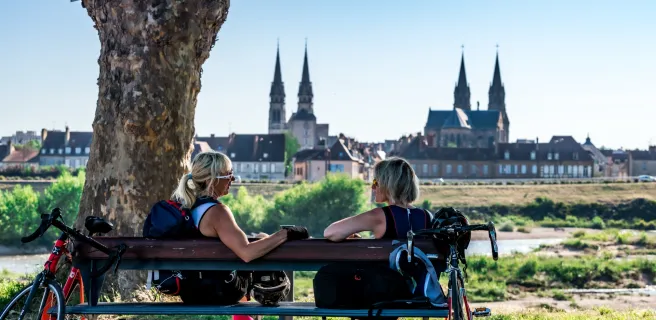
After enjoying a last look at Moulins with its bell-towers rising above the river, get back in the saddle to carry on along the Via Allier. The cycle route allows you to get up close to the Réserve Naturelle Nationale du Val d’Allier, protecting a little Eden of 1,450 hectares of truly unspoilt lands. After a small climb shaded by the oaks of Moladier Forest, you ride through further typical bocage bourbonnais. Then the first vines of the Saint-Pourçain wine-making area appear, giving a new aspect to your cycling trip. The winemakers of Saint-Pourçain will be delighted to offer you tastings of wines once served to French kings.
Saint-Pourçain-sur-Sioule / Vichy

5 Saint-Pourçain-sur-Sioule / Vichy

34 km
2 h 16 min
I begin
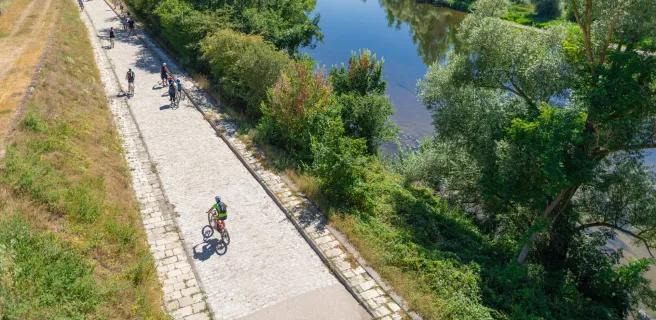
Enjoy the gentle atmosphere along this Via Allier stage, taking cyclists across flood plains and forests. The way leads to Billy, its impressive medieval fort rising above an historic village designated a Petite Cité de Caractère. A lovely greenway then guides you alongside the Allier River to Vichy. Listed as part of a UNESCO World Heritage Site dedicated to historic thermal spa resorts, Vichy and its springs, enjoyed by visitors for centuries, encourage cyclists to rest and to explore the place. In the heart of town, feast your eyes on Art Deco and extravagant façades, plus further buildings reflecting architectural styles from around the globe. A short relaxation session at one of the spas is a tempting option before getting back on your bike. The more sporty might make the most of the water sports available on Allier Lake here. Or simply enjoy a stroll around Vichy’s fine public gardens.
Vichy / Puy-Guillaume

6 Vichy / Puy-Guillaume

26 km
1 h 43 min
I cycle often
Well-rested and relaxed, cycle south from Vichy by getting back on the greenway alongside the Allier River, riding towards Saint-Yorre. Take in the peaceful, unspoilt atmosphere and enjoy glimpses over the Allier Valley, the river dominating along certain stretches, flora and fauna taking centre stage along others. Further on, the Allier’s waters are joined by those of the Dore River at the Bec de Dore, a spot providing many species with a tranquil refuge. In the distance, you can make out the Auvergne’s mountains, presaging greater shifts in altitude. Do make a detour to the Domaine Royal de Randan and to Ris and its Holy Cross Church, part of a former Cluniac priory.
Puy-Guillaume / Pont-du-Château

7 Puy-Guillaume / Pont-du-Château

32 km
2 h 06 min
I cycle often
Along this Via Allier stage, you’ll become aware of the upcoming transition from the fertile Limagne Plain to the steeper ancient volcanic area extending out from the Chaîne des Puys, the extinct volcanic range towering above the Auvergne’s capital city, Clermont-Ferrand. The Allier River, so much wilder downstream, with its shifting banks, is constricted by narrow rocky sides further upstream. This stage is dotted with dovecotes. Close by, the Maringues tanneries make a picturesque architectural scene, while the Musée de la Céramique in Lezoux relates how this town’s renown spread far and wide back in Antiquity, thanks to its production of sigillated pottery. Pont-du-Château, the historic port of the Clermont area, is the stopover point for this stage.
Pont-du-Château / Vic-le-Comte

8 Pont-du-Château / Vic-le-Comte

27 km
1 h 37 min
I cycle often
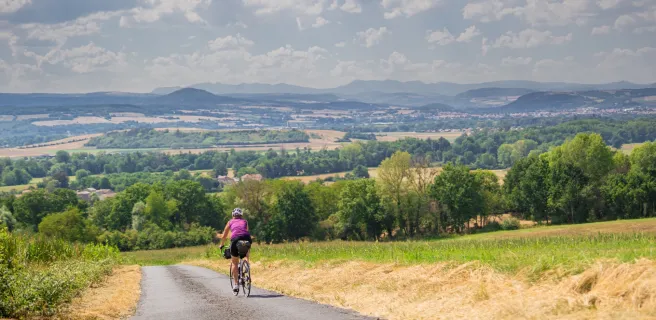
On this stage of the Via Allier cycle route, you start to climb a fair bit, enjoying a fine ride, with the Chaîne des Puys volcanic range as backdrop. The charming towns and villages of the wider area here, known as La Comté, boast a rich and varied architectural heritage to enjoy as your legs get a good work-out. Get your breath back as you visit the fortified village of Chauriat or then the Château de Busséol, perched on its rocky outcrop and offering splendid views. You’ll also cross lands producing AOC Côtes d’Auvergne wines. At the end of this stage, the town of Vic-le-Comte and its church of St Peter are worth a longer stop.
Vic-le-Comte / Issoire

9 Vic-le-Comte / Issoire

14 km
54 min
I cycle often
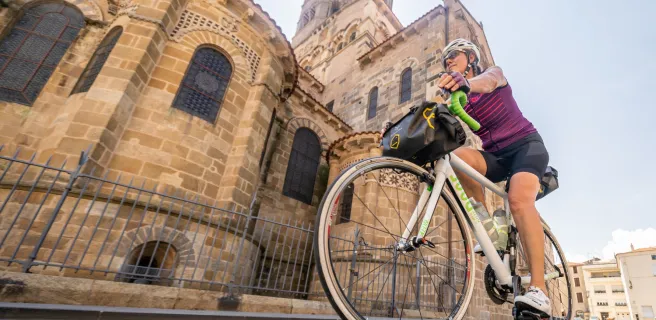
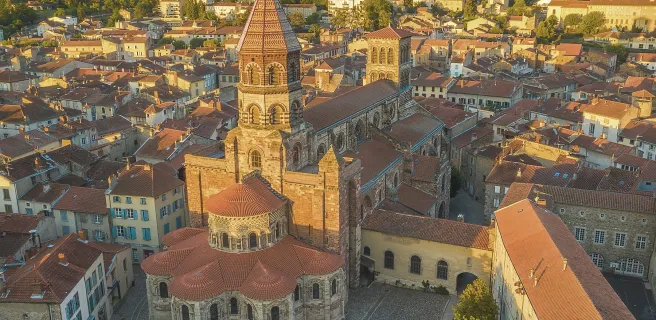
On this Via Allier stage, very visible ancient volcanic lava flows give a distinctive look to the terrain, with steep little valleys overseen by sharp little rocky peaks, the heights often occupied by a hill village, a château or a chapel. Around these parts, arkose, a pale stone made from sandstone and feldspar, predominates, contrasting with the darker basalt further north. In the distance, the serrated mountain tops of the Sancy Range can be made out on clear days. Enjoy the long descent leading down to the town of Issoire and the banks of the Allier River. Make the most of a stop in Issoire, observing its colourful southern French façades and its extraordinary abbey church of Saint-Austremoine, a gem of Auvergne Romanesque art.
Issoire / Brassac-les-Mines

10 Issoire / Brassac-les-Mines

27 km
1 h 48 min
I cycle often
On this hillier Via Allier stage, you’re reminded of the daily graft of bygone days, when miners extracted coal from underground mines, the merchandise then being placed on sapinières, large, flat rudimentary boats made from pine wood, that were then guided downstream along Allier and Loire Rivers. Riding along, enjoy glimpses of the distant Sancy and Cantal mountain ranges. The route alternates between steep little valleys and rocky outcrops beside which you’ll find remarkable villages such as Nonette, Usson, with its volcanic organ-pipe geology, and Bansat, an extremely picturesque fortified spot. Another curiosity to admire is the Parentignat suspension bridge spanning the Allier, built in the 1830s, now a listed historic monument.
Brassac-les-Mines / Brioude

11 Brassac-les-Mines / Brioude

20 km
1 h 19 min
I cycle often
The Via Allier cycle route continues through former coal-mining lands, leading you into the département, or French county, of Haute-Loire, which you enter at Sainte-Florine. The trail crosses the Limagne Brivadoise plain and guides you along the foot of the Livradois Range. Always in sight of the Allier River, moving in wide meanders through a patchwork of agricultural fields, the perched villages dotted along this stage are packed with history. Auzon, Azérat and Lamothe, in particular, have medieval treasures, chapels, Romanesque murals, priories and historic fortifications to reveal to those bold enough to make detours to them. The town of Brioude and its Basilica Saint-Julien, the largest Romanesque church in the Auvergne, also open their doors to you.
Brioude / Lavoûte-Chilhac

12 Brioude / Lavoûte-Chilhac

24 km
1 h 34 min
I cycle often
After a few kilometres of cycling between Brioude and Vieille-Brioude, the Via Allier cycle route finally takes you away from the Limagne plains. The way takes you up into the Ribeyre Valley, which benefits from its own micro-climate, imparting Mediterranean touches to the landscapes, enhanced by the evident wine-making traditions around here, what with all the terracing and the winemakers’ houses. The river, and the road running alongside it, guide you to spots with views of local villages boasting a significant local heritage, up to the Château de Saint-Ilpize, looking down on the Allier, then on to the village of Lavoûte-Chilhac, built in an exceptional meander.
Lavoûte-Chilhac / Langeac

13 Lavoûte-Chilhac / Langeac

16 km
1 h 05 min
I cycle a lot
The Via Allier cycle route looks down on the river here, offering lovely views from one meander to the next. The way gets harder as it crosses characterful villages that prove a pleasure to stop at. Chilhac, built at the top of a volcanic lava flow eroded down a very long time back by the Allier’s waters, boasts magnificent basalt columns. Arriving at Langeac, you reach the most southerly of the "bonnes villes d'Auvergne", the region’s long-established historic towns. This stage is only suitable for seasoned cyclists or those on e-bikes.
Langeac / Prades

14 Langeac / Prades

13 km
53 min
I cycle a lot
Your adventure along the Via Allier cycle route now takes a distinctly different turn. The way you’ve already ridden along may seem long, but it’s been pretty easy going so far, compared with the journey undertaken by wild salmon coming this far up the river from the Atlantic Ocean. Now, however, the views narrow and the Allier Gorges stand before you, rocky and wild in aspect, with the odd picturesque village dotted along the way. Do take the time to visit Chanteuges, with its abbey perched on a long-solidified section of lava flow, and Saint-Julien-des-Chazes, with its chapel dedicated to the Virgin Mary. Also don’t miss Prades, the highlight along this stage, overlooked by the Roche Servière, which offers a spectacular natural show on volcanology. This stage is only suitable for seasoned cyclists or those on e-bikes.
Prades / Saint-Privat-d'Allier

15 Prades / Saint-Privat-d'Allier

18 km
1 h 10 min
I cycle a lot
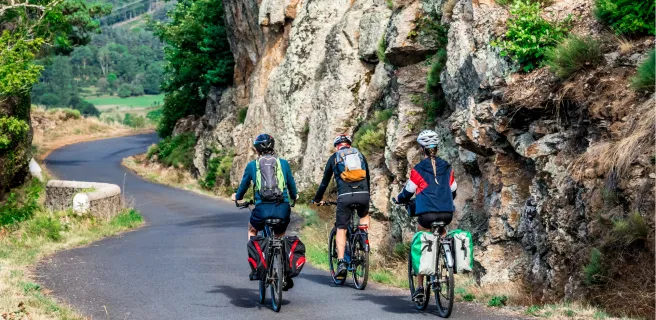
The Allier Gorges narrow and the Via Allier cycle route forces you to climb. This stage involves quite a shift in altitude, as you ride through demanding terrain, but the reward is magnificent views over the Allier, the Devès Mountains and the summits of the more distant Margeride. Great piles of rocks resembling castles oversee your progress. Make the most of a well-deserved stop at Saint-Privat-d'Allier, a village looking down on the Allier Gorges that epitomizes the stage. You may well meet different travellers in this village, in the form of pilgrims following the way to Santiago de Compostela. Note that this stage is only suitable for seasoned cyclists or those using e-bikes.
Saint-Privat-d'Allier / Le Pont d'Alleyras

16 Saint-Privat-d'Allier / Le Pont d'Alleyras

15 km
59 min
I cycle a lot
The Via Allier cycle route here leads you to explore the very heart of the Allier Gorges. You first ride along above the narrowest, most inaccessible section of the river. This true haven of peace means flora and fauna are undisturbed down there, just to be glimpsed occasionally as you pedal along. Descending to Le Pont-d'Alleyras, you rejoin the banks of the Allier. Views open up over the reservoir created by the Poutès Dam, overlooked by the Château de la Beaume. Take the time to enjoy the refreshing waterside stop, as a quite demanding climb awaits on the next stage.
Le Pont d'Alleyras / Saint-Haon - Nouveau Monde

17 Le Pont d'Alleyras / Saint-Haon - Nouveau Monde

16 km
1 h 03 min
I cycle a lot
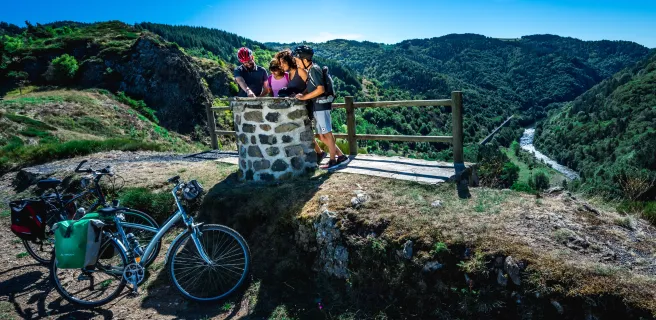
Having relaxed a little and feeling reinvigorated, time to get going again on your adventure along the Via Allier cycle route. You’ll need to use those leg muscles to tackle the slopes up to the Devès volcanic plateau, crossing through exceptional, unspoilt, traditional natural parts. Enjoy the many views down onto the Allier Gorges, offering good excuses to stop and catch your breath, observing more closely the landscapes here, so marked by fire and water. At Saint-Haon, take the time for a little detour to the hamlet of Le Thord to enjoy exceptional views over the Allier Gorges and the viaduct at Chapeauroux.
Saint-Haon - Nouveau Monde / Langogne

18 Saint-Haon - Nouveau Monde / Langogne

34 km
2 h 16 min
I cycle a lot
You may be reaching the end of the Via Allier cycle route, but the hamlet of Le Nouveau Monde makes for a stunning start to this last stage. Located in the parish of Chapeauroux, the combination here of curving 19th-century railway viaduct and basalt cirque (or geological amphitheatre), dug out by the river over millions of years, makes for a glorious sight. Pedal beside the river and the Cévennes railway line for a time before climbing onto the Devès Plateau to reach the little medieval town of Pradelles, at the frontier between the Auvergne and Occitanie Regions.
Afficher les étapes