All types of routes

Entre Rhin et Loire à vélo / EuroVelo 6

Official route
Nicolas Gascard - BFC Tourisme
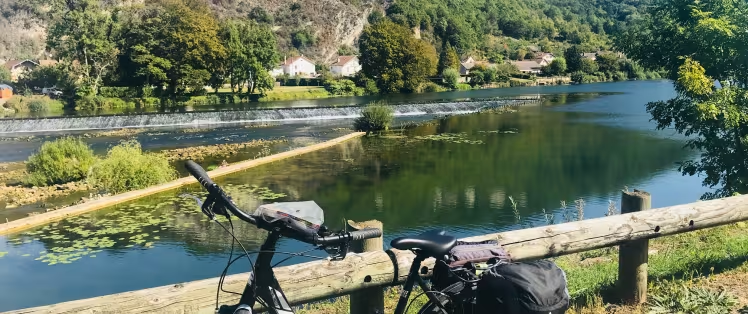
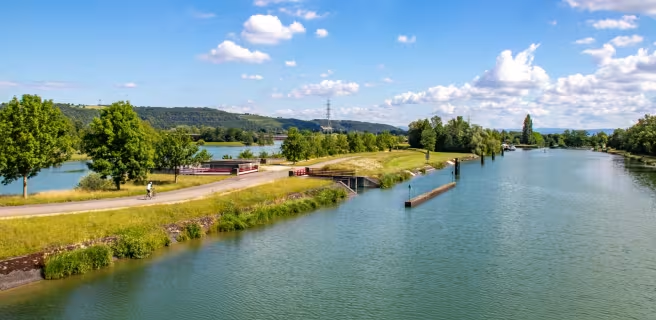
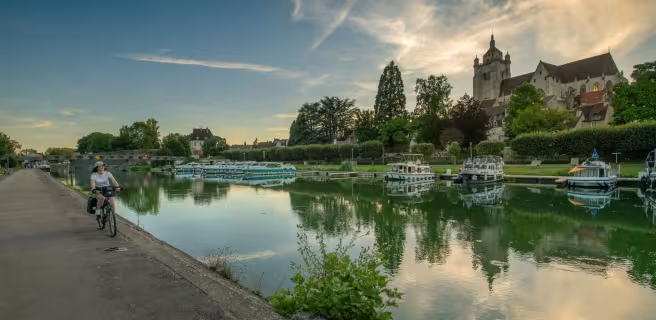
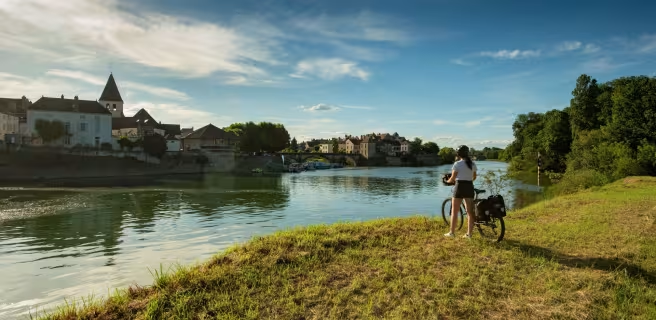
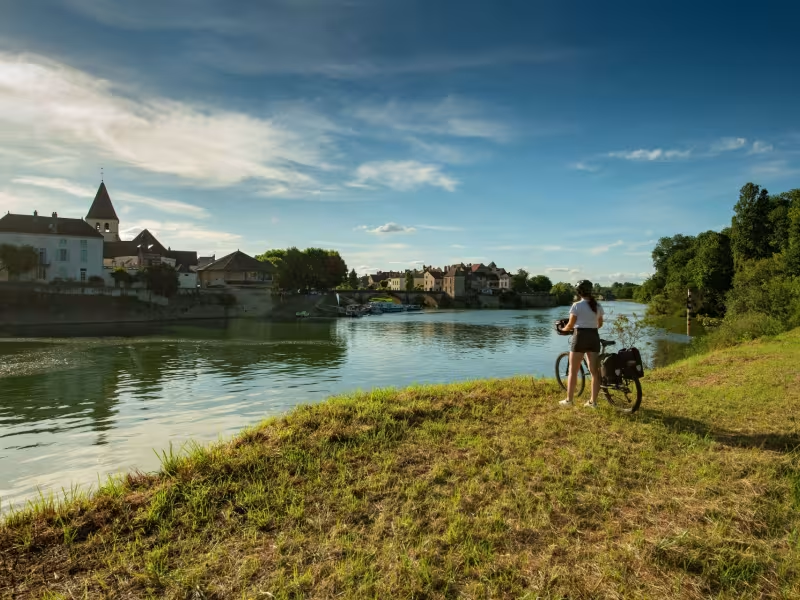
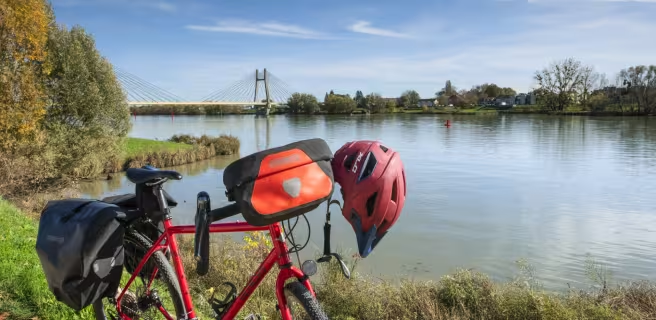
Cycliste et confluence du Doubs et de la Saône à Verdun-sur-le-Doubs
Nicolas Gascard - BFC Tourisme
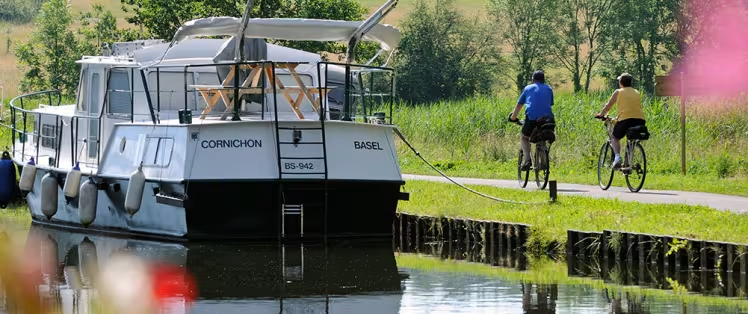
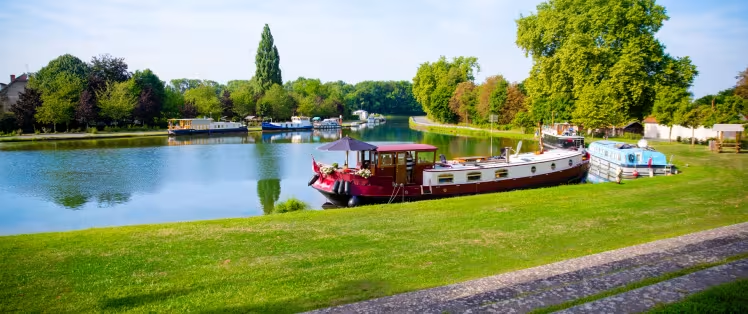
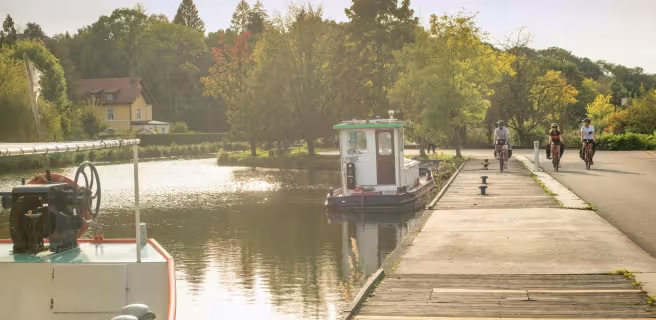
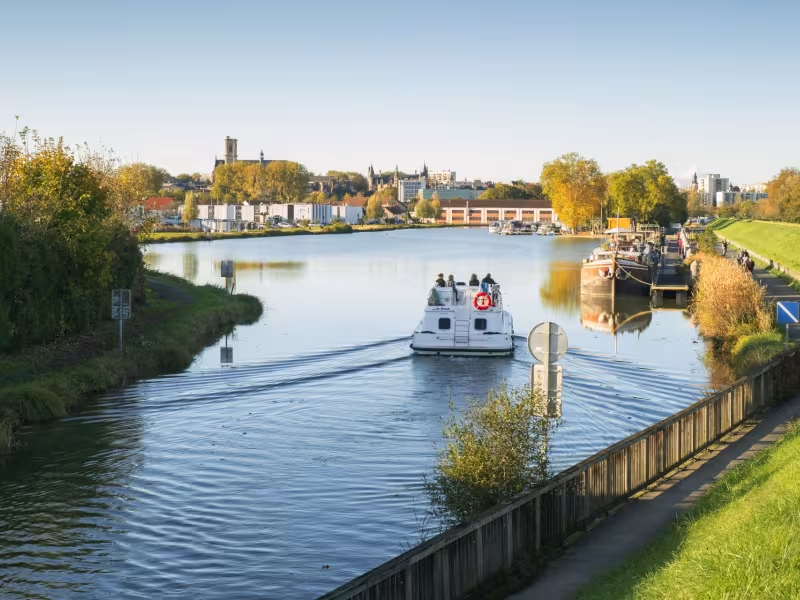
Bateau habitable sur la Loire à Nevers
Florent Tijou
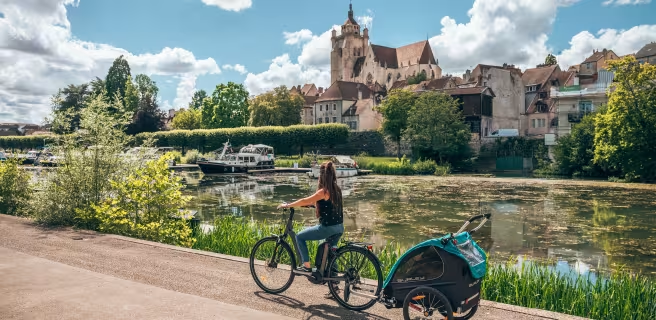
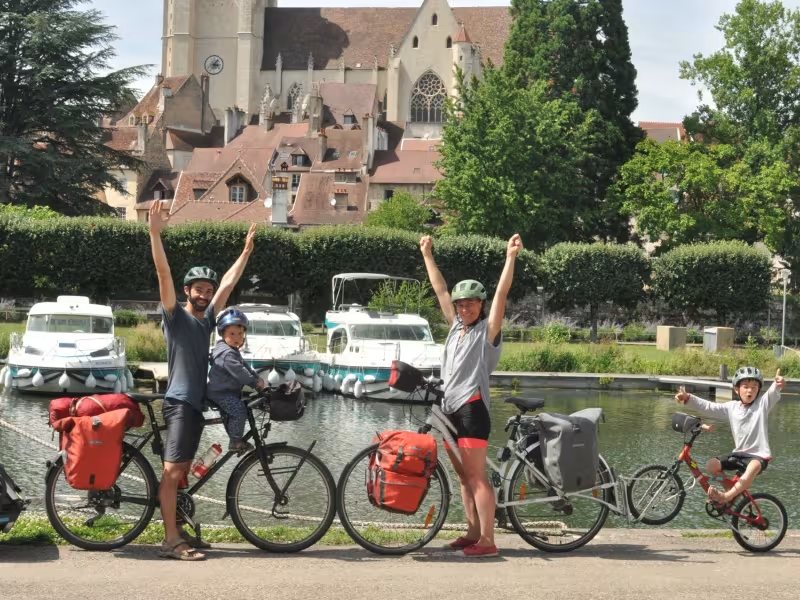
Dôle photo de famille
Florent Tijou
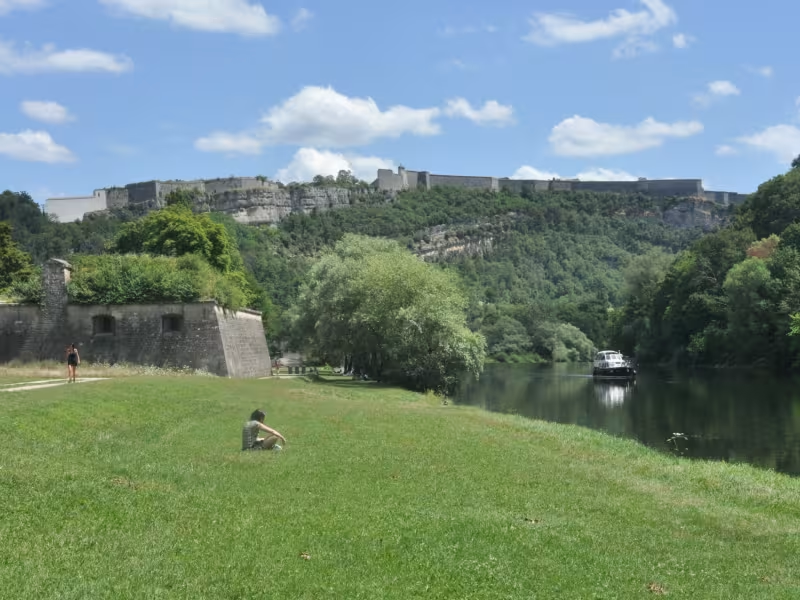
Besançon vue de l'EuroVelo 6
Florent Tijou
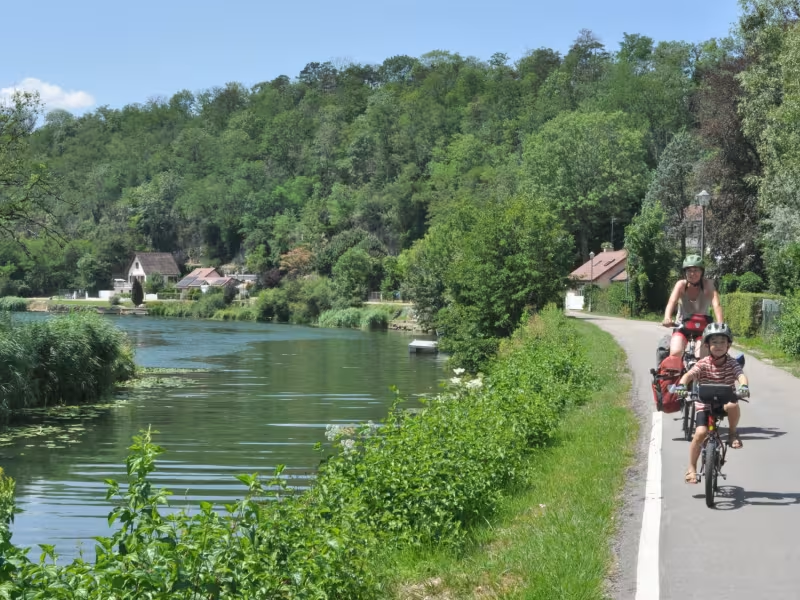
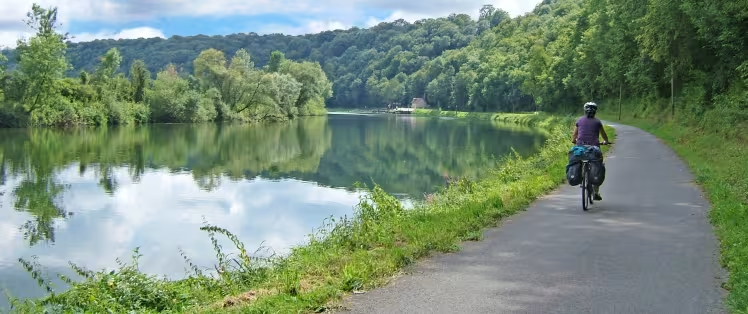
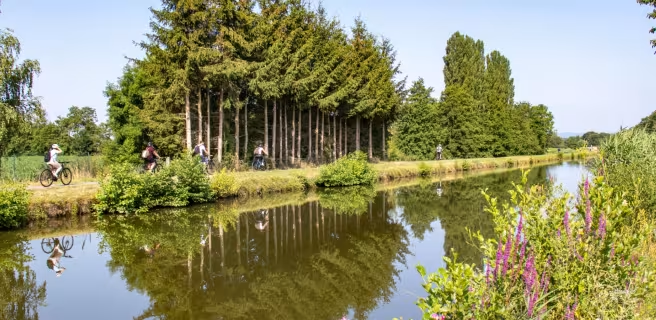
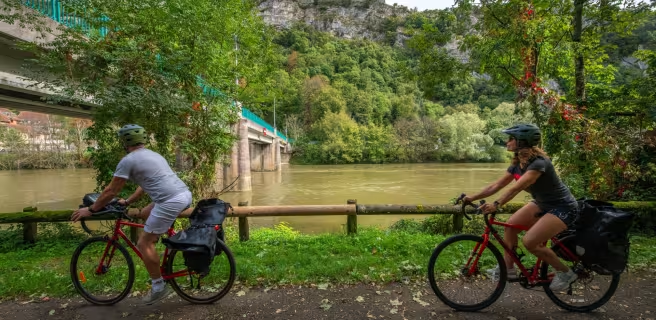
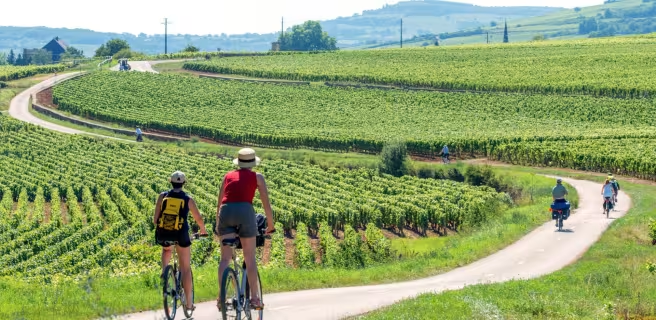
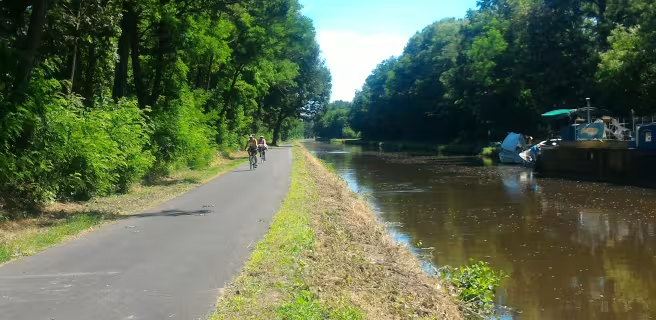
Cyclistes sur l'EuroVelo 6
INNOVEO - BFC Tourisme
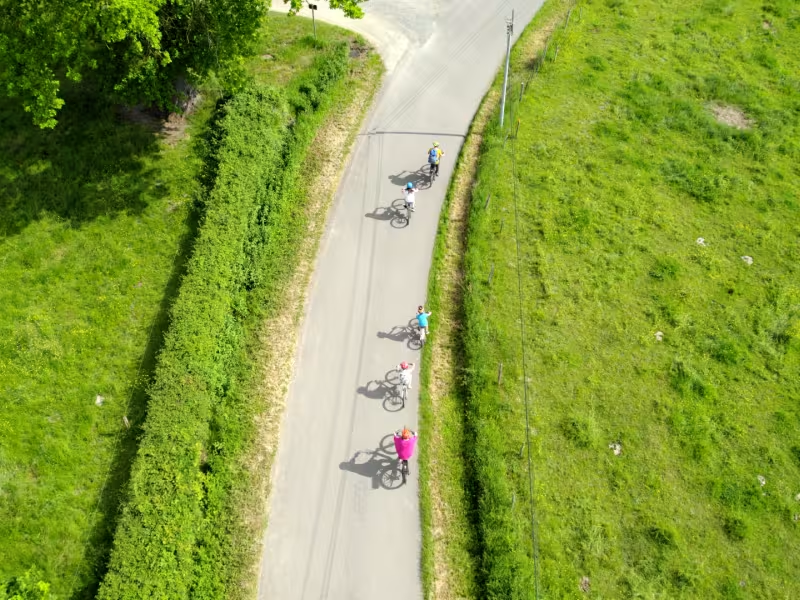
Vélos vus du ciel sur l'EuroVelo 6
Nicolas Gascard - BFC Tourisme
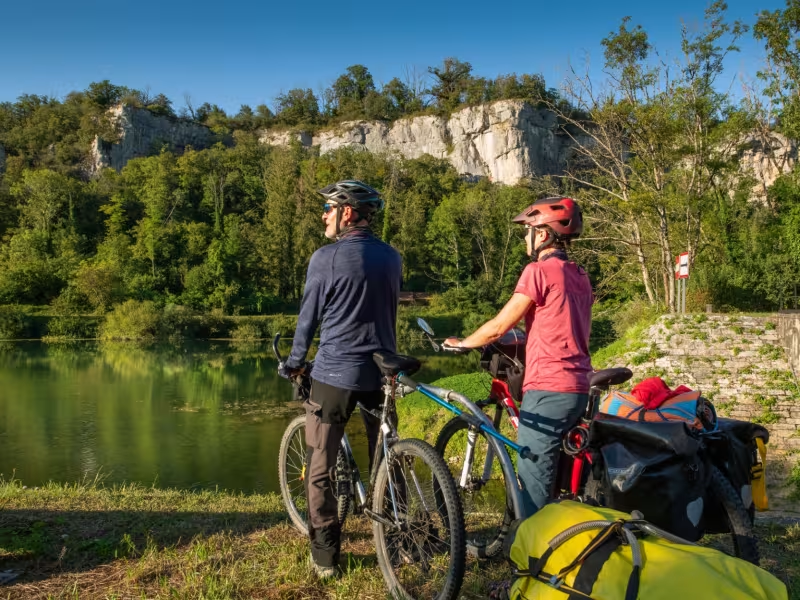
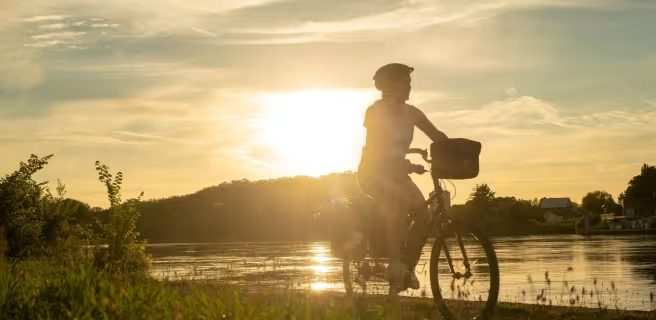
Itinérants contemplatifs sur l'EuroVelo 6
Nicolas Gascard - BFC Tourisme
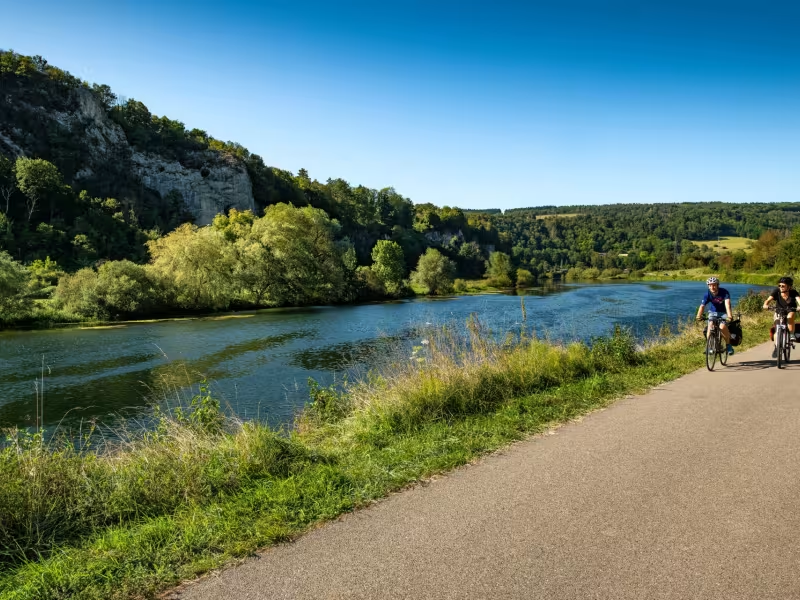
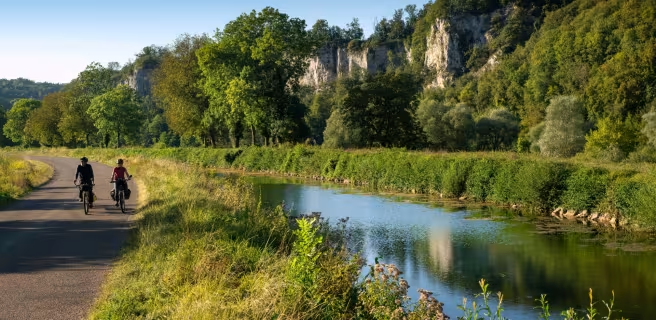
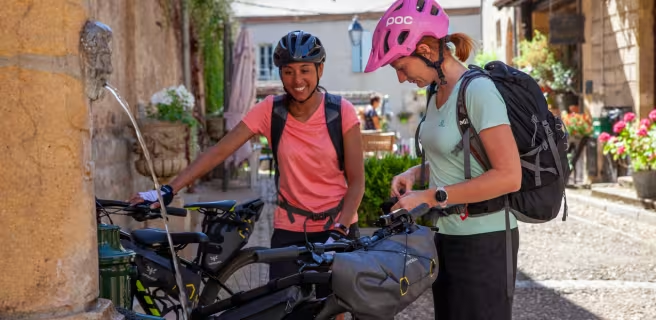
En itinérance sur l'EuroVelo 6
Alain Doire - BFC Tourisme
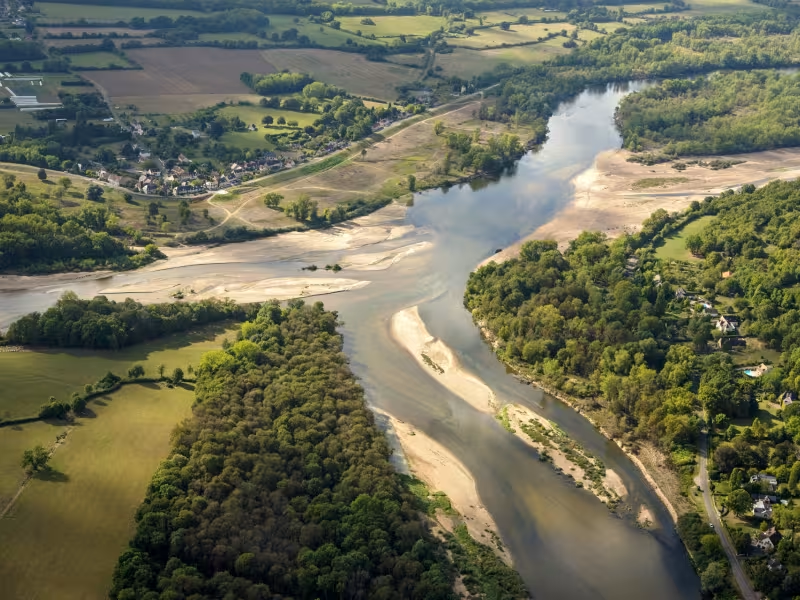
Le bec d'Allier vu du ciel
Nicolas Gascard - BFC Tourisme
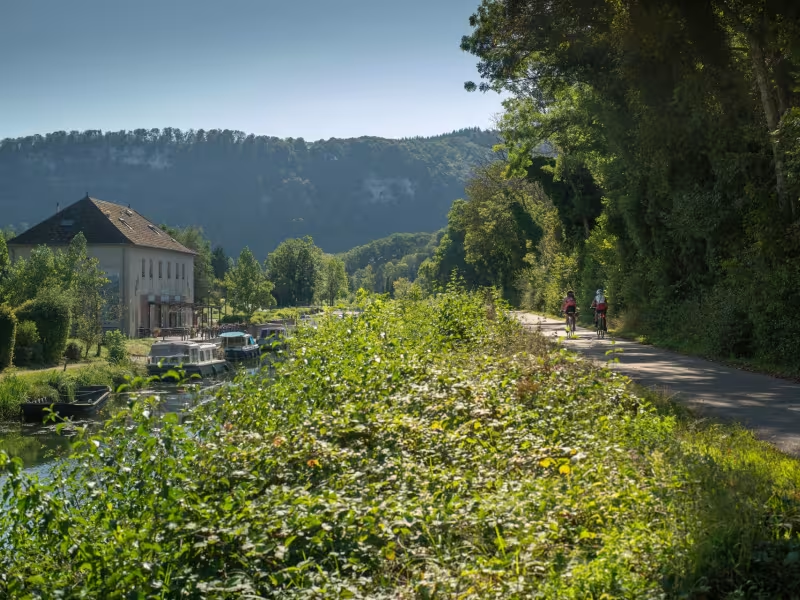
La capitainerie de Baume-les-Dames
One way
570 km
1 week or more
I begin
Bâle (Suisse)
Nevers (58)
Canals & intimate rivers

Linking the Black Sea to the Atlantic, EuroVelo 6 is one of Europe’s major cycle routes, connecting so many countries. The EV6 through France provides c.1,300km of fine cycle paths following major rivers, from Alsace to the Atlantic. Going east-west, this route has two main sections: the first, from Basel to Nevers, known as Entre Rhin et Loire à Vélo - EuroVelo 6; the second, from Nevers to St Brevin-les-Pins, known as the Loire à Vélo. Riding along, what a great way to learn about major chapters in French history. A unique patchwork of places reveals the country’s diversity and grandeur, from Renaissance gems to where 19th-century scientist Louis Pasteur carried out experiments, from military engineering marvels by Vauban to Joan of Arc’s Loire forays, from perched castles in Alsace to the Loire Valley’s royal châteaux, from major industrial endeavours to contemporary art along the Loire Estuary.

Signposting

EuroVelo 6 is fully signposted in both directions. EuroVelo 6’s logo features clearly on all waymarking.

The Loire à Vélo by EuroVelo 6 (continued!) from Nevers to the Atlantic:

To prolong your cycling adventure along EV6, at Cuffy (nr Nevers), you can start following the Loire à Vélo, a very special cycle route running along France’s most regal river, the Loire, up to its Atlantic estuary. On the cards: Loire châteaux; vineyards; remarkable towns; splendid gardens… There are numerous train + bike options, enabling you to join or leave the cycle route at different points.

Gradients and elevation

Ascents: 1149m
Descents: 1206m
Lowest point: 173m
Highest point: 359m

Road types

188km (33%) By road
390km (67%) Cycle path

Surface

321km (55%) Smooth
164km (28%) Unknown
77km (13%) Rough
17km (3%) Unpaved

Trains et transport sur Entre Rhin et Loire à vélo / EuroVelo 6
Access by train:

  • To reach the departure point (Basel, Switzerland): Basel railway station
  • From the arrival point (Nevers): Nevers railway station

Not to be missed on this route

The canal bridge to Digoin

Sites and historical monuments
Digoin
Les onze arches du pont canal de Digoin permettent au canal latéral à la Loire de franchir le fleuve Loire. Il fut construit en pierres de taille de 1834 à 1838 et fût élargit en 1870. Il est un des premiers grands pont-canaux de France, avec 243 m de long.

The Château de Digoine

Sites and historical monuments
Palinges
Si l’édifice même du Château de Digoine mérite une visite, vous apprécierez aussi de vous promener dans l’immense parc paysager qui l’entoure, entre l’étang, le jardin à la françaises, les alignements d’orangers dans des caisses bicentenaires et les innombrables palmiers.

The ruins of the Château de Montfaucon

Sites and historical monuments
Montfaucon
Ces vestiges sont en accès libre et permanent, ainsi qu’à la demande pour les groupes de plus de huit personnes. Un guide est disponible gratuitement pour renseigner les visiteurs. La visite guidée, en français, dure entre une demi-heure et une heure.

"Accueil Vélo" accommodation on Entre Rhin et Loire à vélo / EuroVelo 6
114 Accueil Vélo accommodations await you on Entre Rhin et Loire à vélo / EuroVelo 6!

The best stays to make the most of it

The 15 stages of Entre Rhin et Loire à vélo / EuroVelo 6
Bâle / Mulhouse

1 Bâle / Mulhouse

33 km
2 h 13 min
I begin
You can really appreciate what a multicultural cycle route EuroVelo 6 is when starting out from Basel. At the station, the various languages you’ll hear show what a cosmopolitan place this is, encouraging openness to different cultures. The city, on Switzerland’s border with France and Germany, reflects the joy of sharing open borders. After a very brief stretch across the German border, the impressive Passerelle des Trois Pays, a footbridge over the Rhine, opens the way to a gentle introduction to the French region of Alsace and then the dynamic town of Mulhouse. After Basel’s multilingual voices, enjoy the variety of birdsong at the Réserve Naturelle de la Petite Camargue. En route, also make a detour to the Kembs hydroelectric dam, showing the power of the mighty Rhine.
Mulhouse / Montbéliard

2 Mulhouse / Montbéliard

56 km
3 h 44 min
I begin
The town of Mulhouse lies in an area marked by the proud industrial legacies of two dynamic French regions, Alsace and Franche-Comté. Recently, Mulhouse has been turning into a contemporary green city while recalling its technical glories in a dozen museums. Leaving town, the scenery becomes more rural and typical of Alsace, with villages of timber-frame houses. Riding beside the Canal du Rhône au Rhin, the cycle route takes you past a mix of typical villages, medieval castles and transformed former industrial sites, offering a range of landscapes and experiences. You’re making for Sochaux-Montbéliard, historic home of iconic French car maker, Peugeot. Reach town via the gentle Parc Scientifique du Près-la-Rose and a footbridge (passerelle) open to cyclists, a model of its kind, passing under the walls of the Château des Ducs de Wurtemberg.
Montbéliard / Baume-les-Dames

3 Montbéliard / Baume-les-Dames

58 km
3 h 50 min
I begin
At Sochaux-Montbéliard, the Allan River and the Canal du Rhin au Rhône join forces, directing you gently towards Vaujecourt and the Doubs Valley. As the Doubs Valley narrows, the forts of Mont Bart and Mont Bavans recall how manmade defences were added to this natural frontier. You’ll need strength to climb to the Fort du Mont Bart to benefit from the stunning views along the whole valley. EuroVelo 6 then leads you on through undulating, green parts, beside rivers and through forests. After L'Isle-sur-le-Doubs, the natural meanders in the Doubs provide wonderful views over the countryside as well as historic towns dotted around the old Franche-Comté Region. Nestling below the Jura hills lies the town of Baume-les-Dames, with its interesting architecture, a welcoming place for passing cyclists.
Baume-les-Dames / Besançon

4 Baume-les-Dames / Besançon

34 km
2 h 16 min
I begin
This is one of the most beautiful stages along EuroVelo 6, the way between Baume-les-Dames and Deluz bristling with wooded hills. The Doubs River meanders along, with family homes and huts lining its banks, very popular with locals on sunny days. The natural peace is only broken by the whistle of trains approaching tunnels along their route. Drawing closer to Besançon, the cycle route is dotted with vestiges of once-flourishing industries that brought noisy life to the valley until the first half of the 20th century. One final bend, then the city of Besançon comes into view, beautifully located in a great meander in the river. The town is crowned by a citadel designed by Louis XIV’s great military engineer Vauban, and part of a UNESCO Vauban World Heritage Site.
Besançon / Ranchot

5 Besançon / Ranchot

36 km
2 h 24 min
I begin
Leave behind Besançon, crowned by its citadel (part of a Vauban UNESCO World Heritage Site), riding westwards on a greenway that meanders along with the Doubs River. The Doubs Valley’s sides remain very steep, the natural amphitheatres of greenery dominated by forts that controlled the way in times past. Now, just river boats and the odd cry of a bird of prey break the silence. Midway along this stage, the Canal de Monsieur Tunnel, also known as the Percée de Thoraise, avoids a 4km-long meander for both boats and cyclists, but the latter do need to tackle a testing climb of some 100m! At Ranchot, a cycle trail called the Voie des Salines leads off through Jura woods to Arc-et-Senans, where you can visit the staggering Ancien Régime saltworks, the Saline Royale, a UNESCO World Heritage Site adding great interest to the longer version of this stage.
Ranchot / Dole

6 Ranchot / Dole

21 km
1 h 25 min
I begin
For those cyclists who don’t opt to take the Voie des Salines, the Ranchot to Dole stage is the shortest on this cycle route! From Osselle, with its outdoor leisure centre, the banks of the Doubs are broad and flat. Just the sound of grey herons flying off may disturb the peace. After taking in the lovely old fortified village of Rochefort-sur-Nenon, as you approach Dole, historic capital of the French county (département) of Jura as well as the wider former Franche-Comté Region, the cliffs against which the town was built come into view. In the centre, seek out the birthplace of Louis Pasteur, immersing you in the life of the great 19th-century scientist. Dole is best explored on foot, so park up your bike to wander around it.
Dole / Losne

7 Dole / Losne

25 km
1 h 38 min
Enchanting little river ports, locks and barges are dotted along this, a stage on which time seems almost to stand still. Ride out of the attractive town of Dole via the Canal du Rhône au Rhin. On this lovely stretch of the EuroVelo 6 cycle route, you gradually leave the Doubs Valley behind. You’ll find plenty of shade and places to pause for a picnic, watching the barges to-ing and fro-ing between the Canal du Rhône au Rhin and the Saône River. All the way along, take in the green landscapes, the boating and the anglers. Epitomizing this stage is Saint-Jean-de-Losne, known as European capital of river boating, and boasting a dedicated museum, the Musée de la Batellerie.
Losne / Verdun-sur-le-Doubs

8 Losne / Verdun-sur-le-Doubs

42 km
2 h 48 min
I begin
At St-Jean-de-Losne, in Burgundy, the Saône River looks broad and majestic, attracting enthusiastic anglers, its banks providing lovely views of the boating town. This EuroVelo 6 stage then guides you along a mix of greenways, gravel trails and country roads that are suitable for most cyclists. A wonderfully contemplative stop on this stage is the shaded river port of Seurre with its views of both the Saône River and the Canal de Dérivation de la Saône. After a stretch on roads leading you across the Saône Valley’s cereal plains, marked by the silhouettes of immense grain silos, you reach Verdun-sur-le-Doubs, with its timber-frame houses, its lively quays and its relaxing atmosphere.
Verdun-sur-le-Doubs / Chalon-sur-Saône
9 Verdun-sur-le-Doubs / Chalon-sur-Saône

25 km
1 h 40 min
I begin
Verdun-sur-le-Doubs provides a perfect place for cyclists to rest, such an attaching village, at the confluence of the impetuous Doubs River and much calmer Saône. But, perhaps after tasting a pôchouse (a dish of river fish in a white wine sauce), it’s time to head on along the cycle route, or rather, twin cycle routes, as EuroVelo 6 and La Voie Bleue continue to share the same path towards Chalon-sur-Saône, following the broad Saône, its valley stretching across an alluvial plain. As well as all the farming here, angling and boating are on offer, but cycling is of course among the top pursuits in the Saône Valley! At Gergy, enjoy a stop to contemplate the meander in the Saône before continuing up to Chalon-sur-Saône, a dynamic Burgundian town.
Chalon-sur-Saône / Santenay

10 Chalon-sur-Saône / Santenay

22 km
1 h 28 min
I begin
The way through the outskirts of Chalon-sur-Saône is well laid out for cyclists, allowing you to reach the Canal du Centre comfortably. Once you start pedalling along the green ribbon formed by the canal, signs of human presence are rare. You may notice the sound of barge engines, or of saws at the Bois de Curney sawmill. The hills stand out as you come to the renowned vineyards of the Côte Chalonnaise and Côte de Beaune wine-making areas. At the level of La Plaine de Rully’s canal port, or escale nautique, a splendid link leads to the château and wineries of Rully. Next comes Chagny’s port, followed by that of Santenay, below a lovely village built around its château, the whole place surrounded by vine-covered slopes.
Santenay / Montceau-les-Mines

11 Santenay / Montceau-les-Mines

40 km
2 h 40 min
I cycle often
Leaving Santenay, with lovely views of vine-covered hills spurring you on, this EuroVelo 6 stage leads you gently along beside the Canal du Centre. You’ll encounter anglers and boating parties, perhaps exchanging a friendly wave. You cross through a traditional, unspoilt, rural part of Burgundy heading for Montceau-les-Mines. The way is calm, dotted with little locks and picturesque villages. Although you may spot the odd vestige of an industrial site recalling bygone days, today this is a really delightful stage that provides a mix of countryside, industrial heritage transformed, and wonderful tranquillity. Montceau-les-Mines, as the name implies, was a town built to serve local mining; now, its cultural dynamism and dedicated canal-side facilities come as a nice surprise.
Montceau-les-Mines / Paray-le-Monial

12 Montceau-les-Mines / Paray-le-Monial
49 km
3 h 15 min
I begin
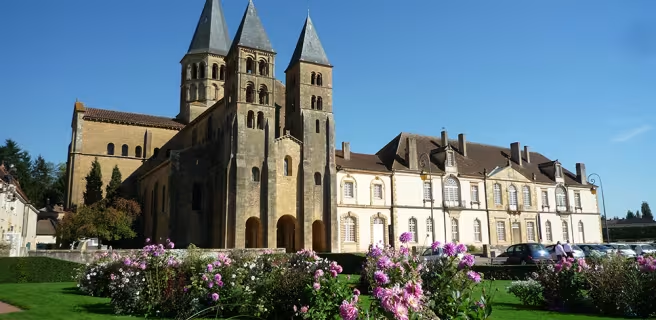
At the point where the areas of the Charolais, the Autunois and the Clunysois meet, EuroVelo 6 continues on through what has been nicknamed the Vallée de la Céramique, which begins at St-Léger-sur-Dheune. There are two remarkable industrial sites along this stage, the Lavoir des Chavannes (a massive disused coal washing house) beside the Bourbince at Montceau-les-Mines and the Briquèterie de Ciry-le-Noble (a brickworks). The atmosphere changes at Génelard, with a museum dedicated to the major watershed here. Then you need to tackle the slope towards the architectural gem of the Charolais area, the Château de Digoine. The final highlight is in Paray-le-Monial, a town dominated by its staggering Romanesque Sacré Coeur basilica. All told, this stage ends with an exceptional heritage display.
Paray-le-Monial / Bourbon-Lancy

13 Paray-le-Monial / Bourbon-Lancy

43 km
2 h 53 min
I cycle often
The waters of the Bourbince and the Canal du Centre run close to the centuries-old monastery of Paray-le-Monial, all providing a wonderful setting for a rest. After taking your time to explore the town’s parks, museums and monuments on foot, absorbing the calming atmosphere, time to ride off along EuroVelo 6. A couple of highlights on this watery stage are two remarkable navigable aqueducts, at Bourbince and Digoin. As to Bourbon-Lancy, you reach this thermal spa town with a rich history going back to medieval times via a cycle path running alongside the Canal Latéral à la Loire. Along the way, enjoy the traditional hedge-divided patchwork of fields of the Charolais bocage, passing verdant meadows and traditional villages. Come dinner, local dishes, especially those featuring Charolais beef, will help exhausted cyclists regain their strength.
Bourbon-Lancy / Decize

14 Bourbon-Lancy / Decize

47 km
3 h 07 min
I begin
This stage tackles the hills of the Bourbonnais area, and runs with the Loire River, taking you towards the Canal du Nivernais. You ride past meadows with grazing white Charolais cows, enjoying beautiful views and lovely places to stop beside the Loire. The tranquillity of the countryside is only broken by the odd mooing, or the sound of a tractor. Having plunged into the heart of the Nivernais countryside and the wilder side of the Loire, you reach the stage’s destination, Decize. The historic centre of this town is on an island in the Loire, set between the Canal Latéral à la Loire, the Canal du Nivernais, the Aron River and the Vieille Loire, an old branch of the great river. It makes for an extraordinary confluence to explore, by foot, to get to the top of the ramparts.
Decize / Nevers

15 Decize / Nevers

33 km
2 h 29 min
I begin
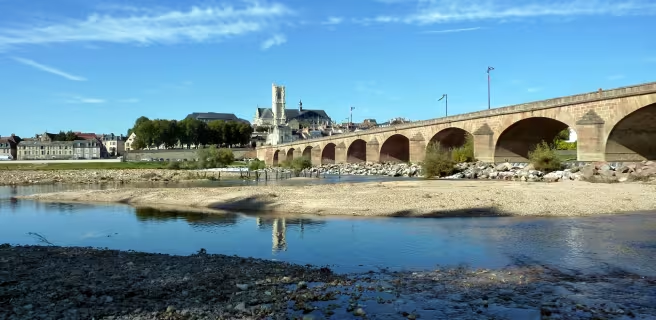
Never say “never Nevers”! But don’t forget to branch off along the Canal d'Embranchement rather than getting carried away and continuing on to the Loire à Vélo by EuroVelo 6! From Decize’s Port de Jonction to that at Nevers, you just need to stick closely to the Canal Latéral à la Loire and the Canal d’Embranchement, then enjoying a splendid arrival in the ducal town of Nevers via its bridge over the Loire. Along the way, tuck into a hearty meal in the irresistible setting of Fleury-sur-Loire’s guinguette (an outdoor riverside restaurant). After Nevers, cyclists lucky enough to have the time and determination can continue on their cycling route towards the Atlantic… as part of another cycle route adventure!
Details