14 stages · 419 km

Gradients and elevation

Ascents: 3165m
Descents: 3223m
Lowest point: 133m
Highest point: 548m

Road types

338km (81%) By road
15km (8%) Cycle path
66km (37%) Unknown
67km (16%) Provisional itinerary

Surface

13km (68%) Smooth
25km (132%) Rough

14 stages used

Vézelay / Flez-Cuzy

1 Vézelay / Flez-Cuzy

19 km
1 h 16 min
I cycle often
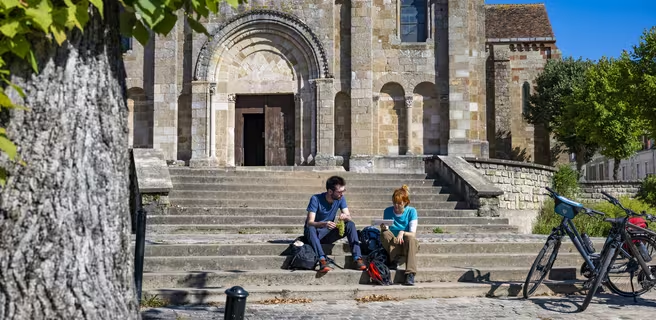
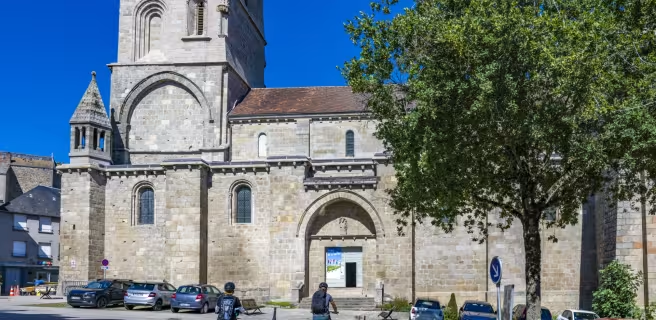
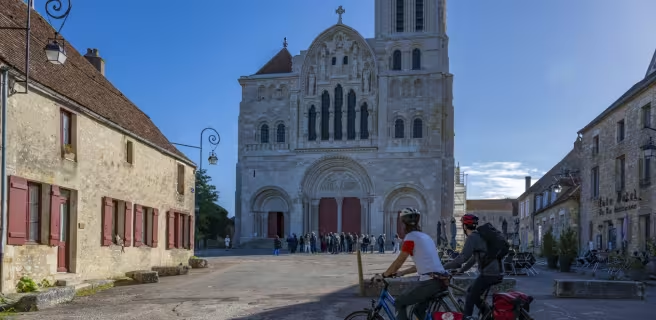
Paradoxically, you need to start this cycling adventure on foot! It seems only fitting to begin this Santiago de Compostela pilgrimage route by climbing Vézelay’s Eternal Hill to visit the famed St Mary Magdalene Basilica. One of an exclusive group of monuments to benefit from a double mention on UNESCO’s World Heritage Site list, the church’s gleaming stone sides are revealed as the sun turns in the sky. At the summer solstice, an extraordinary trail of light illuminates the nave. Stroll along the steep, narrow lanes in the village perched around the iconic church to discover arts and crafts and Burgundy wine shops, plus terraces with views to the Morvan Hills. Enjoy a short detour north to see Asquins Church. Aimery Picaud is thought to have been one of its chaplains, as well as author of the 12th-century Codex Calixtinus, a guide for pilgrims also recognized as part of the World Heritage Site dedicated to the Santiago de Compostela routes. Next, head off for the medieval town of Tannay.
Flez-Cuzy / Champlemy

2 Flez-Cuzy / Champlemy

35 km
2 h 18 min
I cycle often
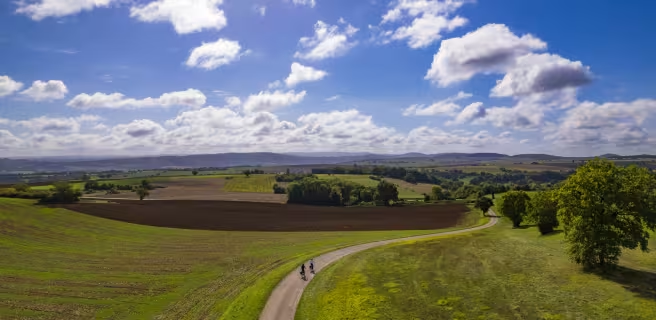
Cycle out from the medieval town of Tannay heading alongside vines that recall the area’s long wine-making past. The vineyards of the département, or county, of Nièvre, reputed since the Middle Ages, were wiped out by a phylloxera epidemic at the beginning of the 20th century. Today, oenologists and wine-makers are reviving this once-renowned wine area. Carry on riding along shaded roads through state-owned forests. Many of Burgundy’s roads are much appreciated by cycling tourists, who can make the most of the many country roads little used by motorized vehicles. Between forests, the landscapes open up, with agricultural fields full of cereals and sunflowers all around. The last hills along this stage take on a lovely golden light in the summer sun.
Champlemy / La Charité-sur-Loire

3 Champlemy / La Charité-sur-Loire

39 km
2 h 37 min
I cycle often
The last Burgundian hills disappear into the distance behind you on this, the last stage before arriving at La Charité-sur-Loire, a major stopover on the cycle route, a place of great significance to pilgrims down the centuries. To head by bike to this medieval town, now designated a Ville d’Art et d’Histoire in recognition of its rich heritage, you once again follow county roads through forests. After crossing the Nièvre, a tributary of the Loire, the cycle route leads you through the heart of Bertranges Forest – this green lung in the county of Nièvre covers some 10,000 hectares. Reaching La Charité-sur-Loire, feel the place’s medieval spirit, as well as noting old graffiti on certain facades, plus the pretty stairways, including those down to France’s royal river, the Loire. Visitors quickly fall under the spell of this enchanting pilgrimage town surrounded by ramparts.
La Charité-sur-Loire / Marseilles-lès-Aubigny

4 La Charité-sur-Loire / Marseilles-lès-Aubigny

12 km
49 min
I cycle often
This short stage along the Saint-Jacques à Vélo - Via Vézelay cycle route leads you first, for just a few kilometres, along typical Loire-side banks. But before leaving behind La Charité-sur-Loire and its ramparts, why not enjoy another wander around town, on foot or by bike, to discover Rue du Pont, Rue des Chapelains and Place des Pêcheurs (a square). In the lower town, these parts have kept their medieval atmosphere, proving a delight to explore. Crossing the town’s recently renovated historic bridge, you pass from one world to another, leaving behind the hills and slopes of western Burgundy to enter the flat agricultural lands known as the Champagne Berrichonne. You’ll get a glimpse of the major Loire à Vélo cycle route from the short stretch of it you ride along here, perhaps giving you ideas for another cycling adventure…!
Marseilles-lès-Aubigny / Sancoins

5 Marseilles-lès-Aubigny / Sancoins

33 km
2 h 12 min
I cycle often
Leaving behind the Loire and its banks, this provisional stretch along the Cœur de France – Canal de Berry à Vélo cycle route leads you through the Germigny Valley. Led by the département du Cher county council, the Cœur de France – Canal de Berry à Vélo is an ambitious plan to revive the former canal network across the old province of Berry that had been largely abandoned. The next stages on the cycle route, up to Saint-Amand-Montrond, will provide you with glimpses of this unusual network of canals, the technical solutions employed at the time of building sometimes wayward. Don’t expect a chain of unbroken waterways through these parts today, as most stretches of the network were long ago drained, covered with vegetation or put to other uses. At La Guerche-sur-l’Aubois and Sancoins, two typical traditional Berry towns, you can find the facilities you might need on your cycling trip.
Sancoins / Saint-Amand-Montrond

6 Sancoins / Saint-Amand-Montrond

39 km
2 h 37 min
I cycle often
On the second stage of this provisional portion of the Saint-Jacques à Vélo - Via Vézelay cycle route, before joining a better signposted trail up to the border with the county of Creuse, you cross the flat Champagne Berrichonne. Characterized by its arable plain, riding along, admire the Charolais cows, who may well look back at you with amusement as you cycle along the country lanes. You may lose any sense of time, but make sure you don’t lose sight of the cycle route. The trail keeps crossing remnants of the Canal de Berry, with its lock-keepers’ houses, some restored, others transformed, others still abandoned. As to the locks, they were so narrow that especially narrow barges had to be built to use this waterway. Reaching Montrond Fort, dating back in part to the 12th century, also admire the tiers of bastions added later, a unique design for the centre of France. Built on one of the rare hills in these parts, the fort looks down on the town that carries the same name.
Saint-Amand-Montrond / Châteaumeillant

7 Saint-Amand-Montrond / Châteaumeillant

37 km
2 h 27 min
I cycle often
You’re never far from water along the whole length of the Saint-Jacques à Vélo - Via Vézelay cycle route and even as you leave behind the old province of Berry’s canals and locks, this stage proves no exception, numerous lakes dotted beside the trail. The cycling is easy through these parts, without any particular difficulties along the way. Calm and serenity are the order of the day as you ride through large fields, past big old farms. In the midst of these deeply rural landscapes so characteristic of the centre of France, discover local heritage and traditions by visiting the Musée de la Poterie in Les Archers or the Musée Michel Langlois nearby, the latter displaying an impressive collection of old craft tools.
Châteaumeillant / La Châtre

8 Châteaumeillant / La Châtre

22 km
1 h 28 min
I cycle often
This stage on the Saint-Jacques à Vélo - Via Vézelay cycle route marks the shift from the département, or French county, of Cher to that of Indre, but you won’t feel a big change as you cross hedge-divided agricultural fields watered by the Indre River and its tributaries. You ride into an area that has become known as the Pays de George Sand, where not just this ground-breaking female novelist found inspiration, but also one of her famous lovers, the composer Chopin… and, much later, pioneering film director Jacques Tati, who shot his cult comedy Jour de fête in the village of Ste-Sévère-sur-Indre. Adding to this cultural past, there are also medieval castles to admire, such as the Château de la Motte-Feuilly. The unspoilt countryside stands out too, with plenty of birdsong and traditional little villages to enjoy. All told, there are lots of sides to the Pays de George Sand!
La Châtre / Gargilesse-Dampierre

9 La Châtre / Gargilesse-Dampierre

41 km
2 h 45 min
I cycle often
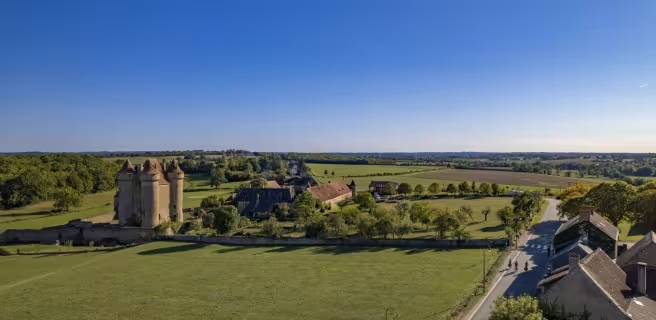
This is the final stage of this cycle route through the old province of the Berry before you reach the Creuse Valley, a great source of inspiration for artists. Following what was a front line in the Hundred Years War, a number of medieval vestiges stand out, for young and old alike to enjoy exploring. The châteaux in these parts, such as Sarzay, resemble castles depicted in children’s books, with tall towers emerging from wooded surrounds. While traces of pilgrimage may have been less visible cycling through the Berry so far, at Neuvy-Saint-Sépulchre, the circular Basilique Saint-Etienne, inspired by Jerusalem’s Church of the Holy Sepulchre, is a major attraction, and features on UNESCO’s World Heritage listing dedicated to the Santiago de Compostela pilgrimage routes through France. It’s certainly worth while leaving your bike to go and admire its surprising interiors.
Gargilesse-Dampierre / Crozant

10 Gargilesse-Dampierre / Crozant

23 km
1 h 30 min
I cycle often
After following several meanders in the Creuse Valley, you climb by bike through low woods rising above the river to then join the banks of the artificial Eguzon Lake a few kilometres later. Make the most of a well-deserved pause here, enjoying the water, before riding on to one of the Creuse Valley’s most iconic sites – the vestiges of Crozant’s medieval fort. This place combines so many elements, its towers and ramparts standing out from a rocky promontory, overseeing a dramatic meander in the Creuse. The magnificent views down on the valley from this historic fort have inspired countless artists, including Impressionists Claude Monet and Armand Guillaumin, not to mention Romantic composer Frédéric Chopin and his ill-starred lover, convention-defying female writer George Sand.
Crozant / Bénévent-l'Abbaye

11 Crozant / Bénévent-l'Abbaye

50 km
3 h 19 min
I cycle often
You ride into the old province of Limousin via the Creuse’s Vallée des Peintres (Artists’ Valley) starting from Crozant, marked by its dramatic medieval fort at the confluence of Creuse and Sédelle Valleys. Passing the village of Saint Germain Beaupré, the Saint-Jacques à Vélo cycle route then heads down to La Souterraine, a medieval town, signs bearing Santiago de Compostela scallop shell showing you the way via the Porte Saint Jean Gateway and the Church of Our Lady. Cyclists who enjoyed Crozant’s ruins should appreciate a detour to the medieval site of Bridiers just east of La Souterraine, with an imposing keep, plus vestiges of the lordly lodgings and ramparts. After La Souterraine, the cycle route takes you along the Gartempe Valley, leading to Le Grand Bourg, followed by the town of Bénévent-l’Abbaye, designated a Petite Cité de Caractère© for its heritage riches, including its admirable 12th-century abbey.
Bénévent-l'Abbaye / Châtelus-le-Marcheix

12 Bénévent-l'Abbaye / Châtelus-le-Marcheix

17 km
1 h 08 min
I cycle often
Heading out from the historic little town of Bénévent l’Abbaye, designated a Petite Cité de Caractère® for its attractions, ride on to the pretty village of Châtelus-le-Marcheix, set in a meander in the Thaurion Gorges. As you’re nearing the last stages of your cycling adventure to Limoges, you tackle the last western foothills of the Massif Central, riding on quiet roads, going along wooded slopes, the experience a sheer delight for cyclists.
Châtelus-le-Marcheix / Saint-Léonard-de-Noblat

13 Châtelus-le-Marcheix / Saint-Léonard-de-Noblat

26 km
1 h 43 min
I cycle a lot
Even if your panniers are weighing you down by now, you just need to tackle the last hills of the Béraude Valley and you’re soon on the final stretch towards Limoges. Make the most of a halt at Saint-Léonard-de-Noblat, set between the capital of the old province of Limousin and the extensive Vassivière Lake. The town’s collegiate church is listed on the UNESCO World Heritage Site dedicated to the Santiago de Compostela pilgrimage ways through France. The historic centre constitutes a remarkable heritage area, its well-preserved buildings protected and highlighted. The town was home to Raymond Poulidor, a legend in French cycling history, very popular in the Tour de France, which he may not have won, but all other cyclists come second to him in local people’s hearts! Saint-Léonard-de-Noblat is a member of Les 100 Plus Beaux Détours de France thanks to its heritage riches, and is proud of its gastronomic specialities, including Massepain (with marzipan) and Limousin beef.
Saint-Léonard-de-Noblat / Limoges

14 Saint-Léonard-de-Noblat / Limoges

26 km
1 h 43 min
I cycle a lot
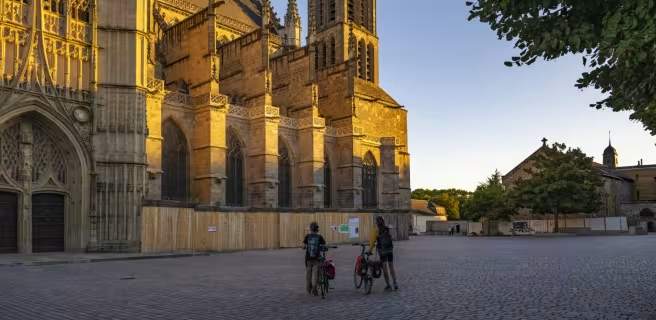
Riding down the Vienne River to reach Limoges is one of the highlights of this whole cycling adventure. The city is packed with fine monuments, craft skills and surprises. Make the most of your visit to the capital of the old province of the Limousin to explore its cobbled lanes, passing centuries-old coaching gateways and the odd risqué stone carving! Do visit the porcelain museum, even if you don’t have space for Limoges ware in your panniers, no doubt full of produce from the old province of Berry! Arriving in Limoges via the historic Saint-Etienne Bridge, you may notice, alongside local joggers, hikers on the GR national trail… and perhaps experience some of the emotions felt by pilgrims arriving at this saintly place down the centuries. The cathedral, also dedicated to St Stephen, is a rare major French Gothic monument south of the Loire and a must to visit. The route may stop here for now, but the Limoges - Saint-Jean-Pied-de-Port portion should be completed before too long!
Afficher les étapes