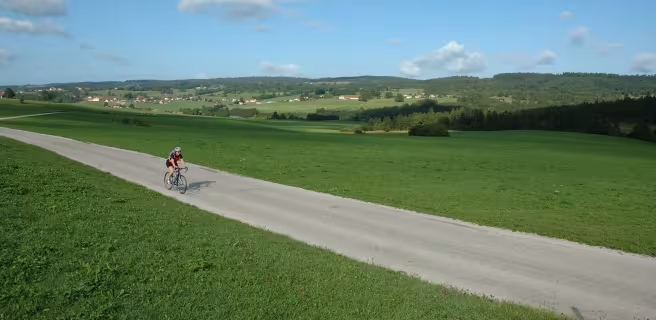
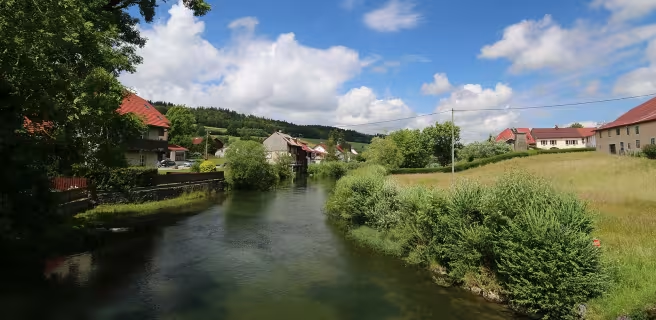
Paysage du Jura
Jura Tourisme - Stéphane Godin
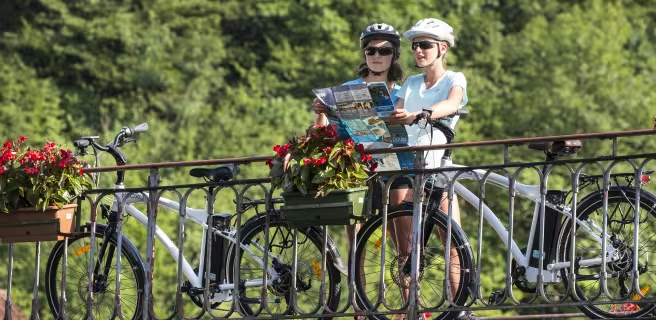
Château de Montbéliard sur l'EuroVelo 6
CRT Franche-Comté –M.JOLY
Découverte de la Vallée de la Valserine - GTJ Vélo
Ronald Jacobs
Sur l'EuroVelo 6, pique-nique près de Montbéliard
Nicolas Gascard - BFC Tourisme

Le Grand Tour du Doubs à vélo

Un parcours en 3D de 389 km

Le Grand Tour du Doubs, itinéraire grand spectacle, évolue sur des petites routes de montagne entre les crêtes des Montagnes du Jura et la surprenante vallée du Doubs. Avec en prime deux sites inscrits au patrimoine mondial de l’UNESCO ! Un véritable parcours en 3D qui concilie les Dimensions sportive, contemplative et culturelle.

Château de Montbéliard sur l'EuroVelo 6
CRT Franche-Comté –M.JOLY

Le Doubs farceur et les monts jurassiens

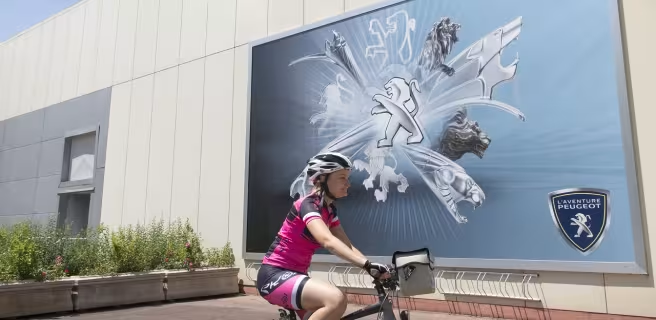
Clin d'œil à votre aventure à vélo, Montbéliard, outre son riche passé historique est également le berceau de l'automobile Peugeot, la visite du musée de l'Aventure Peugeot vous fera remonter le temps de l'industrie… et découvrir les premiers vélos de la marque ! Blotti au creux des vallées de l’Allan et du Doubs, Montbéliard est donc un point de départ bucolique idéal pour s’élancer vers ce Grand Tour du Doubs à vélo.

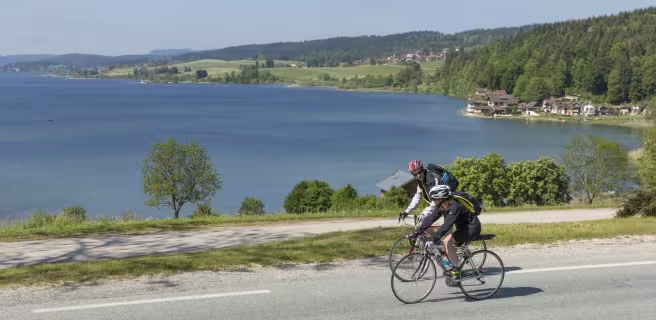
Quittant vite la très sinueuse vallée du Doubs pour grimper sur les plateaux du relief jurassien par la grande Traversée du Jura à vélo (GTJ à vélo), cette belle aventure cyclo sportive commence par jouer à cache cache avec les courbes de la rivière.

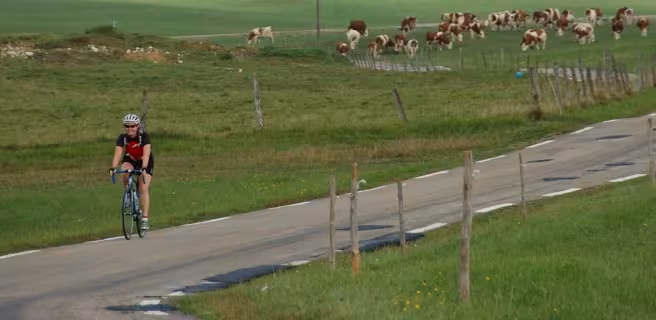
Petite route de montagne et nature - GTJ Vélo
Ronald Jacobs

Ascension panoramique et Saut du Doubs

Le parcours monte et descend, quitte puis retrouve l’encaissée vallée du Doubs, frontière naturelle avec la Suisse. Après la rude ascension pour sortir de Goumois, un panorama grandiose récompense les efforts des grimpeurs. S'ensuit une belle partie de manivelles au cœur de paysages grandioses entre alpages et forêts.  

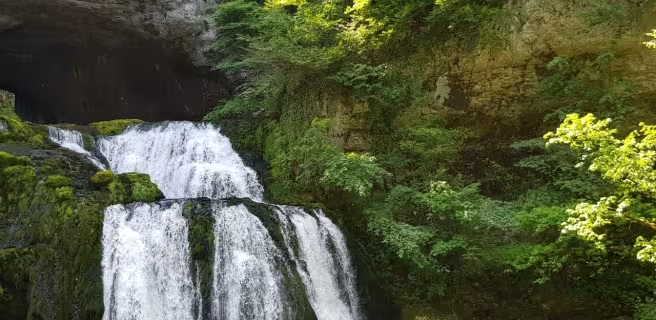
La rivière se dévoile plus sauvage, et avant Villers-le-Lac, il ne faut pas hésiter à s’écarter du parcours de la GTJ à vélo pour admirer le Saut du Doubs, une chute d’eau de 27 mètres ! Après une pause contemplative dans ce majestueux site franco-suisse au pied de la cascade, il est temps de repartir à l'assaut des pentes.  

DR Saline royale

Retour vers la vallée du Doubs

Le Grand Tour du Doubs passe par deux des villes les plus emblématiques du Doubs, Morteau et Pontarlier, puis dit au revoir à la GTJ à hauteur de l’époustouflant panorama sur le Lac de Saint-Point, pour fondre vers la vallée du Doubs.

Après un dernier regard vers le Mont d’Or, point culminant du Doubs à 1 463 m et emblématique montagne liée à la célèbre station VTT de Métabief, le parcours bifurque dorénavant sur la P'tite GTJ. Au milieu des fermes comtoises, il nous conduit à travers un paysage jurassien de pastoralisme et d’agriculture jusqu'à la Saline Royale d’Arc-et-Senans, inscrite au patrimoine mondial de l’UNESCO. Là, il faudra se muer en visiteurs pour profiter de ce site exceptionnel.

Citadelle Vauban à Besançon
Christophe Roy

Du mode cyclosportif au mode vélotouriste

Plus question à ce moment de se disputer l’arrivée au sommet des cols avec ces camarades d’aventure. On active ici son mode “vélotouriste contemplatif” pour profiter au mieux de l'EuroVelo 6 avant de retrouver le Doubs. Le 2e site inscrit au patrimoine mondial de l’UNESCO de ce Grand Tour du Doubs à vélo, à savoir la citadelle de Vauban à Besançon, surgit au détour d’une courbe.

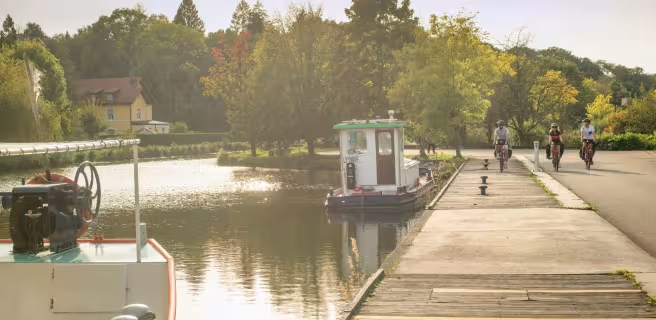
Après Besançon, la vallée encaissée propose un théâtre de verdure remarquable dominé par des forts qui en cadenassaient autrefois son accès. Seul le cabotage fluvial et quelques rapaces au cri perçant troublent le silence. Avant le retour à Montbéliard, grimper au fort du Mont Bart pour profiter de son éblouissant panorama vous rappellera votre début d’aventure par la GTJ !

Côté pratique :

Accès en train : voir le site TER Bourgogne Franche-Comté

  • Plusieurs gares desservent les lignes TER Dole < > Besançon-Viotte < > Belfort

- Ranchot
- Besançon
- Baume-les-Dames
- Clerval
- L’Isle-sur-le-Doubs
- Montbéliard

  • Plusieurs gares desservent la ligne TER Dole <> Neufchâtel (Suisse)

- Pontarlier
- Frasne
-Arc-et-Senans

Services : 

  • Voir les offres de services Accueil Vélo sur les pages détaillées des étapes
     

Tailor-made itineraries

Tailor-made itineraries

Télécharger le GPX
Montbéliard / Saint-Hyppolite

1 Montbéliard / Saint-Hyppolite

33 km
2 h 13 min
I cycle often
Before starting out on your Grande Traversée du Jura à Vélo adventure, take the time to admire the historic City of the Princes of Wurtemberg for a few hours – Montbéliard is well worth exploring. As well as its long history, this town was the cradle of Peugeot automobiles. Visit the Musée de l'Aventure Peugeot, along with the car factory, stepping back in industrial time, discovering how the company started by making some of the earliest bicycles! Having tasted the renowned Montbéliard sausage, served with potatoes and cancoillotte (a runny cheese), you should now have the energy to tackle the route through the Jura Mountains!
Saint-Hyppolite / Goumois

2 Saint-Hyppolite / Goumois

32 km
2 h 07 min
I cycle often
Saint-Hippolyte, designated a Petite Cité Comtoise de Caractère, is a delightful village to explore before a new burst of effort. The GTJ à Vélo takes you climbing to a plateau, soon rewarding you with magnificent landscapes. From here, ride on easily to the Franco-Swiss village of Goumois, renowned for fly fishing. Get off your bike for a moment to admire the Doubs River. Then cycle through its unspoilt gorges, a place where 18th-century philosopher Jean-Jacques Rousseau used to come to collect the varied plants, some rare, that thrive here.
Goumois / Villers-Le-Lac

3 Goumois / Villers-Le-Lac

44 km
2 h 55 min
I cycle a lot
The River Doubs is 453km long in total. Acting as part of the Franco-Swiss border, it has given its name to a whole département (French county), through which much of it runs. Its source is at Mouthe, along this stage of the GTJ à Vélo. The climb to get out of Goumois is steep, but the reward is grand views. Then enjoy a lovely cycling outing through bucolic parts, before you end up passing close to the Saut du Doubs, a splendid 27m-high waterfall worth going to see!
Villers-Le-Lac / Pontarlier

4 Villers-Le-Lac / Pontarlier

41 km
2 h 43 min
I cycle often
All along this stage of the Grande Traversée du Jura à Vélo, admire the architectural heritage of the Haut-Doubs, the mountainous part of the county of Doubs, including magnificent old Comtois farms. These were built around a convivial central room with a big fireplace known as a ‘tuyé’; charcuterie such as Morteau sausages, bacon and hams were hung, smoked and preserved here. Cycle on to Montbenoît Abbey to find silence for meditation before entering the town of Pontarlier via the Porte Saint-Pierre (St Peter’s Gate), a decorative 18th-century triumphal-style arch.
Pontarlier / Mouthe

5 Pontarlier / Mouthe

31 km
2 h 05 min
I cycle often
Leaving Pontarlier, the Fort de Joux, perched high on its rocky outcrop, looks down on your progress for several kilometres. Then the scene changes, providing amazing views over Saint Point Lake. This is a stage of the GTJ à Vélo offering landscapes that are as varied as they are beautiful. Continue to the foot of Mont d'Or, culminating at 1,463m. It is possible to follow an alternative route up towards its summit; you have to leave your bike to tackle the final few kilometres on foot, taking in exceptionally grand views across to the Alps.
Mouthe / Frasne

3 Mouthe / Frasne

41 km
2 h 43 min
I cycle often
Your cycling trip along La P’tite GTJ continues along quiet roads leading to Remoray Lake, followed by Lac Saint-Point, the largest natural lake in the département of Jura, and France’s fourth-largest. Over 7km long, Saint-Point Lake boasts several beaches and is particularly appreciated by summer visitors when temperatures rise. After passing via Vaux-et-Chantegrue, you cross a stretch of forest at Bonnevaux to reach the peat bogs of Frasne Bouverans, classified as a regional nature reserve. These peat bogs present a wide variety of humid zones, from low marshes to living marshes to wooded marshes. They also play a significant role in capturing greenhouse gases, their conservation important in limiting the impact of climate change. So, while exploring this ecosystem, make sure you leave it untouched!
Frasne / Nans-sous-Sainte-Anne

4 Frasne / Nans-sous-Sainte-Anne

31 km
2 h 05 min
I cycle often
After Frasne, the roads are quiet that lead you to Chapelle-d'Huin. The way is lined by fields in which distinctive Montbéliarde red-pied cows graze. Once through the woods of Chapelle-d’Huin, La P’tite GTJ guides you on to Levier. Dismount here to visit… the Musée du Cheval Comtois, devoted to these cart-horses, long a distinctive part of the old Franche-Comté Region’s identity. Originally bred to serve in battle, these steeds became widely used for heavy work, such as clearing woods, ploughing fields, caring for vineyards and taking away rubbish. They can still be seen performing some of these tasks today, although they’re more appreciated now for leisure activities, such as horse-drawn outings, carriage competitions and shows. The cycle route continues via Crouzet-Migette, the Lison River your companion up to Nans-sous-Sainte-Anne, where the river springs out of the earth as a waterfall, well worth seeing!
Nans-sous-Sainte-Anne / Port-Lesney

5 Nans-sous-Sainte-Anne / Port-Lesney
44 km
2 h 54 min
I cycle often
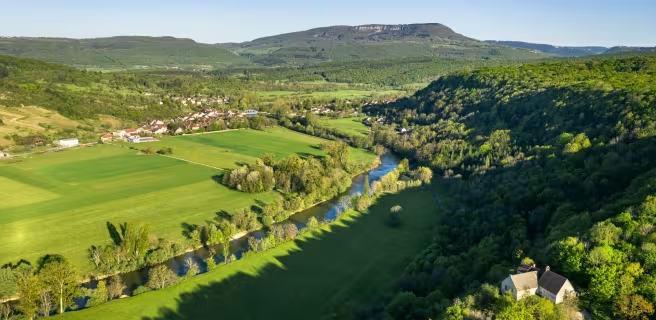
Before leaving Nans-sous-Sainte-Anne, do go on foot to see the remarkable site of the source of the Lison, the river springing out of the earth in the form of a startling waterfall, reached via a lovely country path. Back on your bike, this stage of La Petite GTJ first leads you through the cliff-lined Lison Valley towards Saraz. You leave the Lison at the level of Myon. After several stretches through forests, the cycle route reaches the Loue Valley at Champagne sur Loue. Another 4.7km away, the Saline Royale d’Arc-et-Senans – sensational saltworks designed in the 18th century by Claude-Nicolas Ledoux – makes a remarkable place to explore, a UNESCO World Heritage Site since 1982. At Port-Lesney, at certain times, you may observe the entrancing sight of paragliders high in the air, setting off from the nearby summit of Mont Poupet.
Ranchot / Port-Lesney

2 Ranchot / Port-Lesney
26 km
1 h 42 min
I begin
This short stage on the Tour du Jura Vélo Loisirs guides you into a wholly different world from the previous stage, making you follow the Voie des Salines (the Saltworks Route), a cycle route branching off from the major EuroVelo 6 to reach the two extraordinary historic salt towns of Arc-et-Senans and Salins-les-Bains, awarded UNESCO World Heritage Site status. Before reaching them, the route crosses Chaux Forest, one of the largest broad-leafed forests in France, home, for many centuries, to significant crafts centred around wood-working and the use of small ovens, notably attracting blacksmiths, potters, ceramicists, glass-blowers and more. Many regional tales and legends feature Chaux Forest, now a large nature reserve reputed for its remarkable flora and fauna, and a place that has also maintained an air of mystery.
Besançon / Ranchot

5 Besançon / Ranchot

36 km
2 h 24 min
I begin
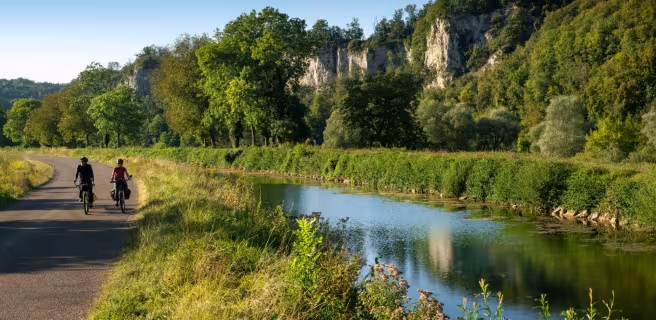
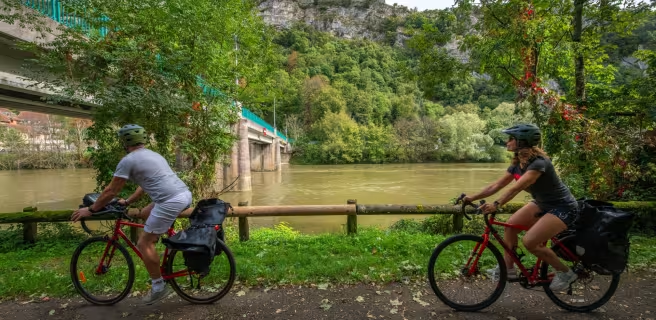
Leave behind Besançon, crowned by its citadel (part of a Vauban UNESCO World Heritage Site), riding westwards on a greenway that meanders along with the Doubs River. The Doubs Valley’s sides remain very steep, the natural amphitheatres of greenery dominated by forts that controlled the way in times past. Now, just river boats and the odd cry of a bird of prey break the silence. Midway along this stage, the Canal de Monsieur Tunnel, also known as the Percée de Thoraise, avoids a 4km-long meander for both boats and cyclists, but the latter do need to tackle a testing climb of some 100m! At Ranchot, a cycle trail called the Voie des Salines leads off through Jura woods to Arc-et-Senans, where you can visit the staggering Ancien Régime saltworks, the Saline Royale, a UNESCO World Heritage Site adding great interest to the longer version of this stage.
Baume-les-Dames / Besançon

4 Baume-les-Dames / Besançon

34 km
2 h 16 min
I begin
This is one of the most beautiful stages along EuroVelo 6, the way between Baume-les-Dames and Deluz bristling with wooded hills. The Doubs River meanders along, with family homes and huts lining its banks, very popular with locals on sunny days. The natural peace is only broken by the whistle of trains approaching tunnels along their route. Drawing closer to Besançon, the cycle route is dotted with vestiges of once-flourishing industries that brought noisy life to the valley until the first half of the 20th century. One final bend, then the city of Besançon comes into view, beautifully located in a great meander in the river. The town is crowned by a citadel designed by Louis XIV’s great military engineer Vauban, and part of a UNESCO Vauban World Heritage Site.
Montbéliard / Baume-les-Dames

3 Montbéliard / Baume-les-Dames

58 km
3 h 50 min
I begin
At Sochaux-Montbéliard, the Allan River and the Canal du Rhin au Rhône join forces, directing you gently towards Vaujecourt and the Doubs Valley. As the Doubs Valley narrows, the forts of Mont Bart and Mont Bavans recall how manmade defences were added to this natural frontier. You’ll need strength to climb to the Fort du Mont Bart to benefit from the stunning views along the whole valley. EuroVelo 6 then leads you on through undulating, green parts, beside rivers and through forests. After L'Isle-sur-le-Doubs, the natural meanders in the Doubs provide wonderful views over the countryside as well as historic towns dotted around the old Franche-Comté Region. Nestling below the Jura hills lies the town of Baume-les-Dames, with its interesting architecture, a welcoming place for passing cyclists.