L'Isle-sur-la-Sorgue
G. Kessler VPA

Tour du Comtat Venaissin à vélo

Près de 200 km à vélo entre comtat venaissin, Luberon et vallée du Rhône

La Via Venaissia est une véloroute ensoleillée, elle est ici le trait d’union provençal entre la Méditerranée à vélo et ViaRhôna pour une lumineuse échappée à vélo de plusieurs jours :

Rue de Carpentras
LesBroz Teddy Verneuil

Villages typiques de Provence

Avec en toile de fond les Dentelles de Montmirail, au départ d' Orange, on file pendant 56 kilomètres sur une confortable voie verte à la découverte des villages typiques de Provence.

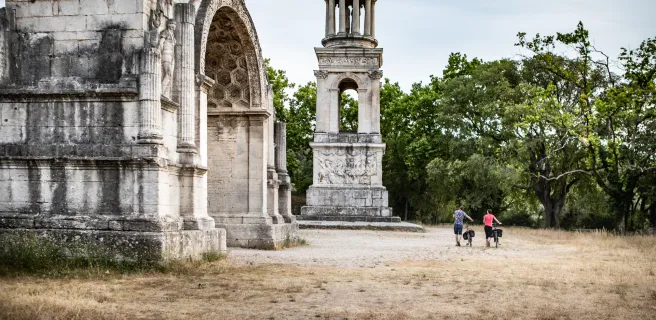
  • Orange : cette belle romaine compte deux prestigieux monuments classés au Patrimoine mondial de l’Unesco : son arc commémoratif et son théâtre antique. 
  • Carpentras : au pied du mont Ventoux et des Dentelles de Montmirail, sur les rives de l’Auzon, Carpentras se dresse au milieu des vignes et des vergers de la plaine comtadine. 
  • Pernes-les-Fontaines : à l’ombre d’un haut donjon, le temps est ici suspendu, des placettes ornées de fontaines, ruelles enchevêtrées, petits musées dédiés au patrimoine comtadin, ateliers d’artisans d’art… C’est une vraie carte postale !
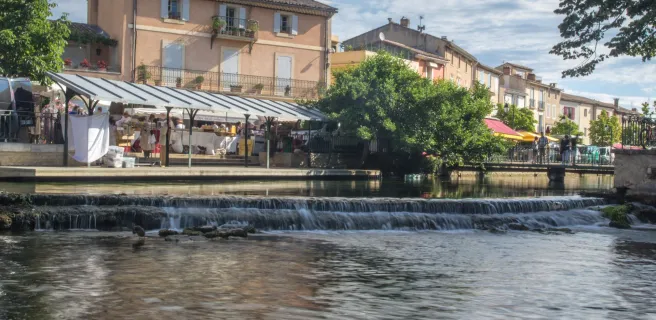
  • L'Isle-sur-la-Sorgue : bienvenue au temple des brocanteurs... À l’ombre des platanes, une courte déambulation suffit pour comprendre pourquoi cette petite cité entourée d’eau porte ce nom. 
Ruelle à Robion
LesBroz Teddy Verneuil

Robion : la clé du Luberon

La présence des grottes et d'eau est constitutive de ce village construit à son emplacement actuel au Moyen-Âge. En contrebas, vous découvrez sa place du village au charme typiquement provençal avec son église du XIIe siècle. Robion allie patrimoine architectural et nature omniprésente.

Point de départ de nombreuses randonnées dans le massif du Luberon, Robion est pour l'itinérance à vélo idéalement situé  :

Champ de lavandins sur La Méditerranée à vélo
La Méditerranée à vélo - Olivier Octobre

Trop de couleurs

Emblématiques de la Provence, les champs de lavandins illuminent les terres du Luberon et des Alpilles.  Sur ce tour du comtat venaissin à vélo, il ne faudra pas manquer les quelques produits star et pédaler les sens olfactifs en éveil :

Outre les sens olfactifs, les papilles ne seront pas en reste sur cet itinéraire.

Vignoble des Côtes du Rhône gardoises
ADRT

Vignoble des Côtes du Rhône

En remontant le cours du Rhône, Tarascon et Beaucaire, se mirent l'une dans l'autre et vous ouvrent le parcours de la ViaRhôna vers Avignon et Caderousse. Et les vignobles des Côtes du Rhône encadrent la véloroute. Autant d'appels à sortir des rails pour explorer les coteaux !

  • Tarascon : La Tarasque et l’inénarrable Tartarin l’ont rendue célèbre ! Surplombant le Rhône, son corpulent château en impose
  • Beaucaire : sa forteresse, ses hôtels particuliers et son port fluvial en font un incontournable arrêt sur votre parcours
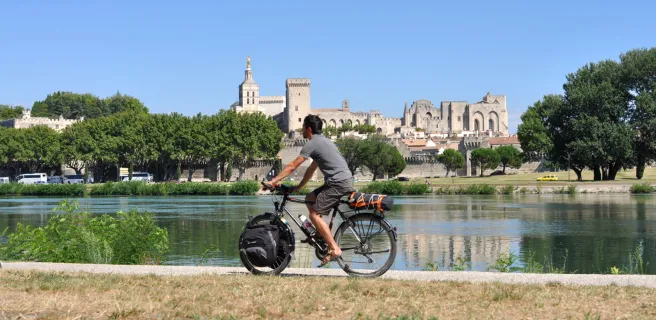
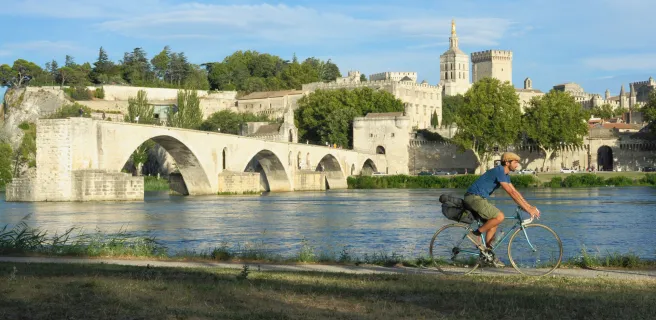
  • Avignon : son festival, sa cité des papes... et son célèbre pont
  • Caderousse : à deux tours de roues des vignobles de Châteauneuf du Pape, ce village protégé par sa digue apparait telle une île. 

Côté pratique :

🚆 Gares sur le parcours : Caderousse, Orange, Carpentras, L'Isle-sur-la-Sorgue, Cavaillon, Avignon TGV.

💡 Hébergements / restaurants / sites de visites : Rendez-vous sur les cartes des étapes ci-dessous pour afficher les différentes catégories de services.

Tailor-made itineraries

Tailor-made itineraries

Télécharger le GPX
Caderousse / Orange

1 Caderousse / Orange

10 km
1 h 21 min
I begin
On the ViaRhôna cycle route, at the level of Piolenc, continue first along this cycle route in the direction of the village of Caderousse, nestling in a former, older branch of the Rhône River, with an imposing levée or embankment worth seeing. From this village, make for the town of Orange, riding along quiet roads shared with motorized traffic. Then, explore the town’s exceptional historical vestiges, with its superb Roman triumphal arch and theatre listed as a UNESCO World Heritage Site. Note that from summer 2024, it will in fact be possible to reach Orange directly from Piolenc and its artificial lake (or plan d'eau) via a road shared with motorized traffic, followed by a footbridge over the Aigues River. At time of writing, this footbridge was being worked on, and therefore not open to cyclists or pedestrians.
Orange / Carpentras

2 Orange / Carpentras

25 km
1 h 40 min
I begin
Onwards to Carpentras, a town known for having the oldest synagogue in France, as well as producing culinary specialities, notably fine strawberries and berlingots, traditional boiled sweets with provençal flavours. On this stage, the Via Venaissia leads you away from the Rhône, splendid views opening up onto the Massif des Dentelles de Montmirail, a remarkable, jagged hill range, and the Mont Ventoux, the Giant of Provence, notorious as a punishing judge of even the fittest of cyclists on the Tour de France (nicknamed by celebrated journalist Albert Londres as “les forçats de la route”, or “slaves of the road”). At Loriol du Comtat, the Aqueduc des 5 Cantons draws your attention, forming a vital part of this town’s irrigation system, along with the Canal de Carpentras. On a stop-over, relish local specialities derived from the vines, olive groves and almond trees you’ve passed, bringing truly local flavour to your dining… as well as filling you with energy for an early start the following day.
Carpentras / L'Isle-sur-la-Sorgue

3 Carpentras / L'Isle-sur-la-Sorgue

16 km
1 h 05 min
I begin
This short stage of the Via Venaissia incites cyclists to enjoy provençal life at a slow pace, discovering gem in the old town of Carpentras, even abandoning the bike for a time to saunter around the pretty provençal markets held here. Leaving Carpentras, ride on to Pernes les Fontaines, a small historic town boasting no fewer than 41 fountains and nicknamed the Perle du Comtat for its exceptional heritage, along with its fine craft traditions. Stopping in Pernes-les- Fontaines, pay homage to Paul de Vivie, nicknamed Vélocio, who spread the word about the joys of the dérailleur gear-changing system and is considered in France as the father of cycling tourism. He was from Pernes-les-Fontaines and the town has dedicated its Musée du Cycle to him; this museum displays an impressive collection of bikes! In short, it might be said that this is the place where French cycling tourism was born, so any self-respecting cyclist should consider a visit here a kind of pilgrimage! Leaving Pernes, ride on via Velleron to L’Isle-sur-la-Sorgue, nicknamed Provence’s Little Venice, a lively lovable town crisscrossed by the clear, fresh branches of the Sorgue River.
L'Isle-sur-la-Sorgue / Robion

4 L'Isle-sur-la-Sorgue / Robion

12 km
48 min
I cycle often
Between L’Isle-sur-la-Sorgue and Robion, the Via Venaissia cycle route hasn’t yet been completed at time of writing.
L'Isle-sur-la-Sorgue is a place you won’t be able to resist stopping at. A year-round magnet for antiques collectors, its weekly Sunday market offers a wonderful display of provençal colours, scents and tastes. This enchanting place hones all the senses! From town, a link via road shared with motorized traffic enables you to join up with the Méditerranée à Vélo cycle route at the level of Robion, a key junction for cyclists crossing the Luberon region. From there, you have the option of riding on all the way to Menton (a Mediterranean resort on the French-Italian border), or then continuing on a Provence-based cycling circuit, going via Cavaillon, the foot of the steep little Alpilles Range, Beaucaire and Avignon, making use of the ViaRhôna cycle route. Along the way, there’s an additional detour you can make to Lagnes, a pretty medieval village on the slopes of the Monts de Vaucluse, the little range located between Luberon and Mont Ventoux. Lagnes offers a main entry point to the extraordinary Mur de la Peste (Plague Wall), a 27km-long rampart built along the Monts de Vaucluse in a vain attempt to protect the Comtat Venaissin region from a terrible outbreak of the plague in the 18th century, this Grande Peste (Great Plague) estimated, roughly, to have killed one in four people across Provence. This epidemic was evoked by famed regional writer Marcel Pagnol (he of the renowned provençal novels Jean de Florette and Manon des Sources, turned into famous films) in an unfinished work, Les Pestiférés (The Plague-stricken).
Cavaillon / Apt

9 Cavaillon / Apt

34 km
2 h 25 min
I cycle often
The Mediterraneen Cycle Route joins up with Le Luberon à Vélo, in this area where lavender prospers. Nestling at the foot of the Petit Luberon Range, Les Taillades mill and its waterwheel will surprise you. To join Le Calavon Greenway, go via Robion, a marvellously typical Provençal village, with its central square shaded by plane trees, its old-stone architecture and its fountain. Once on the lovely greenway, take in the Luberon, from the Lavender Museum at Coustellet to the picnic stop set up at the former station at Goult. Pause at the end of your cycling day to contemplate the venerable old Pont Julien bridge, before visiting the pedestrian streets of Apt. This stage is good for families once you’ve joined Le Calavon Greenway.
Beaucaire - Tarascon / Cavaillon

8 Beaucaire - Tarascon / Cavaillon

39 km
3 h 19 min
I cycle often
Guarding the Rhône, Tarascon’s medieval fort signals the entrance to the Alpilles for cyclists on the Méditerranée à Vélo route. The town of St-Rémy-de-Provence makes an unmissable stop for atmosphere and for understanding Van Gogh’s fascination with this area, marked by the special light emanating from the local limestone. The greenway from St-Etienne-du-Grès to St-Rémy-de-Provence is a successful transformation of a former rail line, with stopping points for cyclists as well as locals to enjoy. The last stretch of this stage takes you along pretty little farm tracks, with beautiful views over the Alpilles. A cycle path leads you across the Durance River, facilitating your arrival in the town of Cavaillon.
Avignon / Beaucaire

19 Avignon / Beaucaire

35 km
2 h 31 min
I begin
Take a last look back at the great papal city before ViaRhôna leads you across the Rhône into the county of the Gard. A dedicated cycle track will be put in place here; for the moment, follow the green strip of land between the TGV rail bridges and Aramon Bridge. Then the route zigzags between vineyards and orchards before joining the Pont du Gard Greenway, heading to the Rhône-side port of Beaucaire, designated a Ville d’Art et d’Histoire for its rich historical legacy, and set at a point where the regions of Languedoc and Provence meet.
Caderousse / Avignon

18 Caderousse / Avignon

26 km
2 h 24 min
I cycle often
This stage combines a gourmet break (Châteauneuf-du-Pape and its famous vineyards), nature discovery (numerous river islands punctuate the route) and history. Leaving the small village of Caderousse, follow the cycle path along the dike, then the Revestidou lake. ViaRhôna then joins the banks of the Rhone counter-canal as a greenway, offering fine views of the Château de Montfaucon, Châteauneuf-du-Pape and the Tour de l'Hers. The route continues along small roads lined with plane trees on the Ile de l'Oiselay as far as the Pont des Arméniers, before returning to the greenway on the Ile de l'Oiselay, a shaded island of greenery. After a few kilometers, the itinerary joins the banks of the Rhône, to cross it by a superb suspended footbridge, facing the Sauveterre dam. Inaugurated in autumn 2023, this structure provides access to Avignon via Barthelasse Island, Europe's largest river island. The arrival is "papal", offering a breathtaking view first of Villeneuve les Avignon, then of the city of the Popes, the majestic Rhône, the famous Pont d'Avignon, and Mont Ventoux on the horizon. This is one of the most beautiful views of Avignon!

Les meilleurs séjours pour en profiter