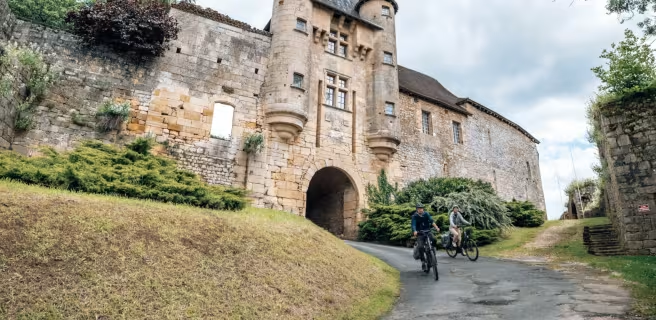
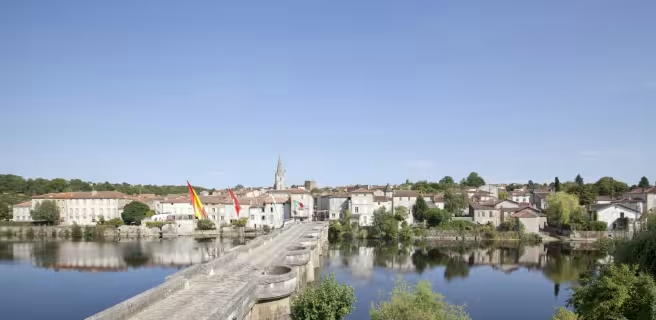
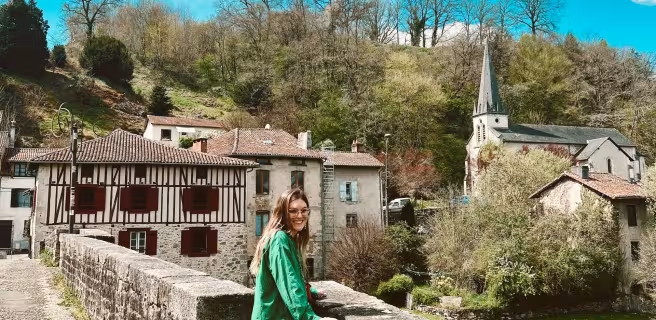
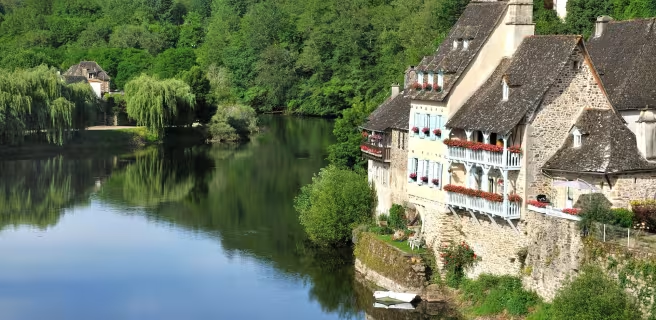
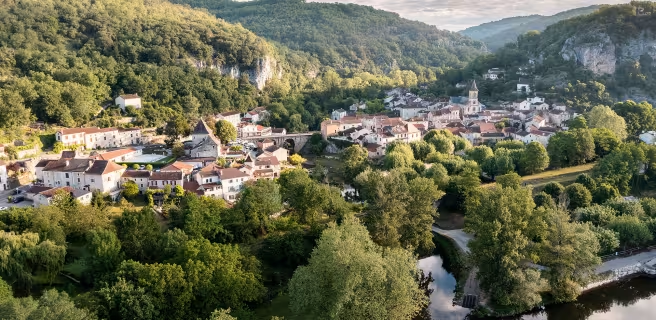
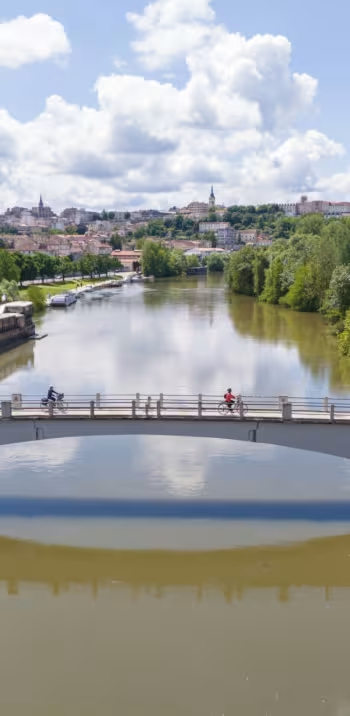
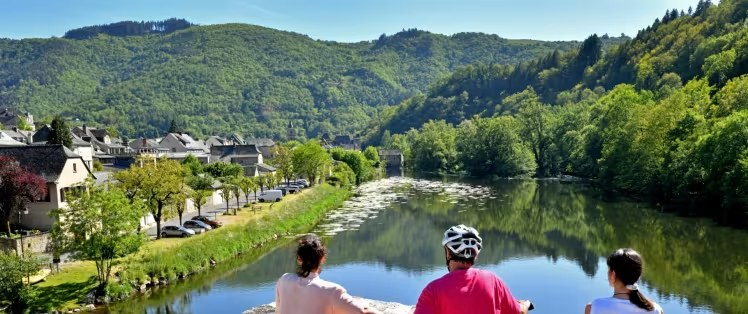
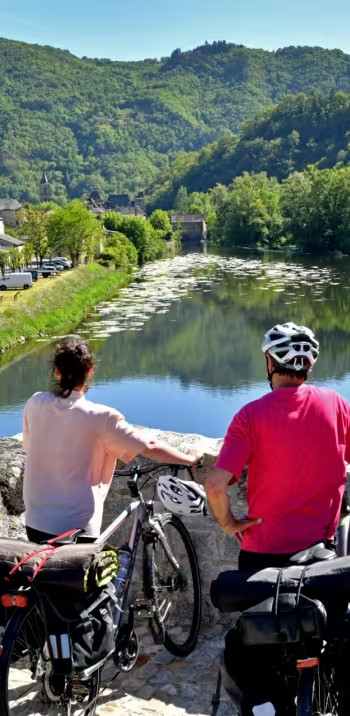
Vue du village à la confluence du Ver et du Lot avec le Quercy au loin
C. Novello

De la Dordogne au Lot à vélo

680 km à travers l’histoire du Périgord, du Limousin et du Quercy

Un itinéraire ambitieux pour découvrir la richesse des vallées de la Dordogne, de la Vienne et du Lot. Autour de ces trois rivières, remontez le fil de l’histoire, de la Préhistoire à l’époque médiévale, entre grottes, villages, châteaux et paysages à couper le souffle. 
Un parcours de 680 km, avec quelques grandes ascensions, qui emprunte principalement des routes partagées pour un voyage d’une dizaine de jours à travers les époques.

Ville de départ : Sarlat-la-Canéda 
Ville d’arrivée : Castelfranc
Distance : 680 km
Balisage : La Flow Vélo / La Scandibérique - EuroVelo 3 / La Vélidéale / La Vagabonde / La Vallée du Lot à Vélo
 

Vue aérienne du Château d'Excideuil - La Flow Vélo
TTW Production

Remontez le temps sur les routes de Dordogne et de Charente

C’est au cœur du Périgord noir, dans la ville d’art et d’histoire de Sarlat-la-Canéda que commence votre aventure. Un parcours qui vous emmènera à la découverte de villages typiques de la région avant d’atteindre les rives de la Vézère. Par un petit détour depuis Le Lardin, vous pouvez faire la liaison jusqu’à la grotte de Lascaux IV pour découvrir ce trésor préhistorique. 
 

Une fois la Vézère franchie, place aux premiers châteaux de l’itinéraire avec ceux de Peyraux et de Hautefort. Votre route est également rythmée par de nombreux villages médiévaux et des fermes qui appellent à une halte gourmande pour déguster les produits du terroir. Et après un bon ravitaillement, gagnez la Haute-Charente et les lacs de Mas-Chaban et de Lavaud pour une pause baignade bien méritée.

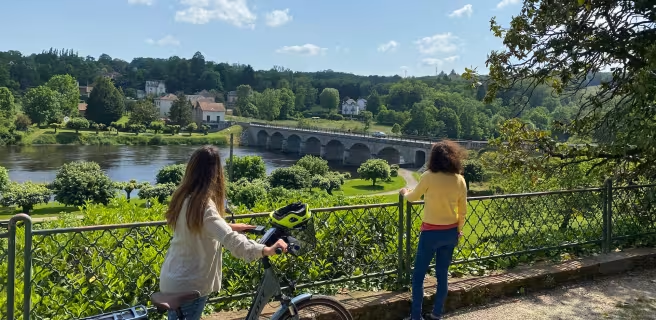
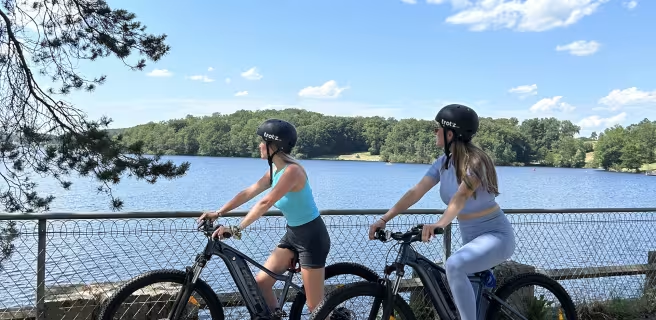
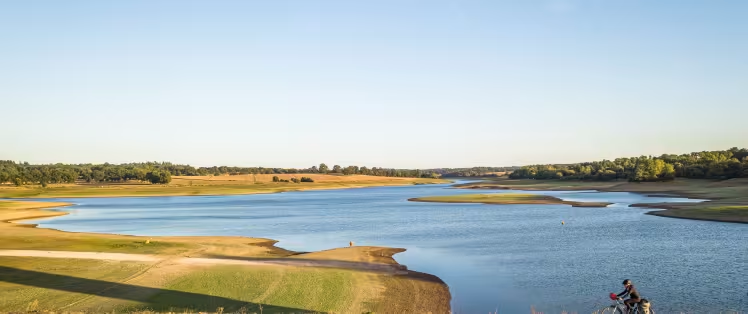
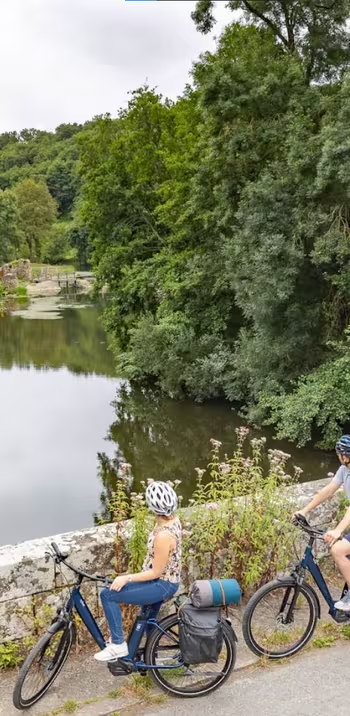
Couple de cyclistes face au lac de Vassivière
Sébastien Laval

Au fil de l’eau, de la Vienne au lac de Vassivière

Avant de rejoindre la Vienne, traversez le site géologique de Rochechouart. C’est ici, il y a des millions d’années, qu’une météorite s'est écrasée et a donné l’impactite. Une pierre née de la fusion de cette collision, utilisée pour la construction de plusieurs bâtiments de la ville, comme son château. Après cette découverte géologique et historique, pédalez au fil de l’eau dans la vallée de la Vienne, votre guide vers Limoges et son architecture remarquable.
 

Une fois sorti de la capitale du Limousin, partez à la découverte des nombreux moulins qui bordent la rivière, comme celui du Got, qui fabrique toujours du papier de manière artisanale. Petit à petit, la Vienne s’efface pour laisser place à la Maulde jusqu’au lac de Vassivière surnommé le “petit Canada”. Avec ses vastes étendues d’eau, ses îles et ses forêts de résineux, c’est l’endroit parfait pour poser votre vélo quelques heures et faire une balade, à pied, au bord du lac. 
 

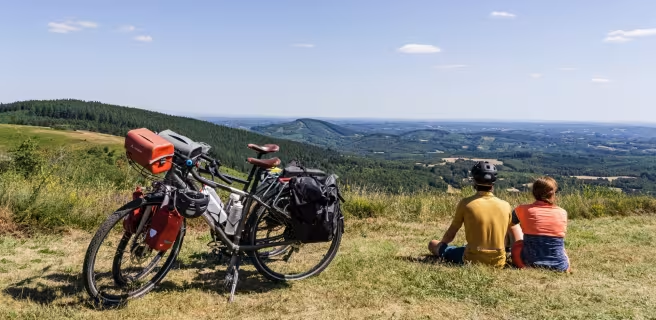
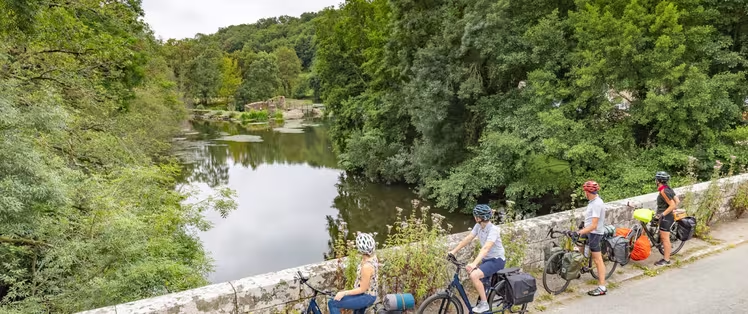
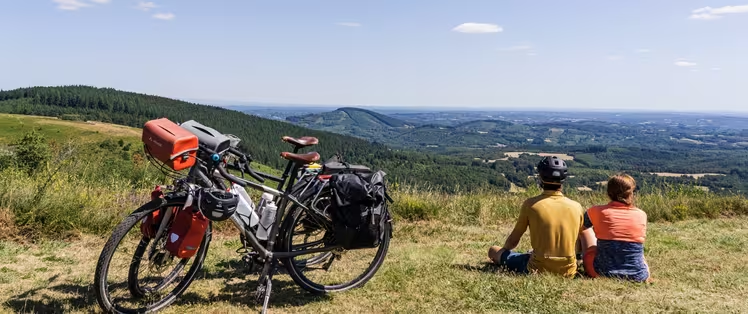
Couple de voyageurs à vélo qui profitent du point de vue depuis le Suc en May
UnMondeàVélo

Ascensions et patrimoine en Limousin

Cette partie de l’itinéraire est la plus aérienne, d’abord sur le plateau de Millevaches autour de ses lacs et tourbières, puis avec l’ascension du massif du Suc de May et du Puy de la Monédière à plus de 900 m d’altitude. Après l’effort, prenez le temps d’admirer la vue, et si la météo le permet, d’entrevoir au loin les monts du Cantal. La descente se fait par la charmante vallée de la Doustre qui vous accompagne jusqu’à la plus connue vallée de la Dordogne. Ici, explorez les diverses cités de caractère construites au fil des siècles, comme celles de La Roche-Canillac, d’Argentat-sur-Dordogne ou encore de Beaulieu-sur-Dordogne, élue “Plus Beau Village de France”.

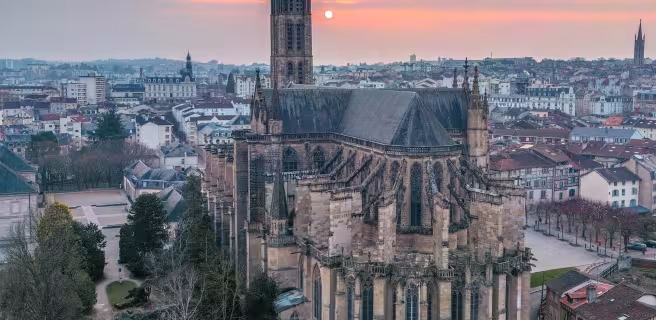
Pont Valentré à Cahors dans le Lot
Lot Tourisme - Cyril Novello

Derniers panoramas en Quercy

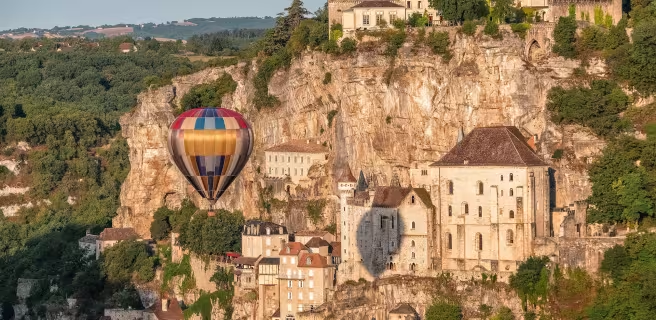
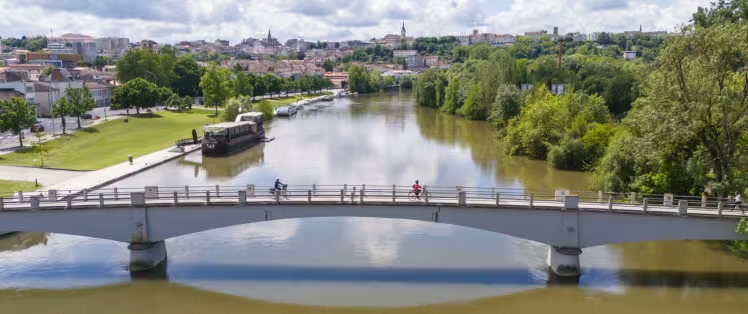
Le village perché de Rocamadour marque le début de votre immersion dans les Causses du Quercy. Évoluez à travers ses plateaux calcaires et ses vallées verdoyantes avant d’entamer votre descente par la vallée du Vers jusqu’à sa confluence avec le Lot. Vous serpentez dans ses méandres jusqu’à apercevoir Cahors, une ville à l’ambiance méridionale au riche patrimoine historique, et surtout, une cité généreuse en plaisirs gourmands. Entre ses vins, ses mets luxueux, ses fromages et ses pâtisseries, vous serez récompensé comme il se doit de vos efforts pour clôturer votre voyage à vélo entre la vallée de la Dordogne et la vallée du Lot.

⭐ Un passage incontournable dans le Lot, dégustez les vins de l'AOC Cahors au Clos Triguedina en poursuivant votre voyage sur La Vallée du Lot à vélo.

Côté pratique : 

Accès en train :


Hébergements / restaurants / sites de visite :  

  • Voir les offres de services Accueil Vélo sur les pages détaillées des étapes
     

Tailor-made itineraries

Tailor-made itineraries

Télécharger le GPX
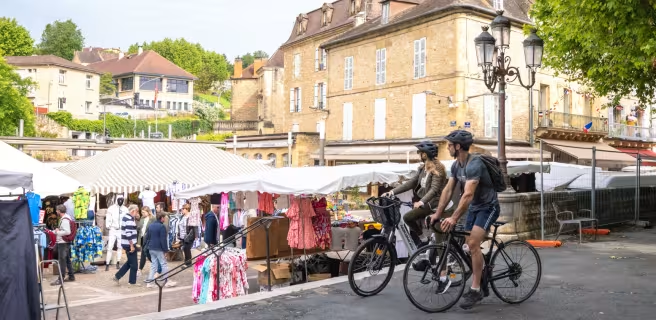
Sarlat-la-Canéda / Le Lardin-Saint-Lazare
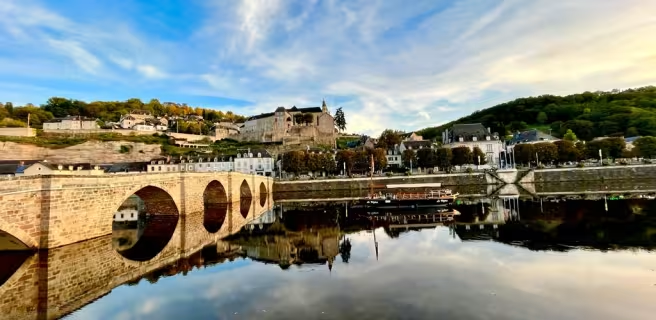
1 Sarlat-la-Canéda / Le Lardin-Saint-Lazare

39 km
2 h 26 min
I cycle often
The Flow Vélo now starts in Sarlat-la-Canéda, capital of the Périgord Noir region. The cycle route joins the valleys of the Chironde and Coly rivers. The bucolic landscapes of the Périgord accompany you all the way along little-travelled roads. Typical Périgord villages punctuate the stops along the way, and everywhere, in season, you can enjoy local produce, whether at a restaurant or strolling through the market. Once you've reached your destination, the most curious cyclists can extend their stopover by discovering Lascaux IV or the ancient town of Terrassson-Lavilledieu... just a few kilometers away.
Le Lardin / Excideuil

2 Le Lardin / Excideuil

47 km
3 h 25 min
I cycle often
Enjoy the bucolic landscapes of the Dordogne, particularly around the Château de Peyraux, surrounded by its green landscape. In the Elle valley at Villac, with its forests as far as the eye can see, you may catch sight of mouflons and red sandstone buildings. Along the way, park your bike and visit Saint-Robert, one of France's most beautiful villages. Stroll through its medieval streets, admire its Romanesque church and stop off at a quaint café for a local pastry. The Château de Hautefort dominates the surrounding countryside, and the Musée d'Histoire de la Médecine, in the same architectural style as the Château, now houses a museum with an impressive collection (6,500 objects). Around Hautefort, you're in the heart of AOC Noix du Périgord and Canard Gras country. A number of farms offer tastings of 100% local produce. Take a short detour to Saint Raphaël, a pretty little hilltop village, and admire the view from its panoramic viewpoint before returning to Excideuil.
Excideuil / Thiviers

3 Excideuil / Thiviers

20 km
1 h 43 min
I begin
This stage of the Flow Vélo plunges you into the heart of the natural beauty of the Dordogne and Périgord Vert. In Excideuil, you ride along the banks of the Loue. You'll need to put your feet up to stroll through the medieval town. Built by the Viscounts of Limoges, the Château d'Excideuil is a strategic site from which to watch over the passage from Périgord to Limousin. On Thursdays in Excideuil, the heart of the town becomes pedestrianized, and the colorful market is a must for lovers of local gastronomy. Continue into the heart of Périgord Vert! You'll cycle uphill and downhill, taking in many viewpoints and river banks... Once you're in Thiviers, stop to enjoy the town's many shops. A stopping-off point on the Chemin de Compostelle, Thiviers was surrounded by ramparts in the Middle Ages, its elevated position making it a sentinel, and a few buildings from this era still stand scattered along its narrow streets.
Thiviers / Nontron

4 Thiviers / Nontron

28 km
2 h 06 min
I cycle often
This stage invites you to dive deep into the natural beauty of the Dordogne and Périgord Vert. You set off on a lovely greenway through shaded woods, leading you gently to Saint-Pardoux-la-Rivière. Don’t miss the little detour to see the picturesque village of Saint-Jean-de-Côle, with its half-timbered homes, plus the Château de la Marthonie, transporting you to a different era. After the greenway, the route follows quiet country roads in bucolic settings up to Nontron, a town renowned for its cutlery-making, perched above the Bandiat Valley.
Nontron / Marthon

5 Nontron / Marthon

24 km
1 h 41 min
I cycle often
This stage of La Flow Vélo will delight those of you who appreciate nature and tranquillity. The cycle route crosses the villages of Saint-Martin-le-Pin, Jommelières and Javerlhac. You pass right under the 16th-century Château de Javerlhac, a listed French historic monument. Then you enter the département (or French county) of Charente at Souffrignac. Here, check out the organic produce at the Jardins du Bandiat. The route continues along the greenway La Coulée d’Oc, traversing farmland and woods.
Massignac / Marthon

31 Massignac / Marthon

35 km
2 h 19 min
I cycle a lot
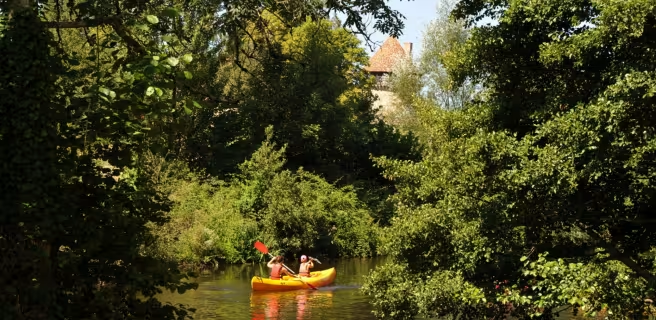
This stage takes you along minor county roads offering lovely views, but steep climbs too! Along the way, the valleys are deep, as you’re riding along the western foothills of the Massif Central Range. The Tardoire River can rise suddenly in heavy rain. At Montbron, though, there’s a lovely watersports centre from which you can launch onto the waters in a canoe. Marthon is where the Scandibérique and La Flow vélo cycle routes connect. It’s a village that has preserved its covered market and an historic keep known as the Tour du Breuil. There are shops here, so you can stock up here before continuing along the route.
Confolens / Massignac

30 Confolens / Massignac

38 km
2 h 31 min
I cycle a lot
Leaving Confolens’s medieval bridge behind, the route takes you beside the Vienne River up to Exideuil, the way revealing more and more of the Charente area’s character, the Château de la Chétardie even being the seat of a Confrérie du Cognac, a fraternity for the famed brandy spirit! In this eastern part of the county, or département, of Charente, the lakes of Lavaud and Mas Chaban were created to help regulate the lack of water in the Charente River certain summers; they also offer nautical activities and places for bird-watching, nice ways to take a break before riding on to Massignac, just a few kilometres on, and a place for a stopover on the route.
Rochechouart / Confolens

6 Rochechouart / Confolens

38 km
2 h 33 min
I cycle often
Between Rochechouart and Confolens, our cycle route takes you through an unusual area marked by the impact made by a meteorite smashing into Earth some 214 million years ago. This geological event is even reflected in the local architecture, which has made use down the centuries of the impact breccia, or fragments of rock fused together as a result of the cataclysmic event. The Vélidéale takes you close to Lac de Lavaud (where it also joins up with the Scandibérique cycle route), one of two lakes in the Haute Charente area where you can enjoy both bird-watching (notably at the Observatoire de Foucherie) and outdoor leisure activities. Note that a few kilometres away from the cycle route itself, at Chassenon, you can go and visit some of the largest and best-preserved vestiges of Gallo-Roman thermal baths in France. Next, you continue to ride along the charming Vienne Valley, crossing the river at Exideuil, a village whose little Romanesque church is a listed historic monument.
Aixe-sur-Vienne / Rochechouart

5 Aixe-sur-Vienne / Rochechouart

40 km
2 h 39 min
I cycle often
Between Aixe-sur-Vienne and Rochechouart, the Vélidéale cycle route continues to guide you along beside the Vienne; you only leave the river at the end of this stage, at the level of St-Brice-sur-Vienne. Along the way, Saint-Yrieix-sous-Aixe is a charming little town that makes for a perfect place to stop for lunch. As to the Étang de la Pouge, a lake at Saint-Auvent in the midst of the Parc Naturel Régional du Périgord Limousin, and a protected Natura 2000 site, it offers idyllic surrounds to ride around. From its observatory, spot the many species of birds that rest and nest here. Finally, you draw close to the little town of Rochechouart, dominated by its magnificent château guarding the valley, the place now open to visitors as the Musée Départemental d’Art Contemporain.
Limoges / Aixe-sur-Vienne

4 Limoges / Aixe-sur-Vienne

20 km
1 h 19 min
I cycle often
The Vélidéale cycle route continues to guide you through the old Limousin Region, going from Limoges to Aixe-sur-Vienne, once again along the well-laid-out banks of the Vienne River. For cyclists working up an appetite along the way, the Limousin restaurants on this stage make for excellent places to stop and savour high-quality local produce. Before leaving the old capital of the Limousin, Limoges, do feast first on its historic quarters, such as those around Place des Halles or the Quartier de la Boucherie and the Musée National de la Porcelaine Adrien Dubouché… but further cultural morsels will also attract your attention along this stage. Along a stretch of greenway, make the most of Vaseix Forest (a county forest with 105 hectares and criss-crossed by trails), a perfect spot for a shaded picnic before reaching Aixe-sur-Vienne.
Saint-Léonard-de-Noblat / Limoges

3 Saint-Léonard-de-Noblat / Limoges

28 km
1 h 51 min
I cycle often
Leaving Saint-Léonard de Noblat for Limoges, the Vélidéale continues to lead you beside the Vienne. This river has deeply marked the landscapes around here, as well as supplying all manner of mills with power, such as the Moulin du Got (a 10-minute ride out), still making paper the old-fashioned way. And to see how cleverly cartoonists can turn paper into art, stop to visit the Centre International de la Caricature et du Dessin d'Humour at Saint-Just-le-Martel, where you can enjoy a good laugh at the same time as resting your pins! The cycle route guides you into the city of Limoges via a fine historic bridge, the Pont Saint-Martial. Do explore the cathedral quarter, among others, with the Bishops’ Garden, or Jardin de l'Evêché, a wonderful place to relax and take in views of Limoges before tomorrow’s cycling stage.
Bujaleuf / Saint-Léonard-de-Noblat

2 Bujaleuf / Saint-Léonard-de-Noblat

18 km
1 h 11 min
I cycle often
Between Bujaleuf and Saint-Léonard-de-Noblat, the Vélidéale cycle route runs beside the Maulde River (passing the Moulin de l'Artige, an historic mill), followed by the Vienne River. You ride through parts where France’s most popular cyclists of all time, Raymond Poulidor, used to train. In the town of Saint-Léonard de Noblat, explore shopping streets that Poupou, as he was nicknamed, loved so much. You’ll arrive at the foot of the collegiate church that forms part of the wider UNESCO World Heritage Site singling out fine monuments along the Santiago de Compostela pilgrimage route. Also taste a massepain, an almond marzipan speciality made here, a sweet top-up that should give you an energy boost!
Royère-de-Vassivière / Bujaleuf

1 Royère-de-Vassivière / Bujaleuf

35 km
2 h 20 min
I cycle often
The Vélidéale cycle route starts at Royère de Vassivière in the département (French county) of Creuse and also in the midst of the Parc Naturel Régional de Millevaches en Limousin. In the early part of this stage, the Lac de Vassivière, a vast, many-branched stretch of water covering over 1,000 hectares, provides dreamy spots at which to stop for a refreshing break. Those who appreciate contemplative outdoor contemporary art should visit the Centre International d’Art et du Paysage on Vassivière Island. Then, continue riding alongside the Maulde River and, just before the stage ends, make the most of the Lac de Saint-Hélène with its beach just north of Bujaleuf.
Royère-de-Vassivière / Bugeat

4 Royère-de-Vassivière / Bugeat

56 km
3 h 43 min
I cycle a lot
At the Lac du Chammet, you reach the département, or county, of Corrèze and can explore some of the Plateau de Millevaches, a major northern upland of Massif Central (France’s central-southern mountainous zone), reaching almost 1,000m in altitude. This area has been nicknamed ‘‘France’s water tower’’; not only is it covered in lakes and peatbogs, but many significant rivers also rise here, notably the Vézère, Vienne, Corrèze and Creuse. This distinctive area is great for cycling adventures, riders able to enjoy both unspoilt landscapes and the feeling of freedom they impart. The way is dotted with small heritage delights, such as plank-bridges, Gallo-Roman vestiges and carved stone Christian crosses, as well as the low stone walls dividing up many fields. There are dense forests of deciduous trees and pines, and moors, peatbogs and prairies, making for varied landscapes. Many migrating birds appreciate these parts. Looking skywards, you may even spot a short-toed snake eagle!
Bugeat / Clergoux

5 Bugeat / Clergoux

64 km
4 h 15 min
I cycle a lot
From Bugeat, your cycling adventure along La Vagabonde cycle route continues through the Massif des Monédières, a granite upland characterized by dry moorlands, classified a Natura 2000 zone for its exceptional fauna and flora. This distinctly steep stage leads you by bike right up to the summit of the Massif du Suc au May (at 908m), then on to the Puy de la Monédière (at 922m), affording you spectacular views. At this altitude, look across the plateau and down the valleys of various streams and rivers, including the Corrèze. On clear days, you can even see the ancient volcanic heights of the Cantal, to the east in the Auvergne. Drink in the fresh air in these peaceful natural surrounds. What’s more, the cycle route takes you to one of the most recent time-trial locations in the Tour de France, between Lestards and Chaumeil, a stretch that will give your legs a good work-out!
Clergoux / Beaulieu-sur-Dordogne

6 Clergoux / Beaulieu-sur-Dordogne

54 km
3 h 35 min
I cycle often
La Vagabonde cycle route now leads you into the narrow, green, lively Doustre Valley. You’ll be won over by its magnificent landscapes marked by layer upon layer of hills as you follow the riverbed by bike. Next, from Argentat-sur-Dordogne, the cycle route clings to the famed Dordogne Valley, its ‘‘bassin’’, or catchment area, designated the largest UNESCO biosphere reserve in France, covering 24,000km2 of unspoilt countryside. Cycling beside the river, as well as marvelling at the valley’s magical landscapes, admire its idyllic built heritage. You cycle through a series of villages designated Cités de Caractère, La Roche-Canillac, Argentat-sur-Dordogne and Beaulieu-sur-Dordogne, the last also recently designated a member of the association Les Plus Beaux Villages de France.
Beaulieu-sur-Dordogne / Rocamadour

7 Beaulieu-sur-Dordogne / Rocamadour

57 km
3 h 48 min
I cycle often
Leaving behind the shaded, wooded roads of the département (county) of Corrèze, La Vagabonde cycle route now guides riders along bucolic little country roads often used by farmers in the northern part of the département of the Lot. Before re-joining the magnificent Dordogne Valley, you ride through long-established farmland marked by walnut orchards. From the village of Gluges, a first slope with a pretty stone wall guarding one side of the road enables you to meander up above the valley. Next, follow the way to Lacave, its name making clear that this parish conceals one of the most remarkable caves in the Lot. Leaving Lacave, a long, challenging slope takes you up to the splendid pilgrimage village of Rocamadour, drawing tourists from around the globe. You find yourself at the top of the cliff on the north side of the village, enjoying amazing views down on the Alzou Valley and the religious shrine clinging to the cliff. An unmissable place to visit along this cycle route, explore its medieval lanes, walk along the castle ramparts and pay your respects to the Black Virgin. Rocamadour’s religious shrine has been classified as part of a UNESCO World Heritage Site devoted to Santiago de Compostela pilgrimage sites.
Rocamadour / Cahors

8 Rocamadour / Cahors

65 km
4 h 19 min
I cycle often
La Vagabonde cycle route gradually distances itself from the Dordogne Valley, leading cyclists into the Parc Naturel Régional des Causses du Quercy with its distinctive, rocky atmosphere – this park has been classified a UNESCO Geopark for its exceptional geology. As well as the extensive limestone plateaus that characterize the area, it also boasts steep green valleys enclosed by high cliffs. Having tackled a stretch along the Causse du Quercy by bike, crossing several villages, you then ride down into the secretive Vers Valley. Cutting north-south through its causse, this tributary of the Lot River has carved out a path from Labastide-Murat to its confluence with the Lot River at the village of Vers. Along the way, crossing the villages of St-Martin de Vers and St-Sauveur la Vallée, stop to drink in their atmospheres. Finally, follow the Lot Valley to reach Cahors, designated a Ville d’Art et d’Histoire for its cultural riches, and capital of the département, or county, of the Lot. This little city boasts a southern atmosphere, rich historical vestiges and many culinary treats!

Découvrez également