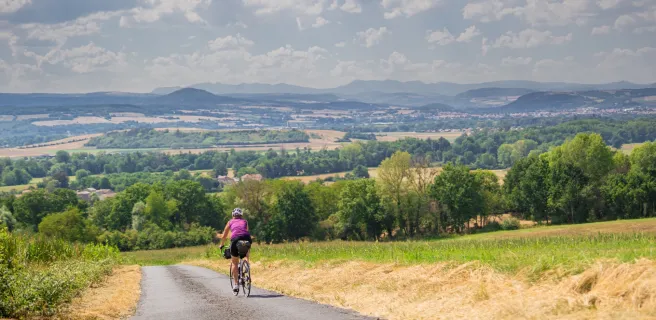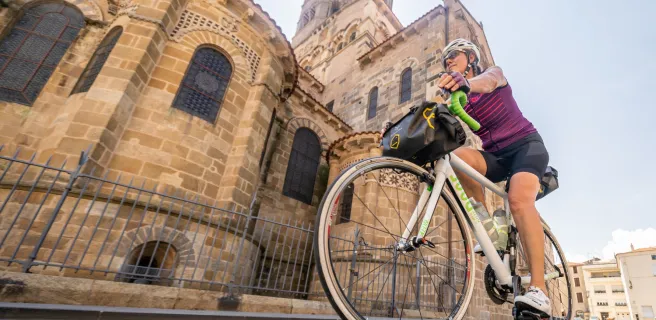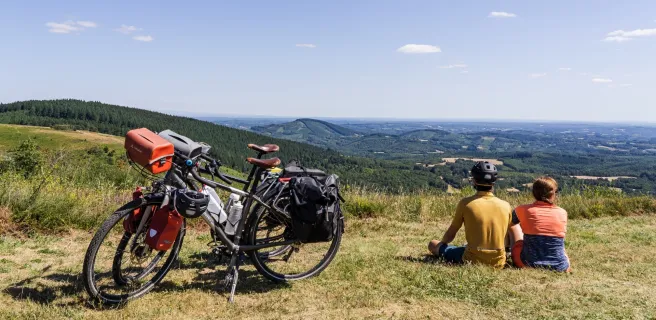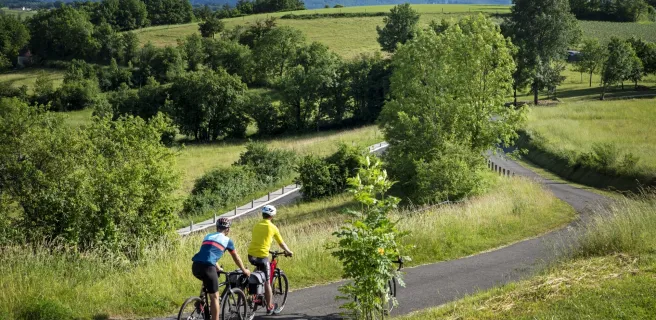
Vue sur la Limagne et le massif du Sancy
Alba Photographie - Auvergne-Rhône-Alpes Tourisme

Tour des Grands Espaces

Une grande aventure de 1 200 km pour rouler au coeur d'une France sauvage et préservée !

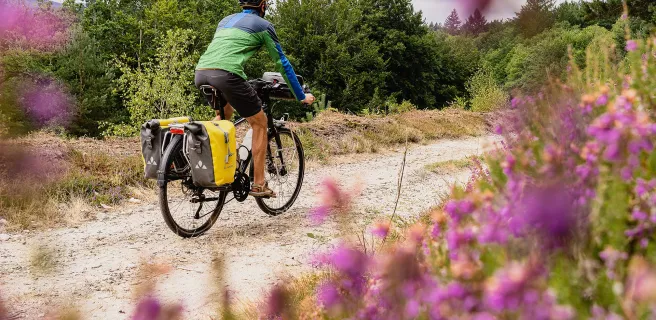
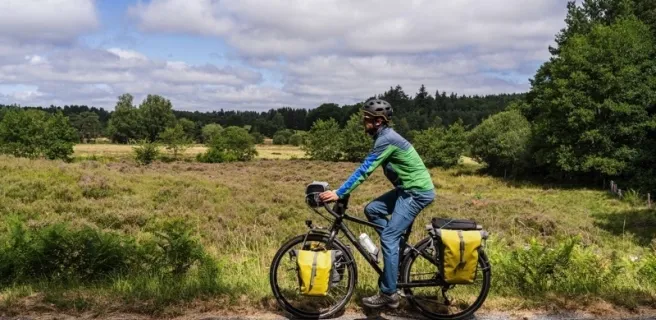
De l'Allier au plateau des Millevaches, des volcans d'Auvergne à la vallée du Lot en passant par les causses du Quercy ou le lac de Vassivières, ce Tour des Grands Espaces est une ode à la liberté. Une idée de voyage qui emprunte 6 véloroutes et vous guidera dans des territoires préservés de France : volcans majestueux, vastes espaces sauvages, rivières sinueuses et villages perchés !

Un tracé principalement sur de petites routes partagées et avec un relief cumulé exigeant qui s'adresse aux voyageurs confirmés en quête d’évasion.

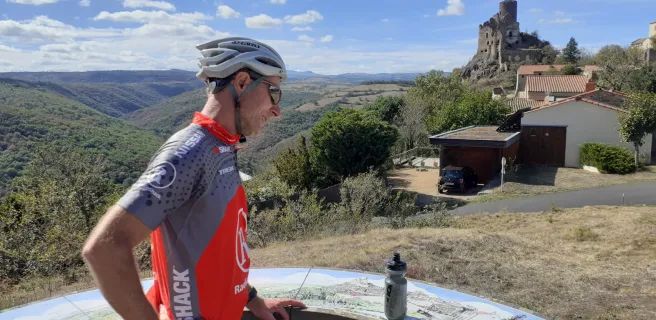
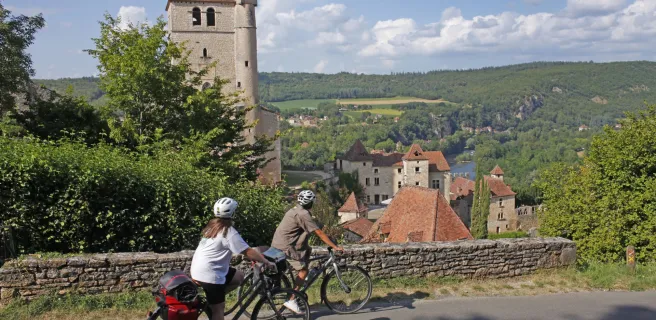
Point de vue au Suc au May
La Vagabonde - Un Monde à Vélo

Explorer les grands espaces

Ce parcours cyclable traverse des paysages à couper le souffle, où la nature règne en maître. Les vastes étendues de ces régions offrent une immersion totale dans un environnement préservé et inspirant, idéal pour les amoureux de grands espaces et de défis sportifs.

  • Les Volcans d'Auvergne : une section spectaculaire d'environ 175 km qui s'étend vers l'ouest de l'Allier et plonge les cyclistes au cœur du Massif central, entre pâturages, forêts profondes et anciens cratères. Les paysages volcaniques uniques témoignent de l’histoire géologique riche et millénaire de la région.
  • Causses du Quercy : Ce parc naturel du Lot, classé Géoparc mondial UNESCO, est parsemé de plateaux calcaires, de grottes mystérieuses et de vallées encaissées à explorer.
  • Plateau des Millevaches : Dans le Limousin, ce plateau granitique séduit par ses vastes landes, ses tourbières et ses forêts paisibles à explorer sur de petites routes tranquilles, bien loin des foules.
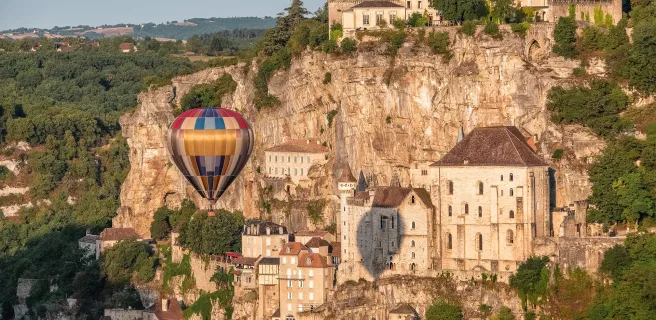
Décollage de montgolfière à Rocamadour
La Vagabonde - Lot Tourisme - Teddy Verneuil

Villes & villages dans des cadres naturels exceptionnels

Tour à tour perchés sur des collines, lovés au bord de rivières ou adossés à des falaises, les cités historiques et villages qui jalonnent le tracé invitent à la découverte de la vie locale et d'un riche patrimoine culturel ! La liste serait longue, mais pour ne citer que quelques-uns de ces incontournables :

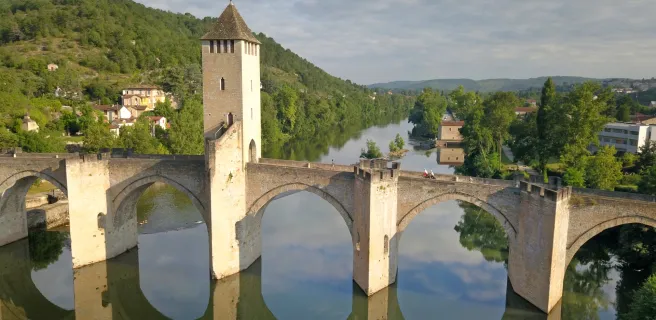
  • Cahors : capitale du Quercy nichée dans dans un méandre du Lot, cette ville est célèbre pour son pont Valentré, chef-d'œuvre de l'architecture médiévale, et son centre historique aux ruelles étroites et vivantes.
  • Rocamadour : Accroché à une falaise, entre sanctuaires religieux et panoramas spectaculaires, cette cité emblématique constitue une étape incontournable.
  • Vézelay : Perché sur une colline, Vézelay est un haut lieu de pèlerinage avec sa basilique Sainte-Marie-Madeleine inscrite au patrimoine mondial de l’UNESCO.
  • Sancerre : Ce village viticole, juché en hauteur, offre des vues magnifiques sur les vignobles environnants et des ruelles charmantes idéales pour une promenade.
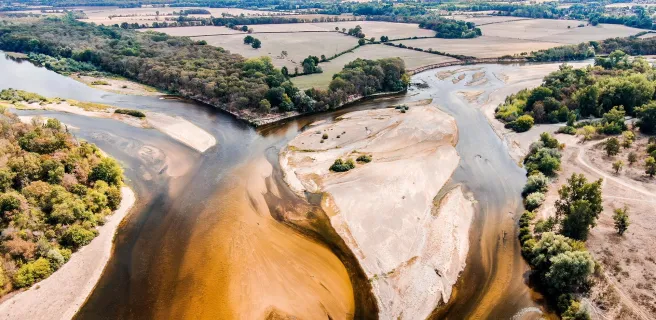
Réserve du val d'Allier entre Chatel-de-Neuvre et Moulins vu du ciel
Luc OLIVIER - CDT Allier

D'une vallée à l'autre

L’eau accompagne les cyclistes tout au long de ce grand tour, que ce soit au fil de rivières sinueuses, au creux de vallées verdoyantes ou au bord de grands lacs :

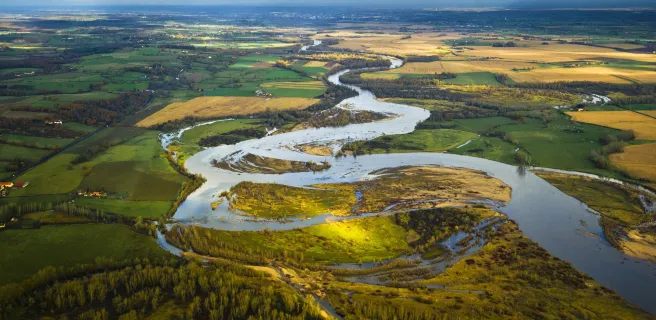
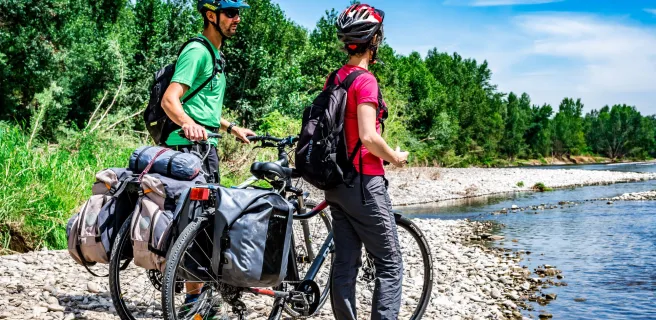
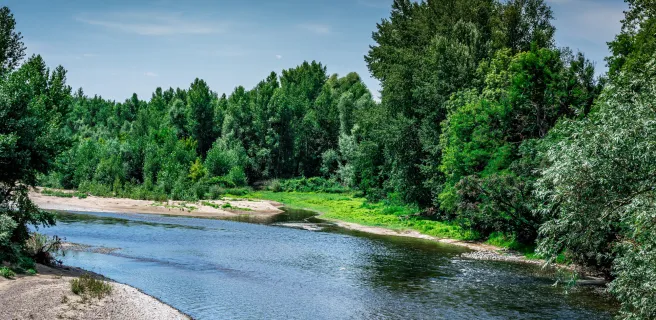
  • Allier : sur la section parcourue, cette rivière sauvage, bordée de plages de galets et de falaises, offre un décor paisible et ouvert, précédant ses gorges sauvages débutant davantage au sud.
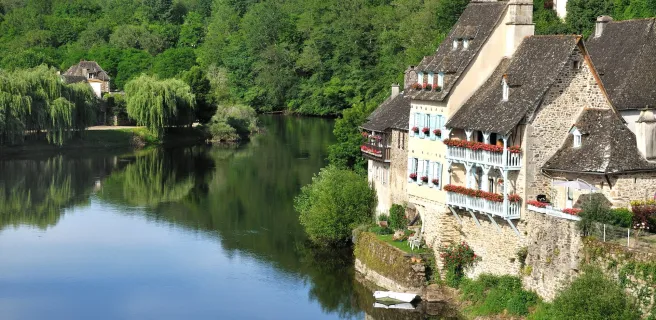
  • Méandres du Lot : en traversant cette vallée à vélo, les paysages se succèdent entre falaises, villages accrochés et méandres qui sculptent la terre.
  • Vallée de la Dordogne : bordée de châteaux et de villages pittoresques, cette vallée offre un cadre enchanteur. Les berges accueillent les cyclistes avec des panoramas idylliques et des arrêts culturels incontournables.
  • Lac de Vassivière : ce vaste lac est une oasis de fraîcheur pour les cyclistes. Entouré de forêts, il invite à la baignade, au pique-nique et à une pause méritée au bord de l’eau !
  • Indre : plus paisible, l'Indre serpente à travers une campagne rurale et verdoyante. Les petites routes qui la longent sont parfaites pour une balade à vélo au calme, loin des axes fréquentés.
Grimpettes & cols
Patrick - Morio60 (Flickr) - CC BY-SA 2.0

Grimpettes & cols, entre volcans et vallons

Les amateurs de défis seront comblés par les ascensions au programme. Quelques cols et montées exigeantes jalonnent le parcours pour autant de panoramas spectaculaires à la clé :

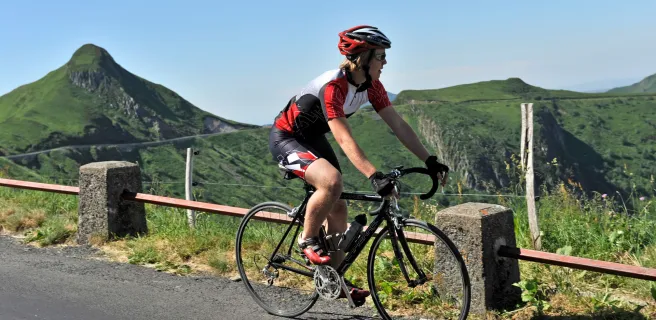
  • Cols dans les Volcans d’Auvergne : plusieurs ascensions se dressent sur votre chemin pour traverser ce territoire, notamment le col du Baladour, ou le Pas de Peyrol, plus haut col routier du Massif Central offrant une vue grandiose sur les monts du Cantal !
  • Grimpettes sur le Plateau des Millevaches : Les routes vallonnées du plateau offrent des ascensions variées, entourées de paysages sauvages et préservés. Un terrain parfait pour les amateurs de reliefs.

Côté pratique :

🚵 Variante Gravel : entre Moulins et Chalinargues, au lieu d'emprunter la Via Allier, vous pouvez emprunter la Grande Traversée du Massif Central Gravel sur 328 km. Voir le détail de cette section sur le site www.la-gtmc.com.


🚆 Gares sur le parcours : Plusieurs gares sur le parcours, mais peu de  (Nevers, Clermont-Ferrand, Cahors).


💡 Hébergements / restaurants / sites de visites : Rendez-vous sur les cartes des étapes ci-dessous pour afficher les différentes catégories de services.

Tailor-made itineraries

Tailor-made itineraries

Nevers / Sancoins

1 Nevers / Sancoins

39 km
2 h 34 min
I begin
Your journey along the Via Allier cycle route begins in the ducal city of Nevers. You’re led across the Loire, following its parallel canal (canal latéral) to Le Guétin canal-bridge, taking you over the Allier River. At the natural site of Le Bec d’Allier, admire how the waters of Allier and Loire merge. Cycling a little further, you reach Apremont-sur-Allier, a member of the association Les Plus Beaux Villages de France. This place, dominated by a château with floral gardens awarded the national accreditation of a Jardin Remarquable, provides a Romantic stop! Before the small town of Sancoins, La Halle de Grossouvre and its Espace Métal recall the area’s iron-forging past.
Sancoins / Le Veurdre

2 Sancoins / Le Veurdre

17 km
1 h 09 min
I cycle often
The Via Allier cycle route now enters the département, or French county, of Allier. This stage recalls the centuries when trading thrived along the river of the same name. Given the difficulties of navigating along the wild Allier, a distinct mariners’ culture evolved in many of the towns the river crossed in the Auvergne Region. Le Veurdre offers fine testimony of this history, as revealed at its Musée de la Batellerie and brought back to life thanks to events proposed by the association La Chavannée. For this first stage through the Auvergne, you ride along quiet country roads leading you through the typical bocage bourbonnais, with its hedge-divided patchwork of fields.
Le Veurdre / Moulins

3 Le Veurdre / Moulins

37 km
2 h 27 min
I cycle often
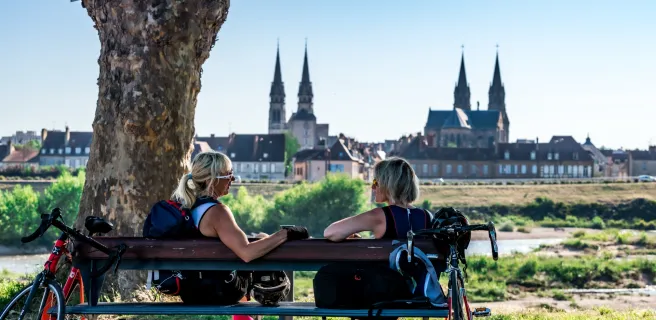
Your adventure along the Via Allier cycle route continues along this fine Loire tributary, considered one of the last great wild rivers in Western Europe. To appreciate the Allier to the full and close up, go right to the riverbank to admire the mosaic of rich and varied environments created by its shifting waters that have carved out substantial meanders. You might compare the Allier River to a cyclist, enjoying a certain freedom of movement on their journey… especially, in the Allier’s case, south of Moulins! As to this city, historic capital of the Bourbon dukes, it merits an in-depth exploration of its streets and lanes, revealing five centuries of splendid architecture.
Moulins / Saint-Pourçain-sur-Sioule

4 Moulins / Saint-Pourçain-sur-Sioule
44 km
2 h 56 min
I cycle a lot
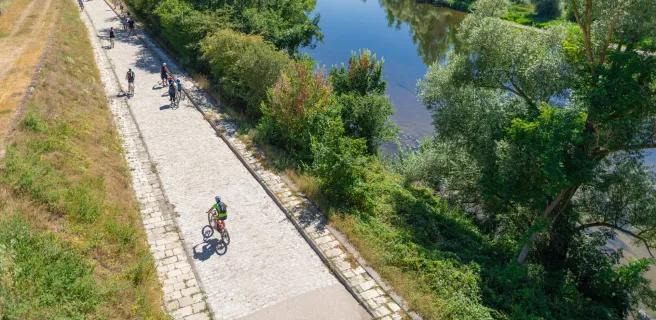
After enjoying a last look at Moulins with its bell-towers rising above the river, get back in the saddle to carry on along the Via Allier. The cycle route allows you to get up close to the Réserve Naturelle Nationale du Val d’Allier, protecting a little Eden of 1,450 hectares of truly unspoilt lands. After a small climb shaded by the oaks of Moladier Forest, you ride through further typical bocage bourbonnais. Then the first vines of the Saint-Pourçain wine-making area appear, giving a new aspect to your cycling trip. The winemakers of Saint-Pourçain will be delighted to offer you tastings of wines once served to French kings.
Saint-Pourçain-sur-Sioule / Vichy

5 Saint-Pourçain-sur-Sioule / Vichy

34 km
2 h 16 min
I begin
Enjoy the gentle atmosphere along this Via Allier stage, taking cyclists across flood plains and forests. The way leads to Billy, its impressive medieval fort rising above an historic village designated a Petite Cité de Caractère. A lovely greenway then guides you alongside the Allier River to Vichy. Listed as part of a UNESCO World Heritage Site dedicated to historic thermal spa resorts, Vichy and its springs, enjoyed by visitors for centuries, encourage cyclists to rest and to explore the place. In the heart of town, feast your eyes on Art Deco and extravagant façades, plus further buildings reflecting architectural styles from around the globe. A short relaxation session at one of the spas is a tempting option before getting back on your bike. The more sporty might make the most of the water sports available on Allier Lake here. Or simply enjoy a stroll around Vichy’s fine public gardens.
Vichy / Puy-Guillaume

6 Vichy / Puy-Guillaume

26 km
1 h 43 min
I cycle often
Well-rested and relaxed, cycle south from Vichy by getting back on the greenway alongside the Allier River, riding towards Saint-Yorre. Take in the peaceful, unspoilt atmosphere and enjoy glimpses over the Allier Valley, the river dominating along certain stretches, flora and fauna taking centre stage along others. Further on, the Allier’s waters are joined by those of the Dore River at the Bec de Dore, a spot providing many species with a tranquil refuge. In the distance, you can make out the Auvergne’s mountains, presaging greater shifts in altitude. Do make a detour to the Domaine Royal de Randan and to Ris and its Holy Cross Church, part of a former Cluniac priory.
Puy-Guillaume / Pont-du-Château

7 Puy-Guillaume / Pont-du-Château

32 km
2 h 06 min
I cycle often
Along this Via Allier stage, you’ll become aware of the upcoming transition from the fertile Limagne Plain to the steeper ancient volcanic area extending out from the Chaîne des Puys, the extinct volcanic range towering above the Auvergne’s capital city, Clermont-Ferrand. The Allier River, so much wilder downstream, with its shifting banks, is constricted by narrow rocky sides further upstream. This stage is dotted with dovecotes. Close by, the Maringues tanneries make a picturesque architectural scene, while the Musée de la Céramique in Lezoux relates how this town’s renown spread far and wide back in Antiquity, thanks to its production of sigillated pottery. Pont-du-Château, the historic port of the Clermont area, is the stopover point for this stage.
Pont-du-Château / Vic-le-Comte

8 Pont-du-Château / Vic-le-Comte

27 km
1 h 37 min
I cycle often
On this stage of the Via Allier cycle route, you start to climb a fair bit, enjoying a fine ride, with the Chaîne des Puys volcanic range as backdrop. The charming towns and villages of the wider area here, known as La Comté, boast a rich and varied architectural heritage to enjoy as your legs get a good work-out. Get your breath back as you visit the fortified village of Chauriat or then the Château de Busséol, perched on its rocky outcrop and offering splendid views. You’ll also cross lands producing AOC Côtes d’Auvergne wines. At the end of this stage, the town of Vic-le-Comte and its church of St Peter are worth a longer stop.
Vic-le-Comte / Issoire

9 Vic-le-Comte / Issoire

14 km
54 min
I cycle often
On this Via Allier stage, very visible ancient volcanic lava flows give a distinctive look to the terrain, with steep little valleys overseen by sharp little rocky peaks, the heights often occupied by a hill village, a château or a chapel. Around these parts, arkose, a pale stone made from sandstone and feldspar, predominates, contrasting with the darker basalt further north. In the distance, the serrated mountain tops of the Sancy Range can be made out on clear days. Enjoy the long descent leading down to the town of Issoire and the banks of the Allier River. Make the most of a stop in Issoire, observing its colourful southern French façades and its extraordinary abbey church of Saint-Austremoine, a gem of Auvergne Romanesque art.
Issoire / Brassac-les-Mines

10 Issoire / Brassac-les-Mines

27 km
1 h 48 min
I cycle often
On this hillier Via Allier stage, you’re reminded of the daily graft of bygone days, when miners extracted coal from underground mines, the merchandise then being placed on sapinières, large, flat rudimentary boats made from pine wood, that were then guided downstream along Allier and Loire Rivers. Riding along, enjoy glimpses of the distant Sancy and Cantal mountain ranges. The route alternates between steep little valleys and rocky outcrops beside which you’ll find remarkable villages such as Nonette, Usson, with its volcanic organ-pipe geology, and Bansat, an extremely picturesque fortified spot. Another curiosity to admire is the Parentignat suspension bridge spanning the Allier, built in the 1830s, now a listed historic monument.
Massiac / Sainte-Florine

6 Massiac / Sainte-Florine

28 km
1 h 50 min
I cycle often
The Grande Traversée du Volcan à Vélo leads you through a series of hills demarcating Les Pays Coupés area. Entering the département (French county) of Haute-Loire, you pass close to splendid villages, such as Blesle, a member of the association Les Plus Beaux Villages de France, and Léotoing overseen by its medieval castle. After Lempdes-sur-Allagnon, you arrive in the flatter plain, the way leading you to Sainte-Florine. Neighbouring Brassac-les-Mines is a town just across the border in the département of Puy-de-Dôme, its name reflecting the mining history in this area. Brassac stands at the junction with the Via Allier (V70) cycle route, which can offer further inspiration to cyclists in search of majestic natural spaces to explore by bike!
Allanche / Blesle

5 Allanche / Blesle

27 km
2 h 09 min
I cycle often
From Allanche, La Grande Traversée du Volcan à Vélo cycle route takes you climbing to the Col du Baladour pass, then across the major Plateau du Cézallier. After a fine descent, you arrive at Massiac, bathing in an almost Mediterranean climate. The route continues across a plain, sometimes following the Alagnon River, to reach Blesle, a member of the association Les Plus Beaux Villages de France. This place marks the border between the counties of Cantal and Haute-Loire, and the end of your adventure on the GT2V cycle route!
Mandailles-Saint-Julien / Allanche

4 Mandailles-Saint-Julien / Allanche
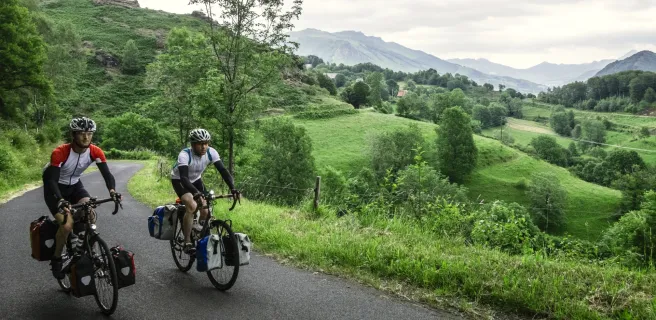
43 km
2 h 53 min
I cycle a lot
This Grande Traversée du Volcan à Vélo stage plunges you into the extensive Parc Naturel Régional des Volcans d’Auvergne. There are new challenges here, notably the climb by bike to the Pas de Peyrol, the pass marking the highest point on the route, at 1,588m. This highlight is added to by visiting the summit of Puy Mary, designated a Grand Site de France for its grandeur. Dismount at its foot for a well-earned rest, then climb by foot to the summit to take in the most spectacular of views, as far as the eye can see. From on high, you can appreciate, sometimes without crowds, the full extent of Europe’s largest strato-volcano. See how the glacial Jordanne, Impradine, Santoire, Cheylade and Le Falgoux Valleys radiate out from here like the spokes of a wheel.
Aurillac / Mandailles-Saint-Julien

3 Aurillac / Mandailles-Saint-Julien

26 km
1 h 44 min
I cycle a lot
Here it comes! The largest volcano in Europe lies ahead of you. Cycle along the marvellous Jordanne Valley, originally sculpted by fire and ice, now so green, especially in spring. You emerge from the bottom of this valley, a tough climb by road taking you to the foot of a series of volcanic ‘puys’, or cones: Chavaroche, Griou and Peyre Arse. Your senses awaken here. Even if the Cantal Volcano has been dormant for millions of years, it could theoretically begin to rumble at any moment…
Maurs / Aurillac

2 Maurs / Aurillac

46 km
3 h 04 min
I cycle a lot
La Grande Traversée du Volcan à Vélo between Maurs and Aurillac wends its way through the Rance Gorges and the heart of La Châtaigneraie, a wide, forested area with many a tale to tell. Detours to Vitrac and Marcolès are tempting, for the architecture and delicious gastronomy. You then arrive at Aurillac, a town where the countryside is always close by. Known in history as the place where Gerbert trained before being elected Pope Sylvester II at the end of the first millennium AD, today it’s known for its international festival of street theatre.
Port d'Agrès / Maurs

1 Port d'Agrès / Maurs

16 km
1 h 06 min
I cycle often
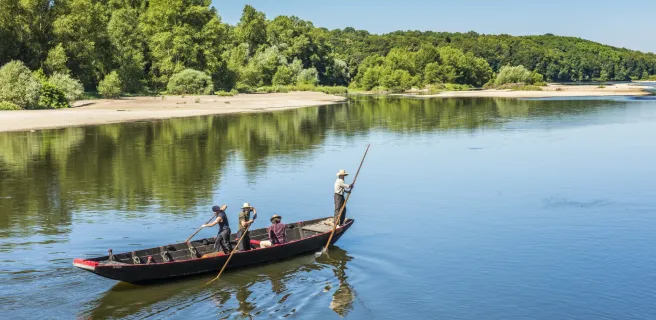
The adventure across the Cantal’s great volcano actually begins in the county (département) of Aveyron, and by the Lot River, at Port d'Agrès, with its medieval roots. The mariners from here used to trade with Bordeaux, their produce shipped down the Lot on traditional river boats known as gabarres. The Grande Traversée du Volcan à Vélo cycle route rises quickly above the river, leading to Maurs la Jolie. Set midway between the gentle Lot Valley and the Cantal Volcano, this fine village, designated a Petite Cité de Caractère, has such a mild climate that comparisons are modestly made with that of the French Riviera!
Capdenac-Gare / Flagnac

9 Capdenac-Gare / Flagnac

37 km
2 h 26 min
I cycle a lot
From Capdenac-Gare, we cycle away from the Lot towards the villages perched on the banks of the Diège river. A hint of authenticity emanates from the gradients. Before plunging down to the river for a majestic finish on the greenway that runs alongside the Lot from Bouillac to Flagnac. At the Livinhac bridge, a signposted alternative route leads to the village of Livinhac-le-Haut and its services, as well as the connection with the Cantal cycle route: La Grande traversée du volcan à vélo (V74).
Cajarc / Capdenac-Gare

8 Cajarc / Capdenac-Gare

30 km
2 h 01 min
I cycle often
At Cajarc, we switch to the right bank to cycle along the old railroad line, soon to be converted into a greenway. A peaceful cycling itinerary dotted with castles and authentic villages, each with its own little nuggets. From Saint-Pierre-Toirac, the more adventurous can head for the beautiful town of Figeac, so typical of the Quercy region. Other cyclists continue along the left bank of the river, which quickly leads to Capdenac-Gare, a former railway junction.
Saint-Cirq-Lapopie / Cajarc

7 Saint-Cirq-Lapopie / Cajarc

23 km
1 h 30 min
I cycle a lot
The heart of the Lot valley stretches between the cliffs and hills of the Causse du Quercy. A beautiful cycling route on the left bank of the river, winding at the foot of white cliffs from which emerge all the shades of green of a wild vegetation. There are many tourist attractions, such as Cénevières and its castle perched above a meander, and Larnagol, another castle with a moving church on the banks of the Lot, before disembarking in the medieval circulade of old Cajarc.
Cahors / Saint-Cirq-Lapopie

6 Cahors / Saint-Cirq-Lapopie

27 km
1 h 51 min
I cycle a lot
We cycle between two of Occitanie's Grands Sites: Cahors and Saint-Cirq-Lapopie. Where the River Lot meanders at the foot of spectacular limestone cliffs. While waiting for the future greenway on the old railroad line, we climb from Arcambal along the pretty départementale 8, which opens onto wildly beautiful landscapes. You might as well be prepared to play with the derailleur or to equip yourself with an electrically-assisted machine. At Saint-Cirq-Lapopie, the silhouette of the medieval village so popular with surrealists looms over the valley. A real postcard. Leave your bike at the tourist office and explore the village on foot.
Rocamadour / Cahors

8 Rocamadour / Cahors

65 km
4 h 19 min
I cycle often
La Vagabonde cycle route gradually distances itself from the Dordogne Valley, leading cyclists into the Parc Naturel Régional des Causses du Quercy with its distinctive, rocky atmosphere – this park has been classified a UNESCO Geopark for its exceptional geology. As well as the extensive limestone plateaus that characterize the area, it also boasts steep green valleys enclosed by high cliffs. Having tackled a stretch along the Causse du Quercy by bike, crossing several villages, you then ride down into the secretive Vers Valley. Cutting north-south through its causse, this tributary of the Lot River has carved out a path from Labastide-Murat to its confluence with the Lot River at the village of Vers. Along the way, crossing the villages of St-Martin de Vers and St-Sauveur la Vallée, stop to drink in their atmospheres. Finally, follow the Lot Valley to reach Cahors, designated a Ville d’Art et d’Histoire for its cultural riches, and capital of the département, or county, of the Lot. This little city boasts a southern atmosphere, rich historical vestiges and many culinary treats!
Beaulieu-sur-Dordogne / Rocamadour

7 Beaulieu-sur-Dordogne / Rocamadour

57 km
3 h 48 min
I cycle often
Leaving behind the shaded, wooded roads of the département (county) of Corrèze, La Vagabonde cycle route now guides riders along bucolic little country roads often used by farmers in the northern part of the département of the Lot. Before re-joining the magnificent Dordogne Valley, you ride through long-established farmland marked by walnut orchards. From the village of Gluges, a first slope with a pretty stone wall guarding one side of the road enables you to meander up above the valley. Next, follow the way to Lacave, its name making clear that this parish conceals one of the most remarkable caves in the Lot. Leaving Lacave, a long, challenging slope takes you up to the splendid pilgrimage village of Rocamadour, drawing tourists from around the globe. You find yourself at the top of the cliff on the north side of the village, enjoying amazing views down on the Alzou Valley and the religious shrine clinging to the cliff. An unmissable place to visit along this cycle route, explore its medieval lanes, walk along the castle ramparts and pay your respects to the Black Virgin. Rocamadour’s religious shrine has been classified as part of a UNESCO World Heritage Site devoted to Santiago de Compostela pilgrimage sites.
Clergoux / Beaulieu-sur-Dordogne

6 Clergoux / Beaulieu-sur-Dordogne

54 km
3 h 35 min
I cycle often
La Vagabonde cycle route now leads you into the narrow, green, lively Doustre Valley. You’ll be won over by its magnificent landscapes marked by layer upon layer of hills as you follow the riverbed by bike. Next, from Argentat-sur-Dordogne, the cycle route clings to the famed Dordogne Valley, its ‘‘bassin’’, or catchment area, designated the largest UNESCO biosphere reserve in France, covering 24,000km2 of unspoilt countryside. Cycling beside the river, as well as marvelling at the valley’s magical landscapes, admire its idyllic built heritage. You cycle through a series of villages designated Cités de Caractère, La Roche-Canillac, Argentat-sur-Dordogne and Beaulieu-sur-Dordogne, the last also recently designated a member of the association Les Plus Beaux Villages de France.
Bugeat / Clergoux

5 Bugeat / Clergoux

64 km
4 h 15 min
I cycle a lot
From Bugeat, your cycling adventure along La Vagabonde cycle route continues through the Massif des Monédières, a granite upland characterized by dry moorlands, classified a Natura 2000 zone for its exceptional fauna and flora. This distinctly steep stage leads you by bike right up to the summit of the Massif du Suc au May (at 908m), then on to the Puy de la Monédière (at 922m), affording you spectacular views. At this altitude, look across the plateau and down the valleys of various streams and rivers, including the Corrèze. On clear days, you can even see the ancient volcanic heights of the Cantal, to the east in the Auvergne. Drink in the fresh air in these peaceful natural surrounds. What’s more, the cycle route takes you to one of the most recent time-trial locations in the Tour de France, between Lestards and Chaumeil, a stretch that will give your legs a good work-out!
Royère-de-Vassivière / Bugeat

4 Royère-de-Vassivière / Bugeat

56 km
3 h 43 min
I cycle a lot
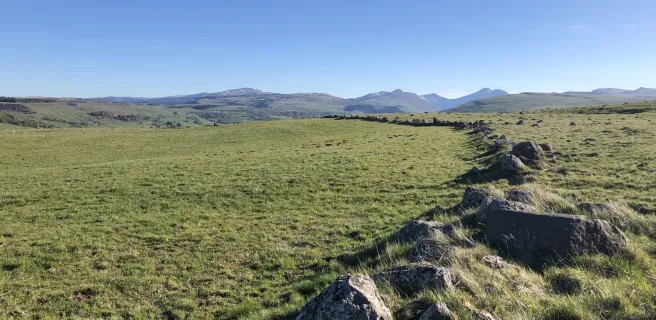
At the Lac du Chammet, you reach the département, or county, of Corrèze and can explore some of the Plateau de Millevaches, a major northern upland of Massif Central (France’s central-southern mountainous zone), reaching almost 1,000m in altitude. This area has been nicknamed ‘‘France’s water tower’’; not only is it covered in lakes and peatbogs, but many significant rivers also rise here, notably the Vézère, Vienne, Corrèze and Creuse. This distinctive area is great for cycling adventures, riders able to enjoy both unspoilt landscapes and the feeling of freedom they impart. The way is dotted with small heritage delights, such as plank-bridges, Gallo-Roman vestiges and carved stone Christian crosses, as well as the low stone walls dividing up many fields. There are dense forests of deciduous trees and pines, and moors, peatbogs and prairies, making for varied landscapes. Many migrating birds appreciate these parts. Looking skywards, you may even spot a short-toed snake eagle!
Aubusson / Royère-de-Vassivière

3 Aubusson / Royère-de-Vassivière

41 km
2 h 45 min
I cycle a lot
From Aubusson, on the route de la Tapisserie to Felletin, a 46 km stage that follows in the footsteps of Tour de France legends. Royère de Vassivière, overlooking Lake Vassivière, offers wide-open spaces for cycling in an exceptional environment. The 23.5 km "circuit des légendes" takes you around the lake, a large part of which was used during the 3 time trials (1985: Greg Lemond victory, 1990: Erik Breuking victory, 1995: Miguel Indurain victory) of the Tour de France held in Vassivière. The great men of cycling who have competed on the roads of Vassivière wanted this circuit to pay tribute to the iconic champion Raymond Poulidor, who was born in Creuse, just a few kilometers from Bourganeuf. Today, his grandson, Mathieu Van der Poel, Road World Champion 2023, continues the family tradition!
Chambon-sur-Voueize / Aubusson

2 Chambon-sur-Voueize / Aubusson

49 km
3 h 16 min
I cycle often
From Chambon sur Voueize, renowned for its imposing Romanesque abbey church of Sainte Valérie, dating back to the 11th century, cycle out into the heart of the countryside, passing one lake after another as you cross the Tardes Valley. Starting by climbing into the surrounding hills, enjoy panoramic views over the river, the abbey church and the town’s terraced gardens. This stage of La Vagabonde cycle route incites contemplation. For further marvels, press on to the Voueize Gorges. Along this stretch of cycle path sticking close to water, nature lovers will particularly enjoy the Étang des Landes, a lake classified as a Nature Reserve in 2004, as well as the Étang de la Naute. The atmosphere changes arriving at the historic town of Aubusson, internationally renowned as France’s tapestry-making capital.
Boussac / Chambon-sur-Voueize

9 Boussac / Chambon-sur-Voueize

37 km
2 h 28 min
I cycle a lot
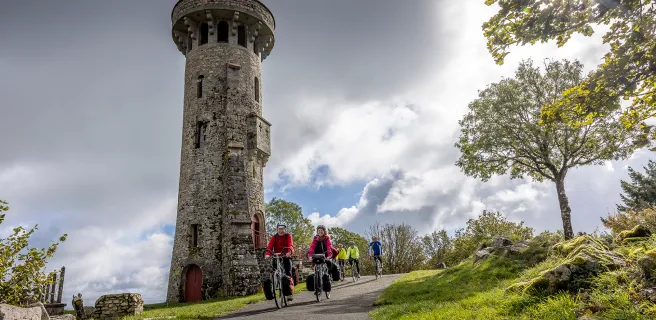
This last stage of the Indre à Vélo cycle route leads you to Toulx-Ste-Croix and Chambon-sur-Voueize. The trail is characterized by a gentle, gradual climb, with unusual places to stop at along the way. Reaching Mont Barlot, don’t miss the Pierres Jaumâtres, the granite blocks piled on top of each other here creating an extraordinary natural site. At Toulx-Sainte-Croix, a panoramic tower offers 360° views of the countryside. Down in the village, enter the startling church, split in two; one part contains the vestiges of St Martial Chapel, one of the oldest monuments in the département (county) of Creuse. Before Chambon-sur-Voueize, cross the well-flowered village of Lépaud. Chambon-sur-Voueize, with its abbey church dedicated to St Valery, welcomes riders at the end of the Indre à Vélo cycle route.
La Châtre / Boussac

8 La Châtre / Boussac

57 km
3 h 48 min
I cycle a lot
Your cycling journey along the Indre à Vélo cycle route continues through hillier terrain and traditional hedge-divided fields. This stage brings you closer to the foothills of the Massif Central, leading you to the source of the Indre River at Saint-Priest-la-Marche. Crossing into the département (or county) of Creuse, the Tour de Creuse à Vélo cycle route now becomes the guiding thread up to the next stopover town. All around, nature and greenery dominate. Following in the footsteps of novelist George Sand, enjoy a halt in Boussac with its perched château, in a place where she loved to stay.
Châteaumeillant / La Châtre

8 Châteaumeillant / La Châtre

22 km
1 h 28 min
I cycle often
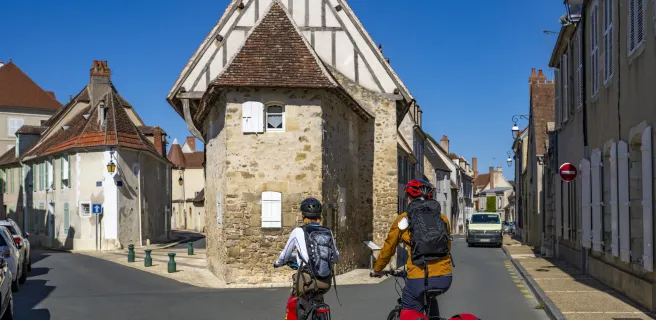
This stage on the Saint-Jacques à Vélo - Via Vézelay cycle route marks the shift from the département, or French county, of Cher to that of Indre, but you won’t feel a big change as you cross hedge-divided agricultural fields watered by the Indre River and its tributaries. You ride into an area that has become known as the Pays de George Sand, where not just this ground-breaking female novelist found inspiration, but also one of her famous lovers, the composer Chopin… and, much later, pioneering film director Jacques Tati, who shot his cult comedy Jour de fête in the village of Ste-Sévère-sur-Indre. Adding to this cultural past, there are also medieval castles to admire, such as the Château de la Motte-Feuilly. The unspoilt countryside stands out too, with plenty of birdsong and traditional little villages to enjoy. All told, there are lots of sides to the Pays de George Sand!
Saint-Amand-Montrond / Châteaumeillant
7 Saint-Amand-Montrond / Châteaumeillant

37 km
2 h 27 min
I cycle often
You’re never far from water along the whole length of the Saint-Jacques à Vélo - Via Vézelay cycle route and even as you leave behind the old province of Berry’s canals and locks, this stage proves no exception, numerous lakes dotted beside the trail. The cycling is easy through these parts, without any particular difficulties along the way. Calm and serenity are the order of the day as you ride through large fields, past big old farms. In the midst of these deeply rural landscapes so characteristic of the centre of France, discover local heritage and traditions by visiting the Musée de la Poterie in Les Archers or the Musée Michel Langlois nearby, the latter displaying an impressive collection of old craft tools.
Sancoins / Saint-Amand-Montrond

6 Sancoins / Saint-Amand-Montrond

39 km
2 h 37 min
I cycle often
On the second stage of this provisional portion of the Saint-Jacques à Vélo - Via Vézelay cycle route, before joining a better signposted trail up to the border with the county of Creuse, you cross the flat Champagne Berrichonne. Characterized by its arable plain, riding along, admire the Charolais cows, who may well look back at you with amusement as you cycle along the country lanes. You may lose any sense of time, but make sure you don’t lose sight of the cycle route. The trail keeps crossing remnants of the Canal de Berry, with its lock-keepers’ houses, some restored, others transformed, others still abandoned. As to the locks, they were so narrow that especially narrow barges had to be built to use this waterway. Reaching Montrond Fort, dating back in part to the 12th century, also admire the tiers of bastions added later, a unique design for the centre of France. Built on one of the rare hills in these parts, the fort looks down on the town that carries the same name.
Nevers / Sancoins

1 Nevers / Sancoins

39 km
2 h 34 min
I begin
Your journey along the Via Allier cycle route begins in the ducal city of Nevers. You’re led across the Loire, following its parallel canal (canal latéral) to Le Guétin canal-bridge, taking you over the Allier River. At the natural site of Le Bec d’Allier, admire how the waters of Allier and Loire merge. Cycling a little further, you reach Apremont-sur-Allier, a member of the association Les Plus Beaux Villages de France. This place, dominated by a château with floral gardens awarded the national accreditation of a Jardin Remarquable, provides a Romantic stop! Before the small town of Sancoins, La Halle de Grossouvre and its Espace Métal recall the area’s iron-forging past.

Découvrez également