En couple
Premier voyage

Leur 1er voyage à vélo sur ViaRhôna

7 jours à vélo de Genève au Grau-du-Roi

Charlyne et Florian, la vingtaine sont partis sur l'itinéraire ViaRhôna l'été dernier (2018). S'ils utilisent le vélo au quotidien, que ce soit pour aller au travail, sortir en ville ou faire leurs courses, le voyage à vélo est une nouvelle forme d'aventure qu'ils ont expérimenté ensemble cette année. Habitants Genève, ViaRhôna s'est "imposé" à eux avec l'idée d'aller piquer une tête dans la mer Méditerranée...

Nous aimons le vélo, mais sans avoir un curriculum exceptionnel à notre actif. Florian

Leur périple est très bien relaté dans la vidéo ci-dessous et pour savoir plus sur ce qu'ils ont pensé du parcours nous vous invitons à lire notre interview ci-dessous.
 

7 étapes entre Genève et le Grau-du-Roi

  • 672 km parcourus
  • 7 jours
  • 100 km en moyenne

Nous sommes arrivés en 7 jours à la Méditerranée, nous faisions nos étapes en fonction de notre fatigue et des endroits que l’on trouvait idéal pour passer la nuit. En moyenne, nous avons fait 100 km par jour. 

  • Deux étapes entre Genève et Lyon
  • Deux étapes entre Lyon et Valence
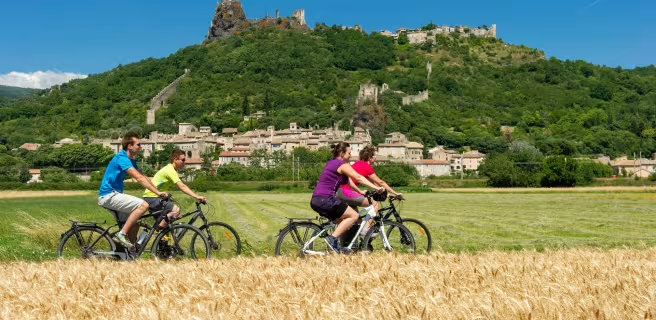
  • Trois étapes entre Valence et le Grau-du-Roi 

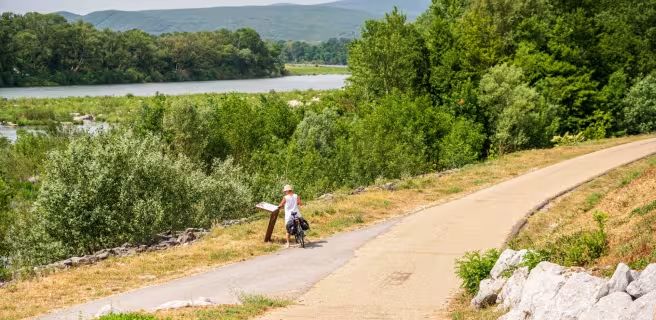
Retour pratique sur leur voyage à vélo sur ViaRhôna
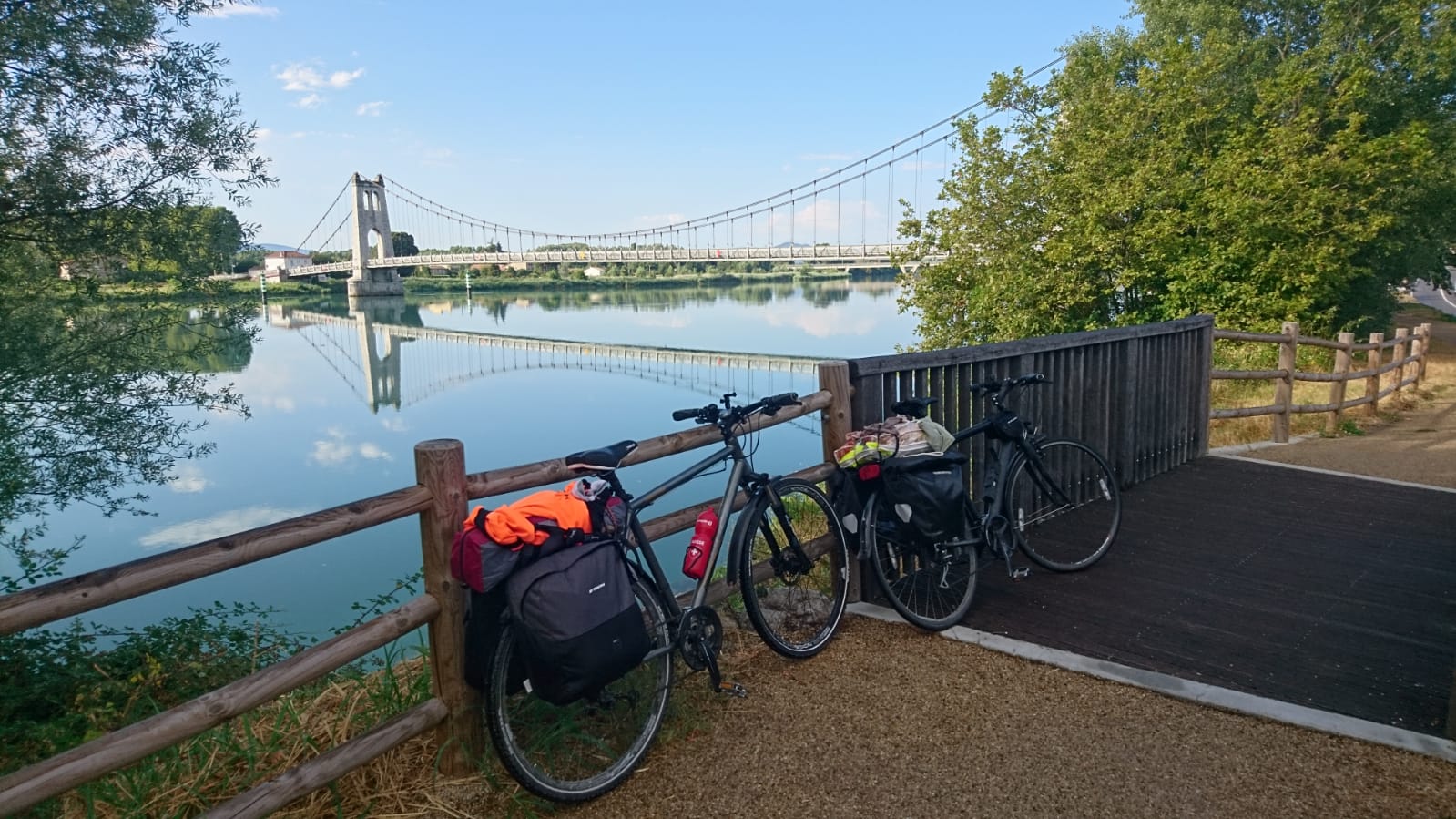
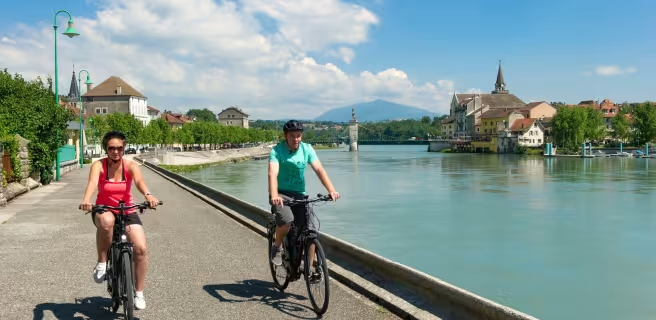
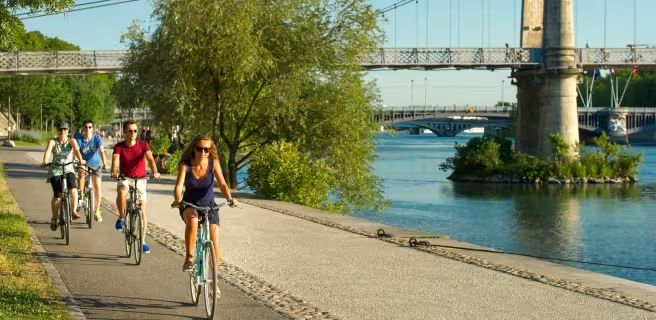
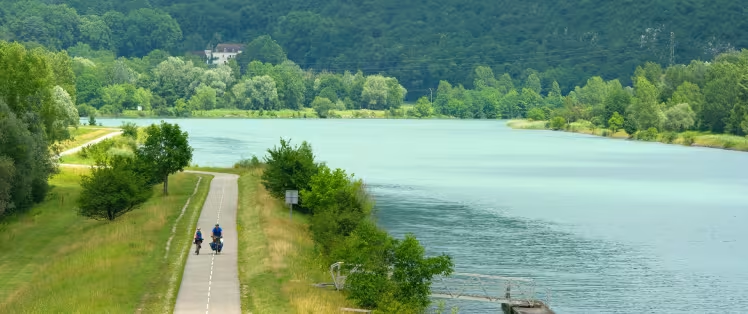
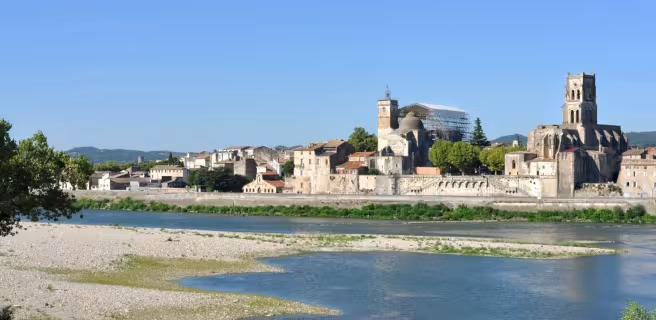
Vélos au bord du Rhône sur ViaRhôna
Hébergement

Le long du Rhône, il est assez facile de trouver des campings, pas chers qui plus est ! Le matin même nous fixions notre point d'arrivée pour le soir (en fonction des campings à disposition la plupart du temps) et nous appelions dans la journée pour réserver.

Nous avons fait du camping chaque jour. Florian

Nous avons toujours réussi à avoir une place directement (à part en arrivant sur la côte méditerranéenne, mais nous aurions dû nous en douter avant). C’était vraiment sympa de pouvoir se relaxer en plein air après une longue journée de vélo. De plus, on ne quittait jamais notre cher Rhône et le lendemain matin nous étions quasiment déjà sur ViaRhôna.

Type de vélo et sacoches

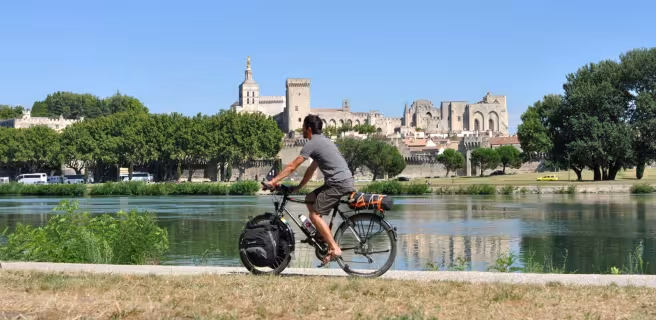
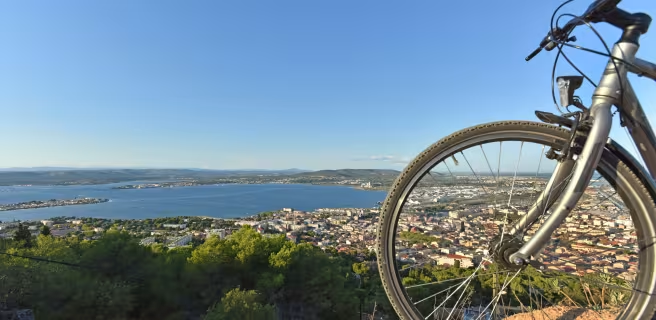
Au niveau de nos vélos (voir photo), nous avions des vélos de route, solides, roues assez grandes avec des doubles sacoches fixées à l’arrière de chacun de nos vélos et du matériel fixé sur le porte bagage à l’arrière également. Ce ne sont ni des gravels, ni des VTT, mais une sorte d’entre deux. 

Restauration

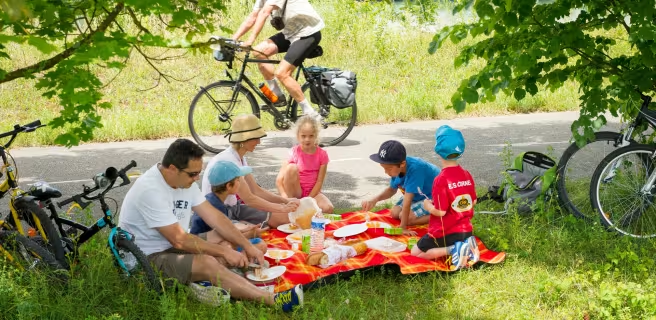
Nous avons alterné entre les restaurants et les pique-niques. Disons qu’on a fait du 50/50. En effet, l’un des buts de ce voyage était aussi une découverte culinaire de notre chère France. On s’est donc régalés à manger dans des petits restaurants dans les villages le long de l'itinéraire ViaRhôna. Mais nous avons également pris beaucoup de plaisir à pique-niquer au bord du Rhône, les pieds dans l’eau si possible !
 

Budget moyen par jour

Au total, nous avons dépensé environ 500 € pour deux en 7 jours (donc 35 €/ personne / jour). Je pense qu'il est possible de faire moins que ça, car nous avions décidé de ne pas nous restreindre sur les restaurants et le prix des campings. 

Ce qui leur a plu sur ViaRhôna
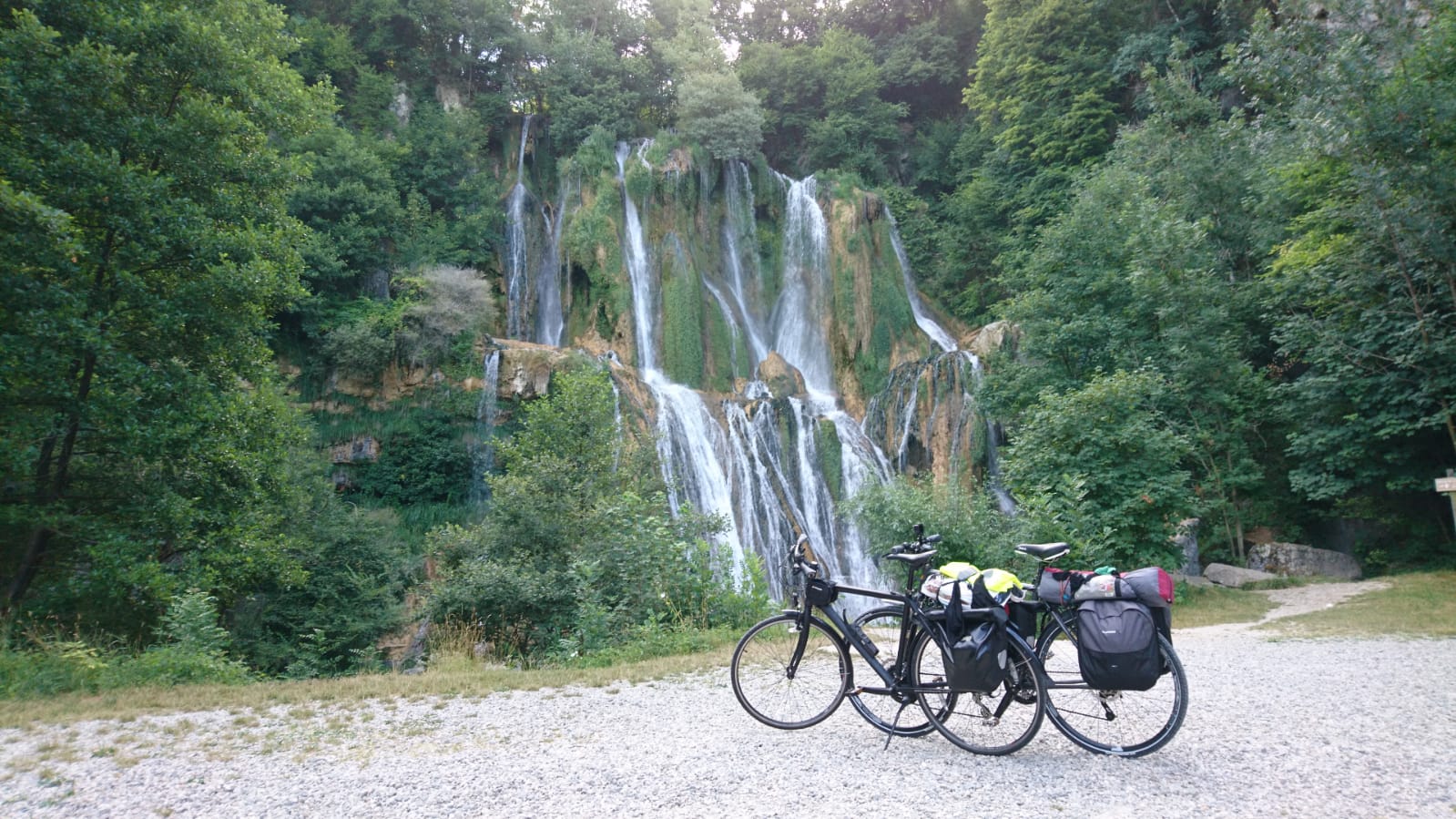
Cascade sur de Glandieu sur ViaRhona

ViaRhôna, c'est un moyen superbe de voir comment l'eau des montagnes du lac Léman s'écoule, chemine, se faufile sur des centaines de kilomètres pour arriver dans la Mer. Aussi, on traverse une belle partie de la France, avec son charme, ses petits villages. C'est la France qu'on aime et ça fait du bien de faire du tourisme dans son propre pays. 

Avec ce voyage, on se rapproche du Rhône, il devient notre complice, notre guide. Florian


Les petits couacs rencontrés sur le parcours


Le moment le plus compliqué a été la sortie de Lyon, en direction du sud... Plus de ViaRhôna sur un long tronçon, obligés d'alterner les routes, le trafic, le danger, la pollution... il a fallu attendre Givors, plus au sud, pour enfin retrouver le calme de la piste et le Rhône qui nous montre le chemin. Également, après Lyon, le Rhône s'industrialise un peu plus, on passe souvent des barrages, des usines et des centrales électriques.

Mais ce n'est vraiment qu'un petit détail, c’est l'exception qui confirme la règle de ce magnifique itinéraire.

Leur avis sur le balisage de l'itinéraire
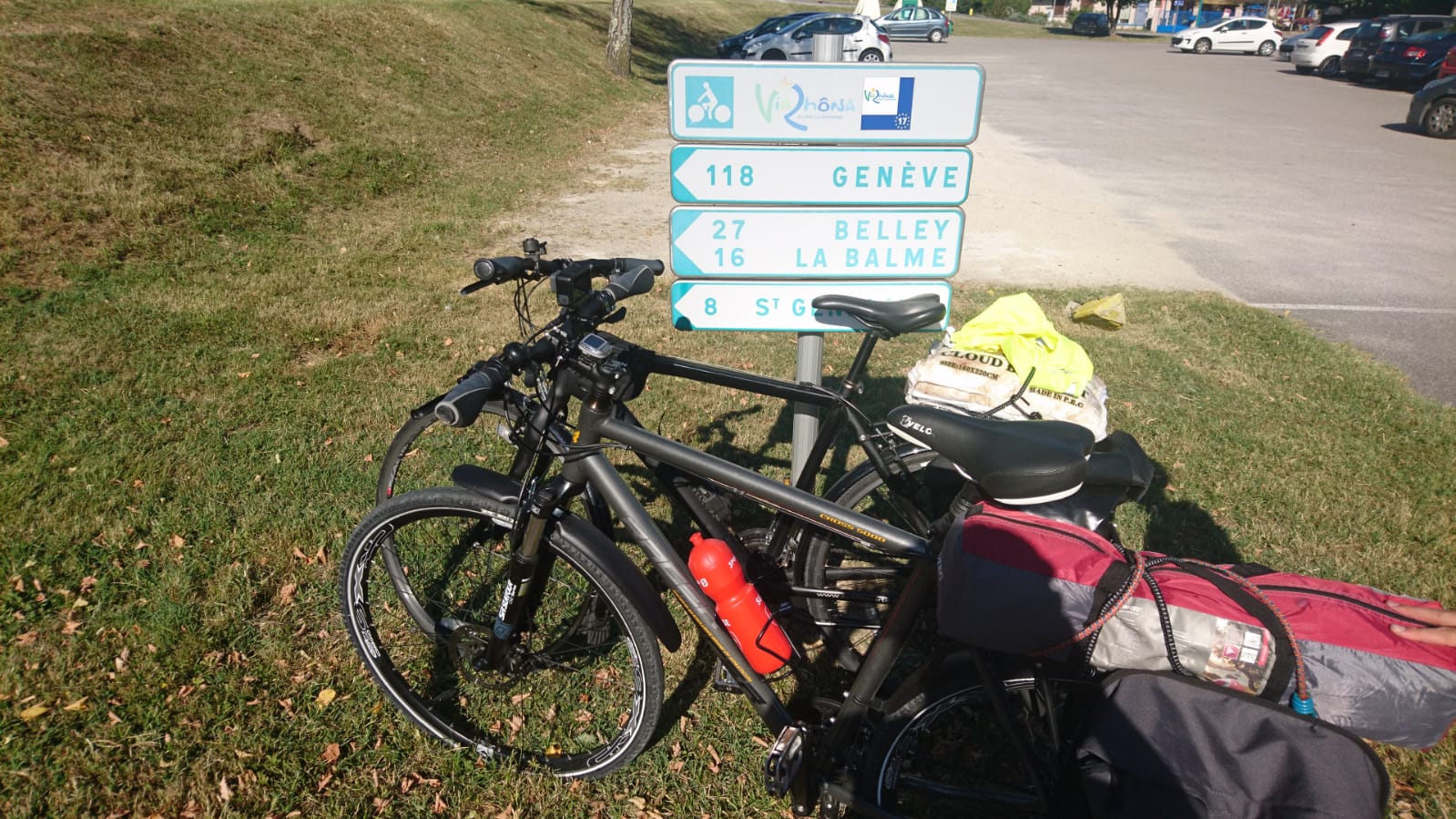
Balisage et panneaux sur ViaRhôna

La signalétique est plutôt très bonne ! Il suffit de suivre la piste et les panneaux indicateurs de ViaRhôna. Et puis quoi de mieux comme guide naturel que le Rhône ? Tant qu’on est proche du fleuve, on est sur la bonne voie. Nous avons adoré ce concept de suivre ce guide naturel ! Cependant, quelques fois, l'itinéraire s’éloigne du fleuve ou bien traverse des agglomérations et l’on peut perdre un peu sa trace. Dans ces moments, nous utilisions notre Smartphone, avec l’application Maps.Me (cartes téléchargeables puis utilisable hors ligne, avec toutes les indications nécessaires et précises pour s’orienter). 

Comment ils ont fait pour remonter à Genève

Pour remonter nous avons pris le train depuis Montpellier (où j'ai de la famille) jusqu'à Genève. Pour le TGV il faut faire attention à réserver un emplacement vélo (si vous n'avez pas de vélo démonté) spécifique dans le TGV et payer un petit supplément. Pour le TER en revanche, pas de soucis, les vélos sont gratuits dans tous les trains. 

Le bon souvenir à partager


L’étape à Montélimar, un certain 15 Juillet, jour de la finale de la coupe du monde. Ce soir-là, exceptionnellement, on a réservé un hôtel, afin de profiter au maximum de l’événement.

Ce fût grandiose de vivre une telle soirée au milieu de notre voyage sur l'itinéraire ViaRhôna ! Florian

Le lendemain, on a repris la route, un peu enivrés de la veille. Le Rhône quant à lui n’avait pas bougé, insensible à cette deuxième étoile pour la France. 

La prochaine destination en tête

ViaRhôna nous a beaucoup inspiré ! On en est ressortis avec pleins d’idées. Notre prochain objectif sera probablement de faire un trip sur une EuroVelo. Nous n’avons pas encore choisi laquelle, mais on a découvert le bonheur et la simplicité de voyager à vélo, à travers la nature, les forêts, les petits villages et on a vraiment envie de recommencer. Faire une EuroVélo, avec un objectif de 1000 kilomètres ou plus, serait vraiment quelque chose que nous souhaiterions faire. Et pourquoi pas dès 2019 !

Tailor-made itineraries

Tailor-made itineraries
Geneva / Vulbens

3 Geneva / Vulbens

33 km
2 h 05 min
I cycle a lot
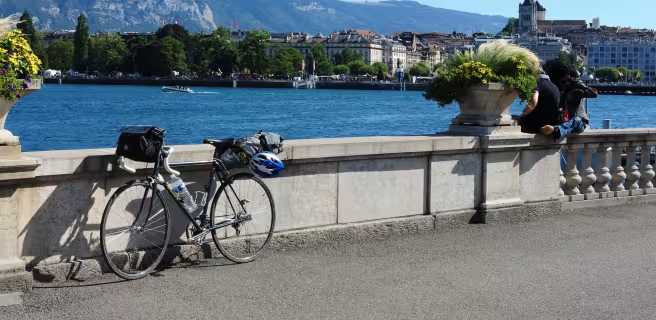
This ViaRhôna stage keeps within the Franco-Swiss border area. You start in the splendid Swiss town of Geneva, beside its famous lake. Known as a buzzing international city these days, Geneva has preserved its traditional Swiss feel too. This ViaRhôna stage leads you via signposted small roads and greenways into the vineyards close to town and on through verdant countryside towards the Alps.
Vulbens / Seyssel

4 Vulbens / Seyssel

27 km
1 h 48 min
I cycle a lot
This ViaRhôna stage takes you up and down through spectacular scenery, offering splendid views over the Rhône Valley. You go through the dramatic Défilé de l’Ecluse before reaching Seyssel, an important river port since ancient times. Today it’s a charming stop, both for cultural activities and leisure ones based around the river. This stage uses roads that can be busy, so it is only recommended for experienced cyclists.
Seyssel / Chanaz / Belley

5 Seyssel / Chanaz / Belley

37 km
2 h 12 min
I cycle often
This ViaRhôna stage goes along both banks of the Rhône. This route is provisional. It leads between crests and plateaux, through landscapes marked by lakes and waterfalls. Then you come to a land of vineyards and gastronomy set below the Bugey Range, passing delightful little historic stops like Belley, Culoz and Chanaz. This physically-demanding stage is along a mix of greenways and roads.
Belley / St-Genix-sur-Guiers / Groslée
6 Belley / St-Genix-sur-Guiers / Groslée

36 km
2 h 39 min
I cycle often
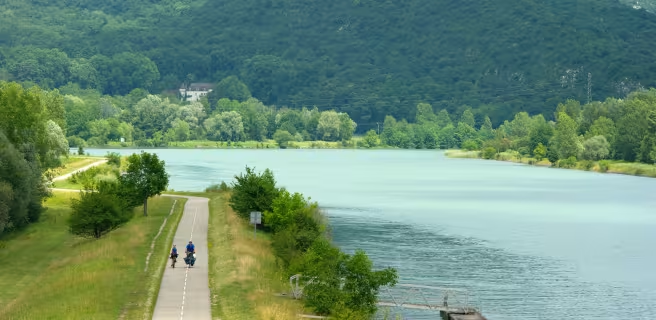
This ViaRhôna stage meanders through the beautiful Bugey area, between the majestic Rhône and the Lavours Marshes, below the imposing Grand Colombier Mountain. To the south, enjoy the Haut-Rhône plain, the mountains and the vineyards, arriving at the Pays de Lhuis and Izieu through magnificently varied countryside. On this stage, you follow greenways and laid-out roads, except when going through La Balme’s tunnels, where the road is narrow and very busy .
Groslée / La Balme-les-Grottes

7 Groslée / La Balme-les-Grottes

52 km
3 h 27 min
I cycle often
This ViaRhôna stage takes you through unspoilt countryside beside the Rhône. Hidden in the magnificent landscapes of the southern Bugey, with their mountains and forests, lie splendid lakes and marshes. You pass lovely villages like Saint-Sorlin-en-Bugey and Sault-Brénaz, and the more secretive La Balme-les-Grottes, with its great caves and picturesque centre. A lovely greenway links "La Vallée Bleue" to Lagnieu. At Lagnieu Bridge, follow the D 1075 and D 65 to join La-Balme-les-Grottes, Be careful on the road (no signposting).
La Balme-les-Grottes / Jons

8 La Balme-les-Grottes / Jons

37 km
2 h 24 min
I cycle often
At the Bugey area’s southern edge, this ViaRhôna stage distances itself slightly from the Rhône to head up to the Balconies on the Rhône, boasting traditional villages, castles and vineyards. At Anthon, the Ain River joins the Rhône, creating a remarkable natural site in stark contrast to Lyon’s sprawling metropolis not far off. Continue to Jons (a village on the edge of Greater Lyon), the Canal de Jonage and the Grand Parc de Miribel-Jonage. This provisional stage follows small roads.
Jons / Lyon

9 Jons / Lyon

27 km
1 h 45 min
I begin
This ViaRhôna stage cleverly links the parks and lakes of Greater Lyon, including at Le Grand Large and Miribel-Jonage. Then enjoy the magnificent cycle route through central Lyon, along the Rhône’s banks. At the Rhône’s confluence with the Saône, you come to a brand-new quarter marked by contemporary architecture, the most striking building being the Musée des Confluences. The route is along greenways, but without specific signposting.
Lyon / Saint-Romain-en-Gal / Vienne

10 Lyon / Saint-Romain-en-Gal / Vienne
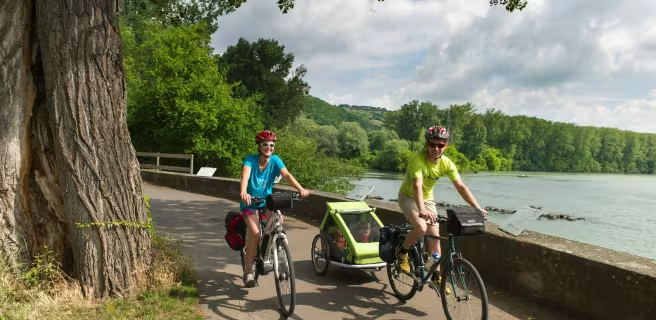
36 km
2 h 21 min
I cycle often
1 / 5
After buzzing Lyon, this ViaRhôna stage leads through the towns of Grigny and Givors, on to St-Romain-en-Gal. The historic importance of navigation is clearer here than anywhere else along the Rhône. Museums at St-Romain-en-Gal and Vienne give a good picture of the river’s rich history, from classical to contemporary times. A provisional link goes along the Rhône’s west bank, on very busy roads. Best take a train from Lyon to Givors.
Saint-Romain-en-Gal / Vienne / Sablons
11 Saint-Romain-en-Gal / Vienne / Sablons

33 km
2 h 11 min
I begin
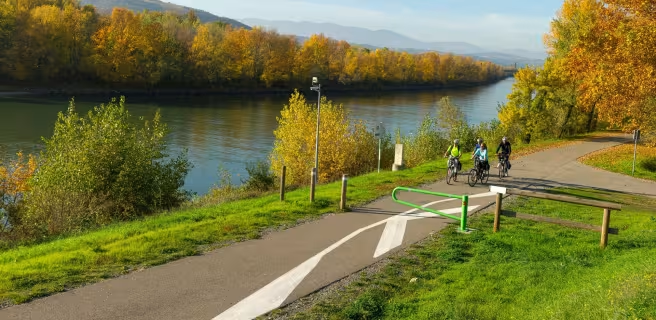
This remarkable ViaRhôna stage offers a great variety of landscapes. From Vienne, once an ancient capital of Roman Gaul, to the nature reserve of L’île au Beurre, bearing witness to the Rhône’s wild side, via steeply terraced vineyards, including the prestigious Côte-Rôtie, and the first major orchards along the Rhône Valley, this stage will delight those interested in history, nature and gastronomy. You follow greenways for almost the entire length, joining a road to enter Sablons.
Sablons / Sarras / Tournon-sur-Rhône / Glun
12 Sablons / Sarras / Tournon-sur-Rhône / Glun

36 km
2 h 25 min
I begin
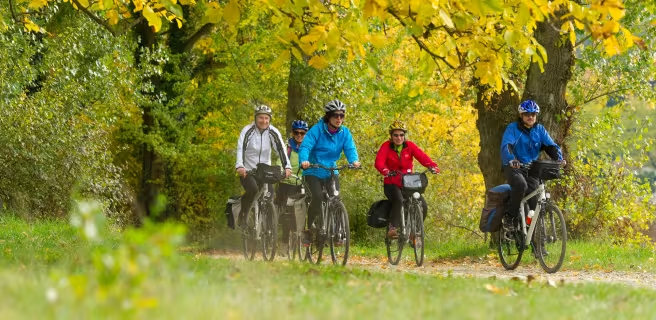
This ViaRhôna stage runs between steep vineyards and dense orchards. Heading south from Lyon, this is the first ViaRhôna stage to enter the rugged Ardèche, a beautiful département (or French county) on the mighty Rhône’s west flank. Here, the tamed river supports orchards, market gardens and vines producing top-class Saint-Joseph wines. Arriving at the town of Tournon-sur-Rhône, follow the provisional signage to continue along the route.
Tournon-sur-Rhône / Glun / Valence / La Voulte-sur-Rhône
13 Tournon-sur-Rhône / Glun / Valence / La Voulte-sur-Rhône

24 km
1 h 39 min
I begin
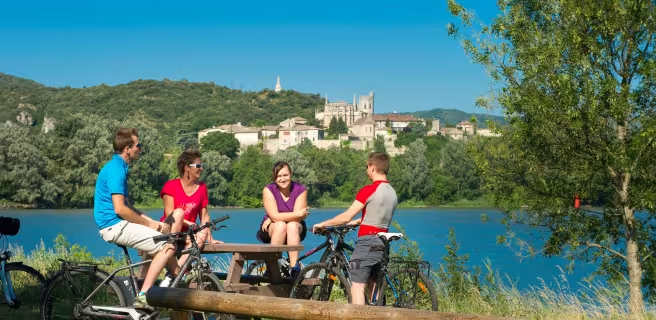
This easy ViaRhôna stage offers a gentle introduction to the South of France. There’s much to enchant: pretty villages in typical southern style; a surprising branch of the Rhône encircling La Roche-de-Glun; and biodiversity. The big town of Valence presages Provence to the south, with its colourful markets, shaded gardens and historic quarters, including pedestrianized area. This stage goes along greenways, except through Valence.
Valence / La Voulte-sur-Rhône / Le Pouzin
14 Valence / La Voulte-sur-Rhône / Le Pouzin

33 km
2 h 12 min
I cycle often
After a halt at Valence’s southern river port of L'Epervière, ViaRhôna leads you back onto the western, Ardèche bank of the Rhône. The Ardèche is known for its exceptional caves, archaeological sites, characterful villages, châteaux and nature reserves. From La Voulte-sur-Rhône, you can discover rugged central Ardèche by taking the Dolce Via route up the Eyrieux Valley. Continuing south along ViaRhôna, cross the Printegarde Nature Reserve to reach Le Pouzin after another short trip across the Rhône into the Drôme.
Le Pouzin / Cruas / Châteauneuf-du-Rhône / Viviers
15 Le Pouzin / Cruas / Châteauneuf-du-Rhône / Viviers

40 km
2 h 41 min
I begin
ViaRhôna cycle route continues south towards Cruas. Heritage sites stand out in this area. Cruas Abbey, with its extraordinary medieval architecture, contrasts greatly with the industrial heritage around here, marked by cement-making works. An intriguing link between old and new is provided by the recent Himalayan-style footbridge at Rochemaure, built using the pillars of the Vieux Pont, an historic bridge over the Rhône.
Viviers / Bourg-Saint-Andéol / Lapalud
16 Viviers / Bourg-Saint-Andéol / Lapalud

32 km
2 h 07 min
I cycle often
Leaving Châteauneuf-du-Rhône, cycle beside branches of the Rhône and pass through historic towns: Viviers, with its medieval spirit; Bourg-Saint-Andéol, its treasures including a rare sculpture of a Mithraic deity; and Pont-Saint-Esprit. This ViaRhôna stage is packed with heritage treasures, especially religious ones, including cathedrals, chapels and grand clerical residences. Those who love history as well as nature can enjoy their fill. The route takes you along portions of greenway and of quiet roads.
Lapalud / Caderousse

17 Lapalud / Caderousse

29 km
4 h 17 min
I cycle often
A provisional stretch of the ViaRhôna route has been signposted south from Lapalud, following the Rhône’s east bank through the county of Vaucluse. Cross the agricultural plain to the Canal de Donzère. Next, the route squeezes between the Rhône and parallel motorway, with links indicated to the medieval villages of Mondragon, Mornas and Piolenc and the town of Orange with its grand Roman remains. Fancy a dip in a lake? Try Les Girardes or Li Piboulos before continuing south along a Rhône-side greenway. End gently at the Provençal village of Caderousse, its dykes built to protect it from flooding by the tempestuous Rhône.
Caderousse / Avignon

18 Caderousse / Avignon

26 km
2 h 24 min
I cycle often
This stage combines a gourmet break (Châteauneuf-du-Pape and its famous vineyards), nature discovery (numerous river islands punctuate the route) and history. Leaving the small village of Caderousse, follow the cycle path along the dike, then the Revestidou lake. ViaRhôna then joins the banks of the Rhone counter-canal as a greenway, offering fine views of the Château de Montfaucon, Châteauneuf-du-Pape and the Tour de l'Hers. The route continues along small roads lined with plane trees on the Ile de l'Oiselay as far as the Pont des Arméniers, before returning to the greenway on the Ile de l'Oiselay, a shaded island of greenery. After a few kilometers, the itinerary joins the banks of the Rhône, to cross it by a superb suspended footbridge, facing the Sauveterre dam. Inaugurated in autumn 2023, this structure provides access to Avignon via Barthelasse Island, Europe's largest river island. The arrival is "papal", offering a breathtaking view first of Villeneuve les Avignon, then of the city of the Popes, the majestic Rhône, the famous Pont d'Avignon, and Mont Ventoux on the horizon. This is one of the most beautiful views of Avignon!
Avignon / Beaucaire

19 Avignon / Beaucaire

36 km
2 h 31 min
I begin
Take a last look back at the great papal city before ViaRhôna leads you across the Rhône into the county of the Gard. A dedicated cycle track will be put in place here; for the moment, follow the green strip of land between the TGV rail bridges and Aramon Bridge. Then the route zigzags between vineyards and orchards before joining the Pont du Gard Greenway, heading to the Rhône-side port of Beaucaire, designated a Ville d’Art et d’Histoire for its rich historical legacy, and set at a point where the regions of Languedoc and Provence meet.
Beaucaire / St-Gilles

20 Beaucaire / St-Gilles

29 km
2 h 08 min
I begin
A provisional signposted stretch of cycle route has been put in place between Beaucaire and Saint-Gilles while awaiting the creation of a dedicated route alongside the Canal du Rhône à Sète. At present, you follow quiet roads into the start of the Camargue plain, cycling amidst fields divided up by irrigation canals. Saint-Gilles with its medieval centre takes visitors back to major pilgrimage times. Beyond town stand slopes producing Costières de Nîmes wines.
Saint-Gilles / Aigues-Mortes

21 Saint-Gilles / Aigues-Mortes

32 km
2 h 07 min
I begin
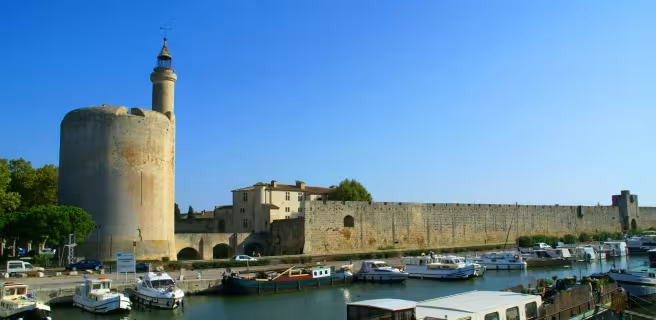
The ViaRhôna route has been set up between Gallician and Aigues-Mortes. On this stage along a greenway, you cross a portion of the Camargue Gardoise (the western, Languedoc side of the Camargue). The flora and fauna are exceptional. You cycle along the former towpaths beside the Canal du Rhône à Sète, crossing through typical marshland to reach the splendid walled port of Aigues-Mortes, set amidst marshes, vineyards and saltpans. Take in these extraordinary landscapes from the top of the Tour Carbonnière, an historic guards’ tower. Two further cycling circuits starting from Gallician enable you to discover more of the surrounding vines, marshes and reedbeds.
Aigues-Mortes / Palavas-les-Flots

22 Aigues-Mortes / Palavas-les-Flots
27 km
1 h 49 min
I cycle often
This stage marks the end of the whole ViaRhône route, with the Mediterranean and its beaches beckoning, and very easily accessed by bike. First you need to cycle alongside the Canal du Rhône à Sète between Aigues-Mortes and Le Grau-du-Roi. Then you ride alongside the Mediterranean and its beaches, with lively resorts and activities all around. ViaRhôna takes you meandering along the beachfront, between the sea and the salt lagoons behind. Have your swimsuits and towels at the ready!
Palavas-les-Flots / Sète

23 Palavas-les-Flots / Sète

36 km
2 h 28 min
I begin
From Palavas-les-Flots, close to the bigger city of Montpellier, the itinerary is winding between beaches and saltwater lagoons. Do not miss the Maguelone Cathedrale where you will glimpse at the massif of Gardioles covered with its garrigues. A shellfish tasting while sipping a glass of "Muscat de Frontignan" will be your rewards for this last stage of the ViaRhôna. The arrival to the Sète Harbor, at the edge of the Etang de Thau, marks the end of the adventure.

Découvrez également